The front where the drones fall from the sky and the GPS goes crazy. War in a technologically hostile environment


Sending drones and robots to the battlefield instead of soldiers has become one of the basic rules of modern warfare. Nowhere does this logic seem more natural than in the frozen expanses of the Arctic. And yet, paradoxically, that's exactly where cutting-edge technology begins to fail, writes The Wall Street Journal.
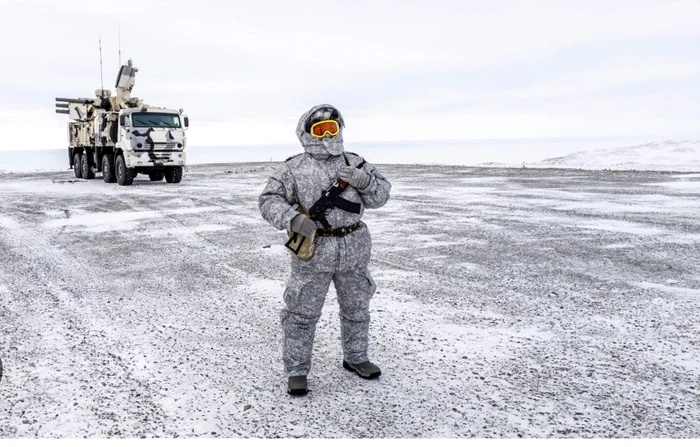
Sophisticated equipment does not work at North Pole parameters/FOTO:X
The closer you get to the North Pole, the less reliable the sophisticated equipment becomes. Magnetic storms disrupt satellite signals, extreme temperatures drain batteries or freeze mechanisms within minutes, and featureless white fields make navigation nearly impossible.
In a polar military exercise held this year in Canada, in which seven countries participated, the US military tested multimillion-dollar arctic vehicles. After only 30 minutes, they stopped: the hydraulic fluids solidified due to the cold.
Not even the Swedish military had better luck. Night-vision goggles, which cost about $20,000 apiece, failed quickly because the aluminum they were made of could not withstand minus 40 degrees.
“The Arctic is the ultimate adversary”says Eric Slesinger, a former CIA officer and current investor in defense startups, including companies trying to find solutions for fighting in the far north.
War in a technologically hostile environment
In Ukraine, militaries often use commercial equipment – power sources, communication systems, chemicals or lubricants adapted from civilian use. In the Arctic, however, almost every basic piece has to be completely rethought.
Great power competition in the Arctic region is growing amid climate change that opens up sea routes and access to natural resources. Russia dominates the “Far North” militarily, with nuclear submarines, missile bases, airfields and ports on the Kola Peninsula. Incidentally, the shortest flight path for future Russian hypersonic missiles to North America passes over the North Pole.
Of the eight states that have Arctic territories, only Russia is not a NATO member. For the US and Canada, the main threat is Russian missiles, while for Finland and Norway, which share a land border with Russia, the risk of a land incursion is much more concrete.
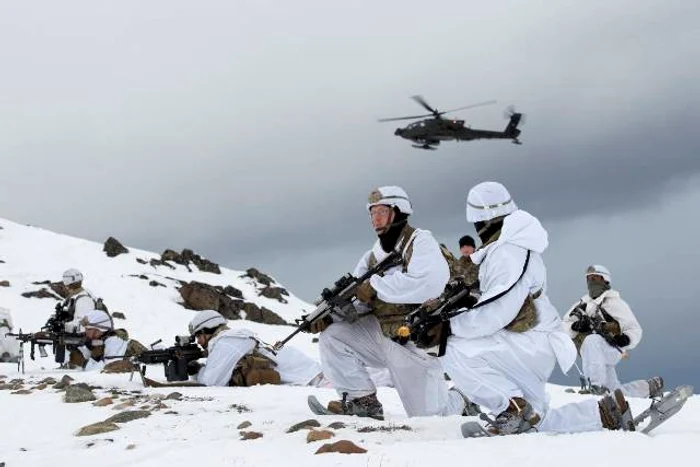
Back to basics
An Arctic conflict would force militaries to go back to basics. Extreme cold causes common materials to become brittle: rubber loses its elasticity, gaskets begin to leak, and the slightest trace of moisture freezes and can destroy pumps or block systems. Cables should be insulated with silicone, not PVC, which cracks at low temperatures.
Oils and lubricants thicken to solidification. In standard hydraulic systems, the fluid becomes viscous, affecting everything from aircraft controls to missile launchers or radar masts. A single freeze can disable an entire weapons platform or immobilize a convoy.
Even one of the most spectacular natural phenomena – the northern lights – is becoming a military issue. The green lights in the sky are the result of the interaction of solar particles with the Earth's magnetic field, which is extremely intense at the poles. They interfere with radio communications and satellite navigation systems, essential for positioning and timing.
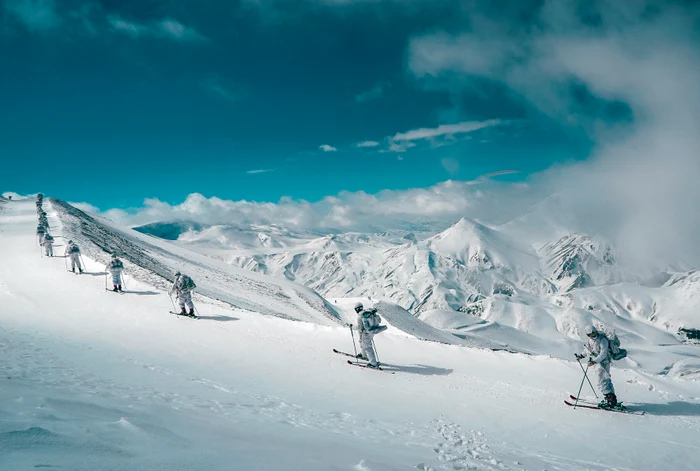
Start-ups, explorers and “mini-space programs”
One of the lessons of the war in Ukraine is the crucial role of the private sector in military innovation. In this spirit, two British explorers, Ben Saunders and Frederick Fennessy, launched this year the company Arctic Research and Development, which develops autonomous systems for the polar regions.
The pair have skied around 12,000 kilometers in the Arctic and compare designing technology for the far north to building a “mini space program”. Their team includes specialists from fields such as space research, intelligence, climate science and the military. Investors include Eric Slesinger.
The company develops software adapted to the Arctic and virtual maps that more accurately represent the polar regions than Mercator projections, which are known for distortions. The tests are done in an industrial freezer in rural England, where the equipment is exposed to minus 70 degrees Celsius.
“We've had a rover on Mars for years, but we don't have an autonomous one in the Arctic”says Saunders. “For a long time, this region was an empty space on the map, marked 'here are dragons'.”
One of the products under development is Icelink – an orange suitcase-sized box, a high-speed communications hub that includes GPS antennas and special batteries capable of operating for days in extreme cold.
When drones are no longer the solution
The war in the Arctic would look radically different from the one in Ukraine. Cheap, mass-produced drones used on the Ukrainian front would quickly fail in the far north. There, the machines must be equipped with de-icing systems, powerful engines for extreme winds and run on fuel, not batteries. They are usually so large that they require runways or trailers to launch.
Even powering radio stations is a major logistical challenge. Recently, the Swedish army received the offer of a battery charger carried on a sled. It weighed over 180 kilograms and would have stuck in the loose snow immediately.
“Many in the industry don't understand what people on the ground really need,” says Frederik Flink, commander of the Subarctic Warfare Training Center in northern Sweden.And our military ideas are often technically unrealistic.”
GPS jamming, little data, limited AI
Artificial intelligence, so useful in Ukraine for fast data processing, is much less effective in the Arctic. The region is sparsely populated with minimal infrastructure, few roads and networks. Data is scarce, and without data, algorithms are almost useless.
In addition, in the north, artificial interference is much more dangerous. Satellites in equatorial orbits are often obscured by the curvature of the Earth, which reduces the number of available signals. GPS jamming, a minor problem in other regions, becomes a major safety risk here.
The Norwegian Communications Authority recorded only six GPS incidents in 2019. In 2022, the year of the Russian invasion of Ukraine, the number increased to 122. From 2024, the phenomenon became so frequent that the authorities stopped keeping track.
“We have to accept the reality and find solutions”says Espen Slette, responsible for radio spectrum management in Norway.
In this context, more than 100 companies gathered on the island of Andøya at the annual Jammertest event, where they test drones, atomic clocks, antennas and chips in jamming and extreme cold conditions.
Event organizer Heidi Andreassen says the interference is not necessarily a deliberate act of Russian aggression, but a side effect of Moscow's measures to protect its military bases on the Kola Peninsula.
“In the Arctic, when the weather is extreme and you have no visibility, jamming can be critical. Something that was rare a few years ago has become a daily problem.” she concludes.