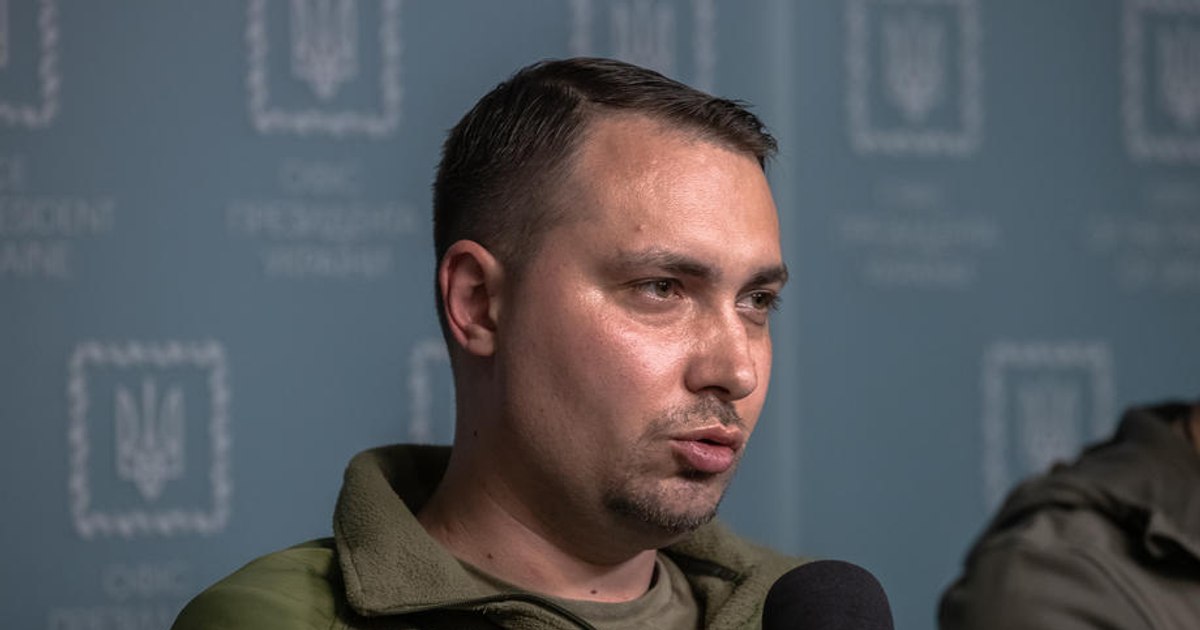
The head of the Main Directorate of Military Intelligence of Ukraine, Kirilo Budanov, says that February 2026 could represent the most favorable period for reaching a real agreement to end the war with Russia. The statements were made in an interview with public station Suspilne.
Kirilo Budanov/PHOTO: EPA/EFE
According to Budanov, several factors converge in this regard, from the situation at the front and the cold season, to the growing economic pressures on Moscow. A central element is Russia's 2026 budget, which the Ukrainian official describes as “catastrophic”.
He claims that almost all of the Russian state's civilian programs have been cut, while defense and security spending amounts to about 46 percent of the budget. “No country can develop normally when almost half of the budget is spent on war,” Budanov said, adding that this imbalance forces the Kremlin leadership to take difficult and unpopular decisions that could influence openness to negotiations.
The statements come in the context in which Ukrainian President Volodymyr Zelensky recently announced that some documents necessary for the advancement of the peace process have already been prepared, and others are being drawn up. He said the next few weeks could be intense for Ukraine's negotiating team.
In late December, Zelenski publicly presented 20 points that could form the basis of a potential peace deal with Russia. These include the withdrawal of Russian troops from other regions of Ukraine and the creation of a free economic zone in the Donetsk region. The president also said that a possible final agreement could be subject to ratification through a national referendum.
Russia's military goals for 2026
In the same interview, Budanov said that Russia's military plans for 2026 include the full occupation of the Donetsk region and the maximum possible advance in the Dnipropetrovsk region. Moscow also plans to continue military operations in the Zaporozhye and Kherson regions, as well as expand so-called “buffer zones” along the border.
The head of Ukrainian military intelligence stated that Russia has never hidden these objectives. To achieve them, the Kremlin would mobilize around 409,000 people in 2026.
According to Budanov, Russia has already met its mobilization plan for 2025, which aimed to recruit 403,000 people, even surpassing the originally set target. Most of the new recruits are contract soldiers, attracted by substantial financial bonuses and extended benefits, a strategy designed to avoid a repeat of the partial mobilization of 2022, which is highly unpopular with the population.
Ukrainian authorities also say Russia continues to recruit foreign nationals to fight in Ukraine, including from Asia and Africa, as well as detainees or people with serious medical problems.
Attacks on energy infrastructure will continue
Budanov warns that Russia's massive attacks on Ukraine's energy infrastructure will continue, as the Russian military industry has reached a high level of production, especially with regard to missiles and drones.
The statement comes after further strikes on Ukraine's power grid, which have left tens of thousands of homes without heat and electricity, including in the capital Kiev. Local authorities say repair work is underway, but the situation remains difficult amid winter.
According to Ukrainian and Western intelligence estimates, the losses suffered by the Russian military since the beginning of the full-scale invasion are very high, in the context of expensive tactics and problems with equipment and training.