Top surgeon believes pig organ transplants may one day become superior to human transplants, which 'will just never be enough'


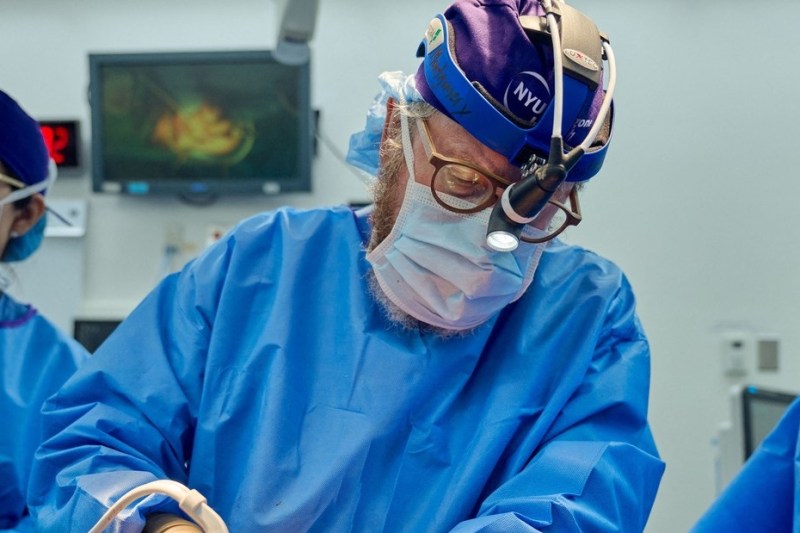
Dr. Robert Montgomery. Credit: Joe Carrotta/NYU Langone Health / MEGA / The Mega Agency / Profimedia
A leading surgeon behind a clinical trial of pig kidney transplants into living humans has said it is possible that these transplants may one day be superior to those with organs from human donors, The Guardian reports.
Dr. Robert Montgomery, director of the Transplant Institute at NYU Langone, said the first transplant in the study has already been done, and another is due in January. Initially, six patients are expected to receive pig organs, which have been genetically edited in 10 places to reduce the possibility of rejection by the human body.
If the US Food and Drug Administration (FDA) gives the green light, the study will be expanded to include 44 more transplants.
Shortage of human organs for transplantation
The approach, called “xenotransplantation”, aims to solve the shortage of human organs.
In the UK alone, more than 12,000 people have died or been removed from the transplant waiting list in the past 10 years before receiving a new organ, according to official figures.
People taking part in the new clinical trial are either not eligible for a human kidney transplant or are on a waiting list for one, but are considered more likely to die or not receive a kidney within five years than to receive one.
“The truth is there will simply never be enough human organs,” Montgomery told The Guardian.
He received a heart transplant in 2018
Robert Montgomery speaks from experience. Not only is he a surgeon and one of the most influential people in 2025, according to Time magazine, he also inherited a heart condition called dilated cardiomyopathy, which killed his father and brother. The doctor suffered no fewer than seven cardiac arrests, one of which resulted in a month-long coma, before receiving a heart transplant himself in 2018.
“I think everyone really knows that we have a terrible problem with organ rationing because there's such a lack of supplies. But unless you're in someone's shoes waiting for a transplant, you don't fully understand how unlikely it is to get a transplant in time,” he pointed out.
New approaches are needed
Montgomery, a leader in the use of organs from donors with hepatitis C, believes that new approaches are needed.
“After spending a career trying to gradually increase the number of human organs available, I realized that I just wasn't making much progress, not in a meaningful way,” he stated. “And any progress we've made has somehow been wiped out by the growing number of people waiting for transplants.”
Montgomery said it's even possible that pig organs will eventually become superior to human organs for transplants, with the possibility of additional genetic modifications to reduce the likelihood of rejection. “They might be superior at some point because we can constantly modify them to make them better, which you can't do with a human organ,” the surgeon explained.