Trump brought a disaster to the US. Here's what his voters think


When Ron Dailey goes to a restaurant, he is shocked by the prices on the menu. — Breakfast costs $20. (PLN 71), regardless of how you divide it, says the 63-year-old who voted for President Donald Trump in November 2024.
Dailey, a Denver-area resident who works for an outsourced human resources solutions company, believes “tariff fluctuations” have created uncertainty in the market, driving up some costs.
However, he notices a decline in other prices – recently he paid only $1.74 for a gallon of gasoline (approx. 3.7 liters). (PLN 6.25). When it comes to cost of living, Americans rate Trump's presidency at eight out of 10.
— The president doesn't have a magic wand says Dailey, who believes tariffs and Trump's agenda will ultimately reduce most day-to-day costs.
The issue of affordability is a top priority for voters as both parties prepare for next year's congressional elections. Republicans are particularly concerned about this persistently high prices could hurt their chances of maintaining control of Congress.
After last year's campaign promise to bring inflation under control, Trump in recent weeks has alternated between dismissing affordability problems as a hoax, blaming them on Joe Biden and promising that his economic policies will benefit Americans next year.
Interviews with a group of 20 Trump voters from across the country, whom Reuters has spoken to every month since February, reveal how high costs are affecting life in the US and who Americans blame for them. Journalists asked voters to rate the president's administration's approach to affordability on a scale of one to 10. Six of 20 voters gave it a rating of “five” or lower, and only one rated the situation above “eight.”
Most voters strongly support the president, predicting his policies will improve purchasing power in the long run or saying the leader has little influence on day-to-day costs. This group blames the rising cost of living on larger structural problems in the U.S. economy — oligopolies, corporate greed, an excessive money supply.
The anxiety deepens
The views of respondents approximately coincide with the results of recent surveys. Nearly three-quarters of Trump voters surveyed in a Reuters-Ipsos poll in early December say that supports the president's handling of the cost of livingcompared to 30 percent all respondents. Trump's voter tally was 10 percentage points higher than in a smaller poll that was conducted in November.
Still, Republicans fear they are vulnerable on economic issues ahead of next year's elections. Independent voters remain more skeptical of the president's policies. Trump hit the road to promote his cost-cutting efforts, starting with a rally in Pennsylvania on Tuesday.
“There is no greater priority for me than making America affordable.” Trump said during a rally where he took credit for lowering gasoline and energy costs and egg prices. He blamed Biden for high prices of other goods, even though he has been in office for almost a year.

A New York resident returns from shopping, December 12, 2025.SPENCER PLATT/Getty Images
Government data shows that job growth has slowed in Trump's second term, unemployment has risen to a four-year high and consumer prices remain high. In turn, economic growth has recovered somewhat after the decline in the first months of the year.
Eight voters polled by Reuters report rising prices at local restaurants and grocery stores, especially for meat and coffee. Several interviewees talk about a drop in food prices, and 11 say they have noticed a drop in gasoline prices in their area.
Several people complain that Trump has done too little to fix the problems and that his signature tariffs have been implemented unprofessionally, unnecessarily raising prices for Americans.
“It hurts the economy”
Loretta Torres, a 38-year-old mother of three who lives near Houston, gives Trump an “eight.” At the same time, he claims that this year's holiday shopping is more difficult because tariffs have doubled or tripled some prices. “I would definitely like to see these tariffs reduced and improved over time,” she says.
Gerald Dunn, a 67-year-old martial arts instructor from Hudson Valley, New York, who rates Trump a “six” for affordability, agrees. — Tariffs should not be introduced without reason. This hurts the economy because uncertainty breeds anxiety, Dunn adds.
Other voters, however, say they haven't noticed any price increases due to the tariffs. Terry Alberta, a 64-year-old pilot from Michigan, notes that American customers spent a record amount of money in online stores on Black Friday.
“People say they're hurting, but they're clearly not hurting enough to cut back on that spending,” says Alberta. — Criticizing the administration and saying, “Oh, these tariffs are terrible,” and so on, it's like, so why do we keep buying stuff?
Regardless of their assessment of Trump's presidency, most voters blame private companies and macroeconomic factors for the rising costs of basic goods and services.
While the 20 voters are not a statistically representative group of all Trump supporters, their age, education, racial/ethnic background, location and voting history roughly match the Republican's overall voter base. The people were selected from 429 respondents to an Ipsos survey from February 2025. Respondents in this group said they voted for Trump in November and expressed willingness to talk to a reporter.
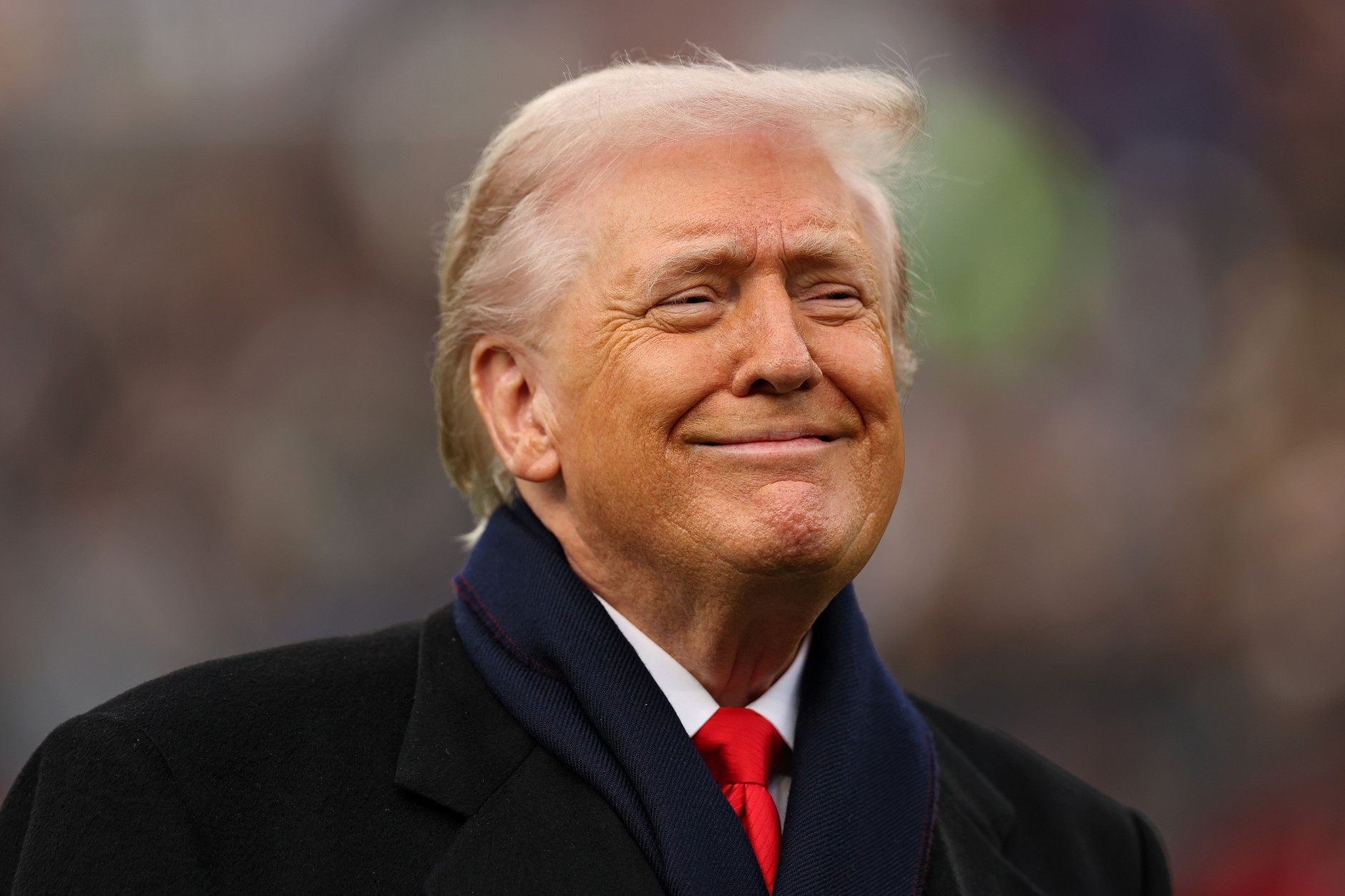
US President Donald Trump, December 13, 2025Patrick Smith/Getty Images
American problems
In the affordability category, Don Jernigan, a 75-year-old retiree from Virginia Beach, gives Trump a “four” on his insufficient action to curb oligopolies.
In industries like meat processing, “there are such large corporations that control so much of our product supply chain,” Jernigan says. — Small businesses are completely excluded from the system, and I don't see any changes that would change that.
In Georgia, 54-year-old David Ferguson adds that he hopes Trump will use presidential executive orders to push through legislation that would limit profits in areas such as health insurance. He blames dominant companies for a “feeding frenzy” that drives high costs.
Lou Nunez, an 83-year-old retired Army veteran from Des Moines, Iowa, also points out that Obamacare health insurance premiums will double if U.S. lawmakers do not extend pandemic subsidies through the end of the year.
“It's something the president could probably get from Congress if he wanted to, but I think he's pretty opposed to it,” says Nunez, who rates Trump a “two” in the affordability category. — I don't think he's done much (to improve) the prices of anything, adds the American.
“Drill, baby, drill”
A common refrain, especially among voters who generally rate Trump highly, is that the president doesn't have enough power to cut costs immediately.
Kate Mottl, 62, from the suburbs of Chicago, and Rich Somora, 62, from Charlotte, North Carolina, who rate the president eight and six points respectively, repeat one of Trump's campaign slogans: “drill, baby, drill.” [wydobywajmy, ile się da]. The interlocutors suggest that opening more of the territory of the United States to… oil and gas extraction would help lower the cost of living.
Voters also emphasize that Trump has limited ability to directly lower prices. Mottl says she would like to see grocery and utility prices fall, but is “very optimistic” about Trump's economic leadership. “He can do so much in almost a year in office,” he adds.
“A lot of these changes are policy-related, and a lot of them have to go through Congress,” Somora says.
Will Brown, a 20-year-old college student from Madison, Wisconsin, blames the current inflation on the Biden administration's federal spending initiatives, which have pumped cash into the U.S. money supply.
Although Brown says meat prices are “scandalous” and housing costs are out of reach for many Americans, gives the president a score of seven.
Fixing inflation and the high cost of living is “easy to say but hard to do,” Brown adds.