2025-12-14 13:51
publication
2025-12-14 13:51
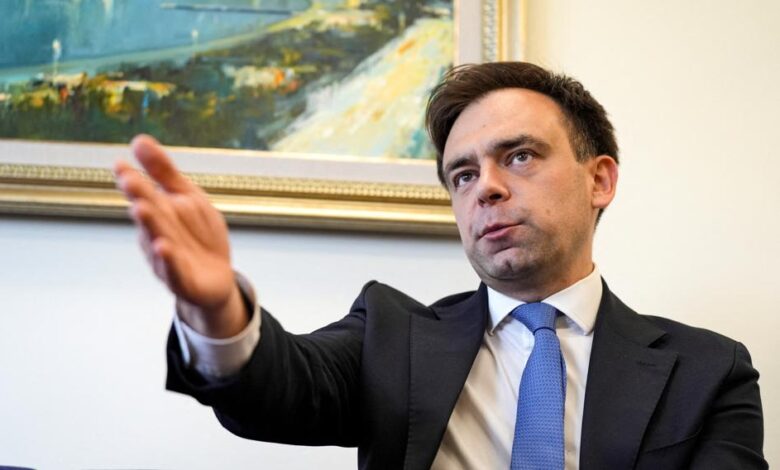
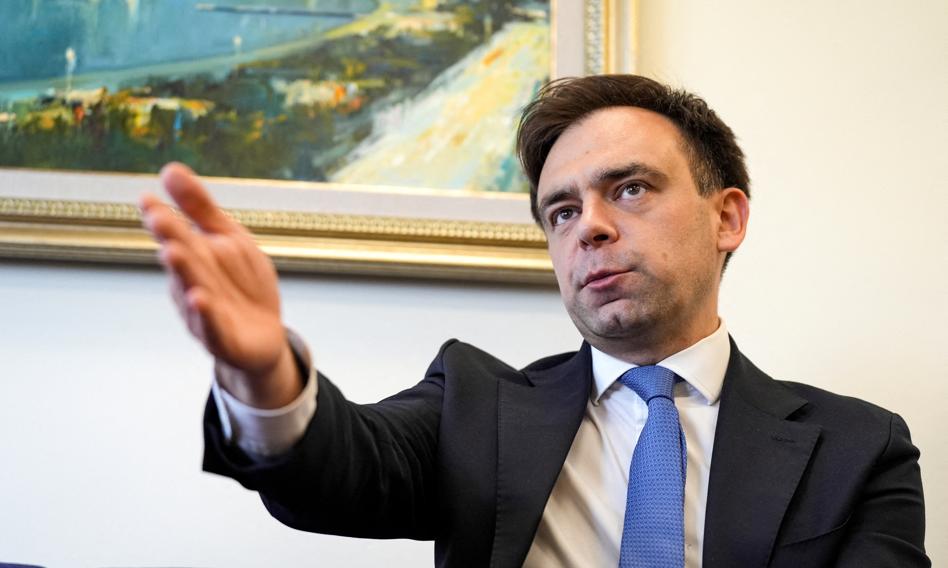
The Act on Crypto-Assets did not lead to overregulation of the market, but only gave the state tools to fight fraud and abuse, said Andrzej Domański, Minister of Finance and Economy, on Sunday.
December 1 this year The president's office announced that President Karol Nawrocki vetoed the act on the crypto-assets market passed on November 7 this year. According to the head of the president's office, Zbigniew Bogucki, Nawrocki's decision to veto was due to, among others, because the act introduced excessive, ambiguous and disproportionate solutions. The Council of Ministers adopted the same project on Tuesday.
Referring to this issue on Polsat News on Sunday, Domański assessed that the vetoed act did not lead to overregulation. – It gave the Polish Financial Supervision Authority – that's a fact – certain tools to fight fraudsters and abuses. Research shows that 20 percent people who invest in the crypto-asset market were deceived in one way or another. Please believe me that in other financial markets this percentage is much lower – he said.
He said that people have the right to lose money when the price of a given asset on the stock exchange falls, but “the situation in which ordinary fraudsters operate there is a different thing.” – That is why an EU regulation was created, which we want to implement in Poland, precisely to protect these investors (…) in some way against fraudsters, and not against losses – he emphasized.
When asked if he had ever invested in cryptocurrencies himself, he replied no. – I worked on the capital market for many years and managed equity funds, so by nature I am more convinced of the stock market as an investment method, because behind each share there are companies with specific revenues behind them – he explained. In his opinion, everyone can invest “as they think is right.” – I will always protect citizens' freedom to invest – emphasized Domański. In his opinion, there must be rules, principles and “some sort of safety umbrella”, which – as he pointed out – was to be created by the bill vetoed by the president.
At the beginning of December, the Sejm did not reject the presidential veto to the bill on the crypto-assets market. After the vote, Prime Minister Donald Tusk announced the quick submission of a new bill on this matter, and on Tuesday the government adopted a bill identical to the bill vetoed by the president.
As stated in the justification, the aim of the project is to ensure the application of the MiCA regulation (The Markets in Crypto-Assets Regulation). It states that the MiCA regulation “sets out a harmonized legal framework for crypto-asset markets across Member States, introducing detailed rules on crypto-assets, related services and activities that are not yet covered by EU financial services legislative acts.”
The project also aims to “introduce supervisory measures aimed at counteracting violations that may be committed by supervised entities”, including enabling the Polish Financial Supervision Authority to suspend the public offering of cryptoassets, interrupt its course for a specified period, prohibit the launch of a public offering or prohibit the admission of cryptoassets to trading. The Polish Financial Supervision Authority will also be able to impose sanctions “on offerors, issuers or persons applying for the admission of cryptoassets, as well as the introduction of supervisory powers of the Polish Financial Supervision Authority, including the possibility of imposing a fine on persons professionally intermediating in concluding transactions related to cryptoassets.”
The bill also introduces criminal liability for crimes committed, among others: in connection with issuing tokens related to assets or e-money tokens or providing services in the field of cryptoassets. (PAP)
jls/aop/