The beauty and medical industries are in fear. Gigantic increases will hit thousands of companies

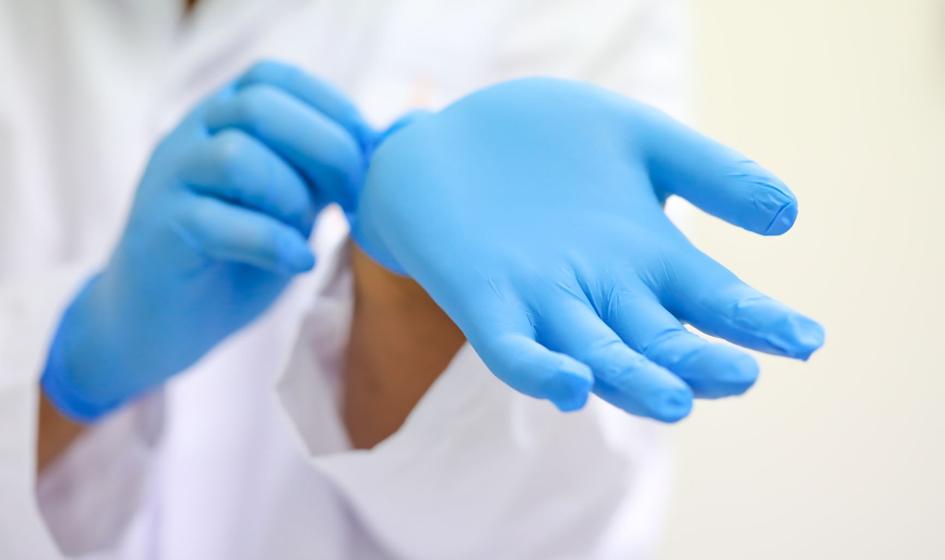
Protective gloves imported from Malaysia and China are becoming more expensive and are increasingly difficult to obtain in Poland. The Organization of Medical Industry Employers Technomed told PAP that raw material prices increased by 25 percent in March. and they continue to grow. The reason is the crisis in petrochemistry and maritime transport.
Online stores offer a package of 100 disposable nitrile gloves for approximately PLN 20, but the most popular sizes (M, L) and colors are often unavailable, and you have to wait several weeks for delivery. If someone cares about time, they have to pay more. – It's a scarce commodity. We haven't had disposable gloves for a month. We imported 70 packages for a regular customer through special channels. Almost PLN 40 per package. – a representative of a large BHP wholesaler in Szczecin told PAP.
The increase in prices and difficulties in purchasing gloves was confirmed by the owner of a private clinic in Szczecin, presenting an invoice with a price of PLN 37.96 for a pack of nitrile gloves (100 pcs), powder-free, blue. – Over the last three or four weeks, the price of the package has increased by approximately PLN 7. There are no small sizes (S, M). This is also signaled by other institutions and private offices, she noted.
Disruptions in supplies and an increase in the prices of disposable gloves (surgical latex gloves cost up to PLN 100 per 100 pieces) have been observed for several months by wholesalers from Wrocław, Warsaw and Tricity, with whom PAP talked. They indicated the escalation of the conflict in the Middle East, the war between Israel and the US against Iran, which led to the blockade of the Strait of Hormuz, the increase in oil prices, and difficulties in maritime transport as the main cause. This results in rising freight costs, price spikes in international commodity markets, etc.
– We are observing significant disruptions in the supply of disposable protective gloves and significant price increases. The suspension of shipments from Asia, in particular from Malaysia, lasted for over six weeks and also concerned previously contracted and prepaid deliveries, Wioletta Suska from the Organization of Medical Industry Employers in Warsaw explained to PAP. – The reason was producers' concerns about the availability and prices of crude oil, which is a key component for the production of raw materials such as nitrile (NBR), polypropylene and polyethylene – added Suska.
It reported that deliveries are gradually being resumed, but to a limited extent and at much higher prices. – Companies indicate that raw material prices increased by at least 25% in March, and the upward trend continues. The first shipments should reach the Polish market within 6-8 weeks. At the same time, a clear supply gap has emerged on the market, which leads to tensions on the part of recipients and additionally drives price increases, Suska pointed out.
Nitrile and latex gloves are imported to Poland and Europe from Southeast Asian countries, primarily Malaysia. The second large producer is China. According to OPPM Technomed, they are not produced on an industrial scale in Poland. Suska recalled that in recent years, attempts had been made to launch production in the EU, but they turned out to be “economically difficult to maintain.” The reasons were high costs of energy, labor and technological infrastructure.
The Polish market is therefore based on imports. According to Technomed, the annual demand is approximately 7-10 million boxes, usually containing 10 packages of 100 gloves each. She explained that in logistic terms this means, on average, the import of approximately 200 containers per month. Based on information from companies associated with OPPM, she said that large institutions buy from approximately 1 million to 20 million pieces per year. – Depending on the size and profile of the hospital – Suska explained.
As PAP found, for example, the University Clinical Hospital No. 1 PUM in Szczecin orders over 5 million nitrile and over 3.7 million latex gloves annually. The Independent Public Provincial Hospital buys approximately 8 million pieces of various types. The outlets' spokespersons assured that deliveries are being made as scheduled.
The University Children's Hospital in Krakow also did not record any supply disruptions. – Purchases are made based on binding contracts with fixed prices – USDK spokeswoman Katarzyna Pokorna-Hryniszyn told PAP. She informed that the hospital orders approximately 6.5 million pairs of gloves annually. She noted that suppliers “have not signaled or requested price increases so far.”
A manufacturer and distributor of occupational health and safety products from Rawa Mazowiecka noted in an interview with PAP that “clear difficulties” with purchase and transport concern primarily products whose production is based on petroleum-derived raw materials, including: nitrile and nitrile-coated gloves. – Nitrile gloves are difficult to obtain now, we are noticing a significant increase in prices, but we are trying to ensure smooth deliveries to customers – said the company's director, Tomasz Stefański.
Stefański noted that the increase in prices of latex gloves (latex is made from natural rubber) is primarily caused by rising transport costs.
Dr. Adrian K. Antosik, a chemist implementing projects including: at the West Pomeranian University of Technology in Szczecin.
– Crude oil is a mixture of hydrocarbons with different chain lengths. In the refinery, during distillation (a form of separating mixtures of substances) and cracking (a process of breaking down long hydrocarbon chains into shorter ones), specific hydrocarbons (monomers), butadiene and acrylonitrile are obtained, necessary for the production of gloves, Antosik explained.
The next stage is emulsion polymerization, during which monomers combine into long, durable chains, creating synthetic latex in the form of a liquid dispersion. The raw material prepared in this way goes to production plants, where the dip molding process takes place. – It involves precisely immersing hand-shaped ceramic forms in a liquid polymer that evenly settles on their surface. The molds then go to vulcanization furnaces, where, under the influence of high temperature, the material gains its final elasticity, tightness and mechanical resistance, Antosik described.
Nitrile is a synthetic polymer (nitrile butadiene rubber, NBR). It is less stretchy than latex, but more durable, more resistant to mechanical damage and does not cause allergies because it does not contain natural rubber proteins.
The Ministry of Health and the Office for Registration of Medicinal Products, Medical Devices and Biocidal Products told PAP that state institutions have not recently received any signals from medical facilities or, for example, voivodes about difficulties with purchasing disposable gloves. (PAP)
tma/ agz/