The US and Ukraine talk about “real progress” in peace talks. But there are also unresolved disputes


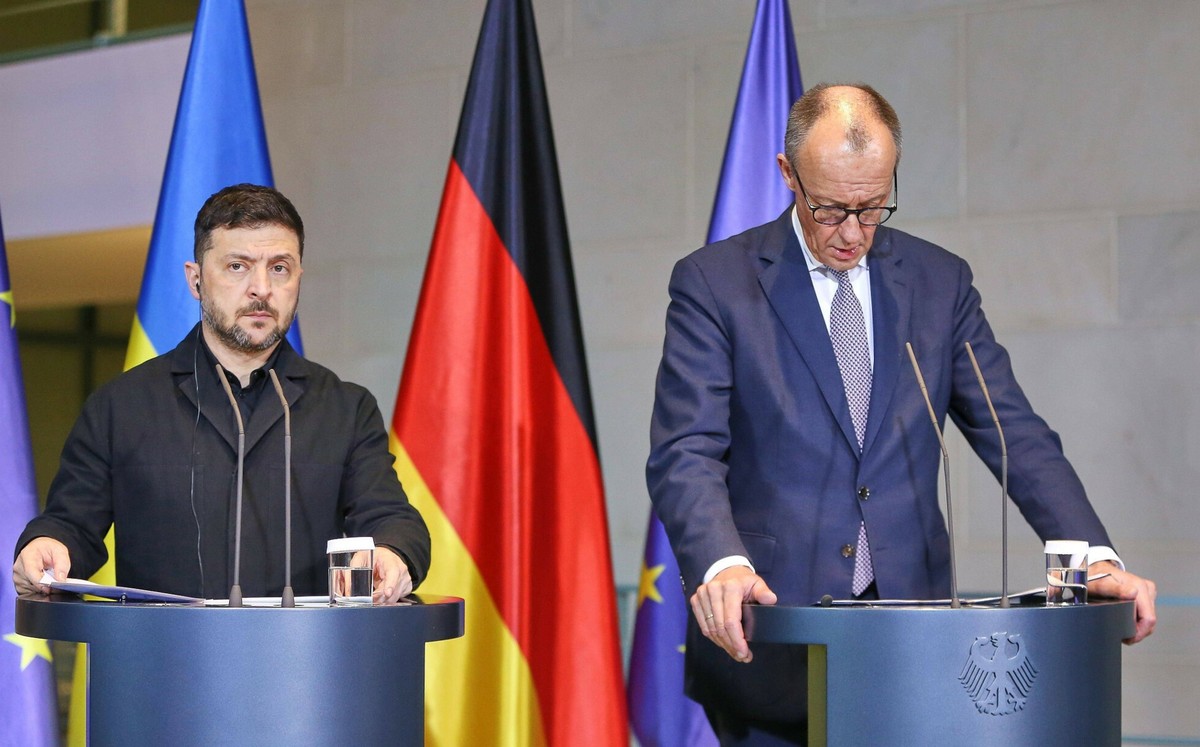
The talks were held with the participation of President Donald Trump's envoys, Steve Witkoff and Jared Kushner, and in the presence of German Chancellor Friedrich Merz. At the same time, Berlin became the center of European diplomacy around the war that day.
The most The future of the territories occupied by Russia remains a flashpoint and what the demarcation line would look like after a possible ceasefire.
The next part below the video:
According to Reuters findings, American negotiators insisted that, as part of the agreement, Ukraine would withdraw its forces from parts of the Donetsk Oblast – areas that Moscow had not managed to control. However, Kiev is expected to oppose solutions that would look like forced territorial concessions without firm security guarantees.
President Volodymyr Zelensky has emphasized in recent days that conversations are difficult but productiveand differences of opinion on territorial issues remain real.
Article 5, but outside NATO. Security guarantees at the center of conversations
In Berlin, the concept of securing Ukraine with a solution “similar to Article 5” of NATO was discussed, i.e. a mechanism that in practice would guarantee assistance in the event of future aggression – however without Ukraine's formal membership in the Alliance.
According to the American official, such guarantees would be limited in time and would include, among others: supervision elements and mechanisms for de-escalation and incident prevention.
Zelensky has previously signaled his readiness to abandon his goal of NATO membership if, in return, Ukraine receives binding – preferably bilateral or multilateral – security guarantees from the US and European partners.
Frozen assets of Russia, the EU and political next steps
The topics also included the controversial idea in the EU of using frozen Russian assets to rebuild Ukraine. This solution has been causing legal and political controversy in Europe for months, but returns as one of the elements of a broader package of post-war security architecture.
US officials had too signal that Russia might be willing accept Ukraine's membership in the European Union as part of a possible agreement – although there are no public, clear declarations from Moscow on this matter, and Russia's conditions remain unknown.
On the same day, Chancellor Merz planned to meet with about ten European leaders, as well as with NATO Secretary General Mark Rutte and the head of the European Commission Ursula von der Leyen. According to reports, after progress in the talks, Donald Trump may have considered addressing the gathered leaders remotely.