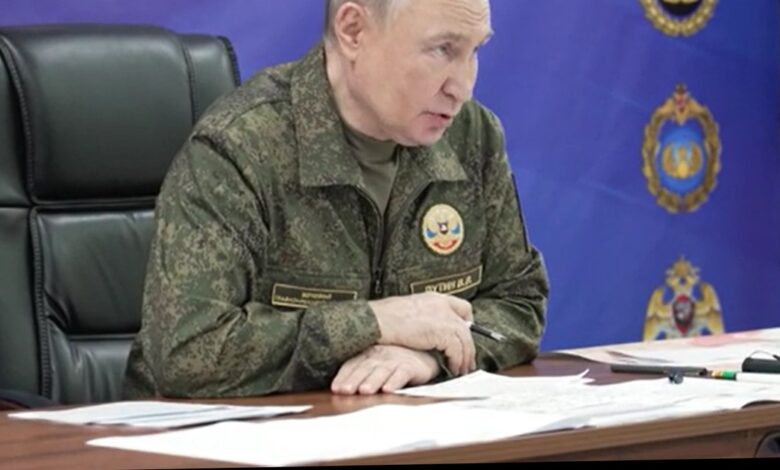
Russian officials are ramping up nuclear threats to the United States as Russian President Vladimir Putin waves new weapons with nuclear capabilities.
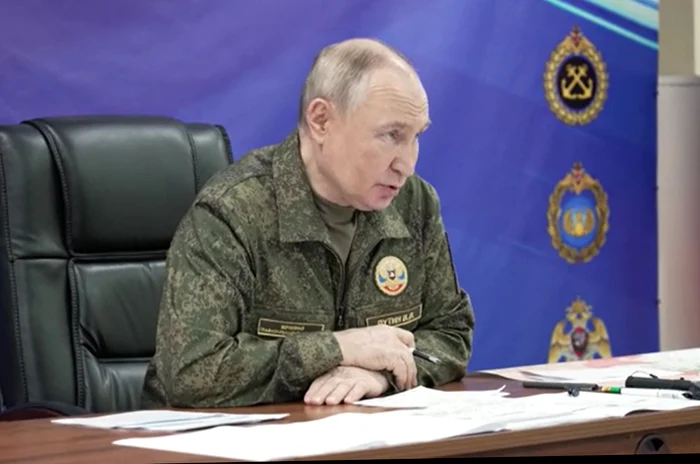
Analysts at the Institute for the Study of War (ISW) wrote that a senior Russian lawmaker suggested Moscow could deploy nuclear-capable missiles in Venezuela and Cuba as Putin unveils new underwater and aerial nuclear weapons.
On October 29, Deputy Chairman of the Russian State Duma Defense Committee, Alexei Yuravliov, threatened that Moscow could deliver nuclear-capable missiles to “Venezuela or Cuba,” noting that they are close to what he called Russia's “main geopolitical adversary,” the United States. He emphasized that the US is “not a friend or a partner” of Russia, but an “enemy”.
Russia has a “whole range” of missiles at its disposal and will use “what is necessary”, he said.
The Russian MP's threats are meant to evoke memories of the Cuban Missile Crisis (1962), as Russian officials have done in the past.
Vladimir Putin is brandishing new nuclear-capable weapons
Putin announced on October 29 that Russia had successfully tested the Poseidon nuclear-powered unmanned underwater vehicle just days ago.
“Putin is elaborating on the alleged attributes of the weapons to lend weight and urgency to his nuclear threats in order to extract concessions from the United States against Ukraine,” ISW analysts wrote. Putin also recalled the recent test of the equally powerful Burevestnik missile, with nuclear propulsion and similar characteristics.
The timing of Putin's announcement followed US President Donald Trump's Oct. 27 call to the Kremlin to focus on ending the war in Ukraine instead of testing missiles.
Putin's statements appear to be intended to defy US pressure and be a show of force. According to ISW, the Russian leader is using nuclear rhetoric to force territorial concessions from Trump and European governments “that his military cannot achieve on the battlefield.”
The United States and its French and British NATO allies maintain robust nuclear triads to “deter nuclear attacks,” ISW recalls.
Belarus to deploy Oresnik missile system
Russia is also using Belarus to more or less covertly threaten Europe. Belarusian presidential press secretary Natalia Eismont told the TASS news agency on October 28 that the Oresnik missile will enter service in December 2025.
Kremlin spokesman Dmitry Peskov said the decision was a response to what he called “Russophobic statements” and “militaristic hysteria” on the part of European countries.
Peskov cited statements by officials from the Baltic states, Poland, France and the United Kingdom as justification for the deployment, which he pointed out shows how valuable these missiles are to Belarus and Russia. Putin had previously announced that Russian and Belarusian specialists would decide on new sites for Oresnik by the end of the year.
“Russia is using the Oresnik system as part of a reflexive control campaign aimed at undermining the West's resolve to militarily support Ukraine,” ISW analysts concluded.
Senior Russian officials are sending the message that Russia is prepared to continue the war possibly indefinitely until Ukraine and its partners capitulate to Russian demands. Russian Foreign Minister Sergei Lavrov on October 28 rejected US President Donald Trump's proposal for a truce along the current front line before resuming negotiations with the US. Their message: Russia's conditions on territorial claims and the so-called “deep causes of the war” remain unchanged.