The far right party The Chega failed to achieve control over any important city in the local elections held on Sunday in Portugal, despite a significant increase in the number of votes compared to the 2021 poll, writes politico.eu.
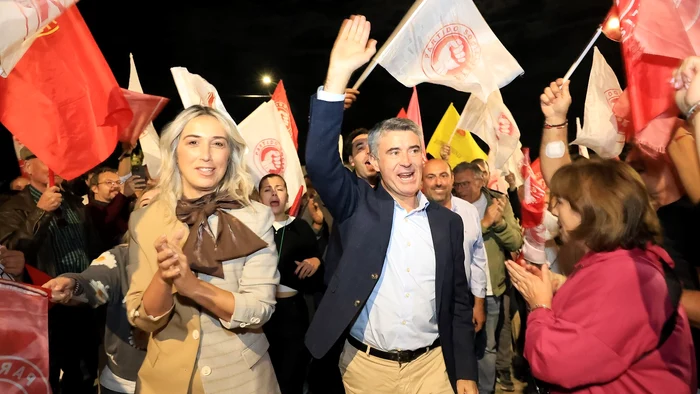
The Portugal Socialist Party came out with minimal losses after local/photo elections: X
The formation led by André Ventura won the town halls only in three localities: Albufeira, Entroncamento and São Vicente – located, respectively, in the Algarve region, Médio Tejo and on Madeira island. Although he failed to take over the administration of any major urban center, Chega has strengthened his presence in the municipal councils and could influence decisions in several local administrations.
“It was a good evening,” said Ventura, at the same time recognizing that the party, who had candidates in 307 of the 308 municipalities of the country, did not reach its goals. The number of voters who supported the ultra -nationalist formation was tripled to the previous local elections, but the total of the votes obtained is under half the score made by Chega at the five -month anticipated legislative elections.
The poor results in cities like Elvas and Sintra – where the extreme right -wing influence was ranked third – suggests that the party has difficulty when the Ventura leader does not apply personally.
Losses important to the Socialist Party
The elections were also marked by important losses for the Socialist Party, which was defeated in the two largest cities of the country. In Lisbon, the socialist candidate Alexandra Leitão failed to defeat the current center-right mayor, Carlos Moedas. In Porto, the Conservative Pedro Duarts exceeded the socialist candidate Manuel Pizarro, a former MEP.
Despite the surveys that foreshadowed a defeat, Moedas was voted by 30,000 voters more than in 2021. The result suggests that the electorate does not consider it responsible for the fatal accident last month from the Lisbon funicular, whose causes are still investigated.
“I only asked for an extra vote to my counter-candidate, but the voters gave me 30,000 more,” said Moedas in the speech after the victory. Although he did not obtain the absolute majority in the Municipal Council, the former European Commissioner for Science promised a “stable” local government, based on negotiations including with Chega.
Outside Lisbon and Porto, the Socialists have won important victories in Coimbra – an important university center – and Faro, the capital of the Algarve region. In Faro, the center-left candidate António Pina managed to attract the votes of the voters disappointed by the centralism of the Lisbon. However, the Socialist Party has lost control in several smaller municipalities, taken over by the Social Democratic Party (PSD) of Prime Minister Luís Montenegro.
The leader of the Socialist Party, José Luís Caroiro, stressed that his formation obtained a better score than in the legislative elections in May, when Chega became the main opposition force. However, this Sunday's results offer favorable prospects in the context of presidential elections scheduled for January. The socialists are expected to designate their candidate next week, to succeed the current president Marcelo Rebelo de Sousa.
At the same time, Prime Minister Montenegro can declare himself satisfied that the representatives of his party are now controlling most of the municipal councils. However, this success amplifies the pressure on it to respond effectively to the housing crisis, which has led to increased prices throughout the country. The government has allocated 2.1 billion euros from the national budget for 2026 in this area, and the prime minister intends to mobilize the support of mayors for the rapid implementation of these funds.
In the last two years, Portuguese voters have been called four times to the ballot box – for national, European and local elections. Although there were fears about a possible high rate of absenteeism, the vote presence was close to 60% – the highest level recorded in local elections since 2005.
The high involvement of the electorate is attributed to the importance of this election, considered by analysts as one of the most disputed in the recent history of Portugal. In almost half of the municipalities there was no mayor in office to run for a new mandate, as a result of limiting mandates and passing several buildings into national positions.
Until the January presidential elections, the Portuguese will not have an election break. Among the candidates announced are the leader Chega, André Ventura, and Admiral Henrique Gouveia is Melo-known for coordinating the National Anti-Covvv Vaccination Campaign, but criticized by some for its potential candidacy in the highest position, in the context in which he is an active member of the army.