Time recognized their platform as the best invention of the year. This is how it works in practice [ZOBACZ WIDEO]

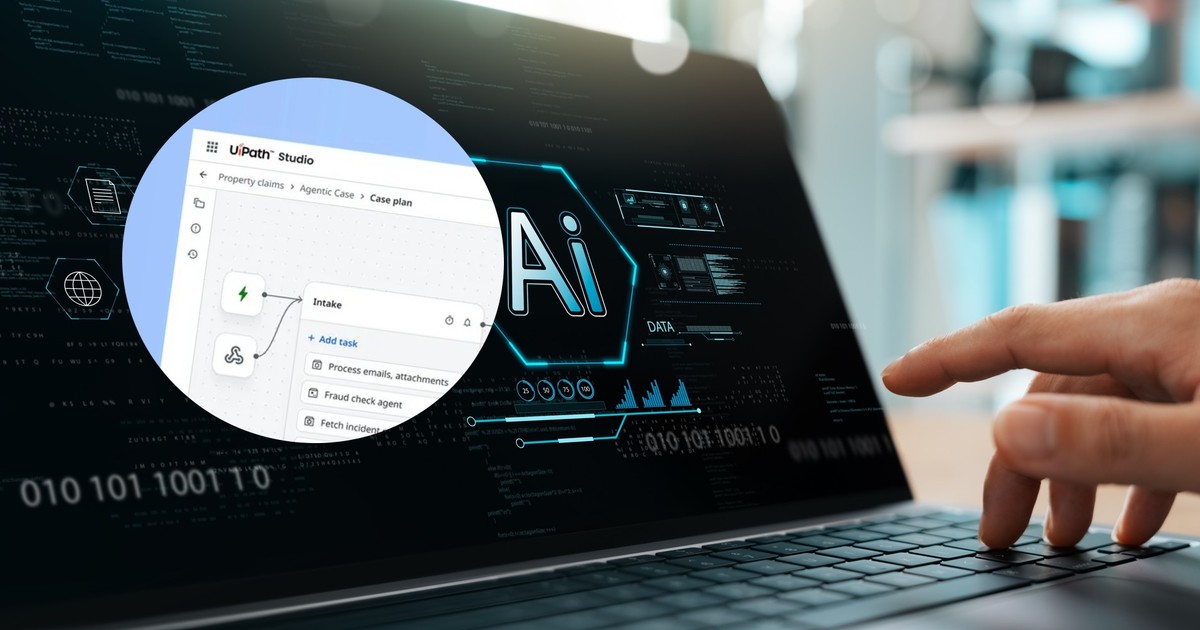
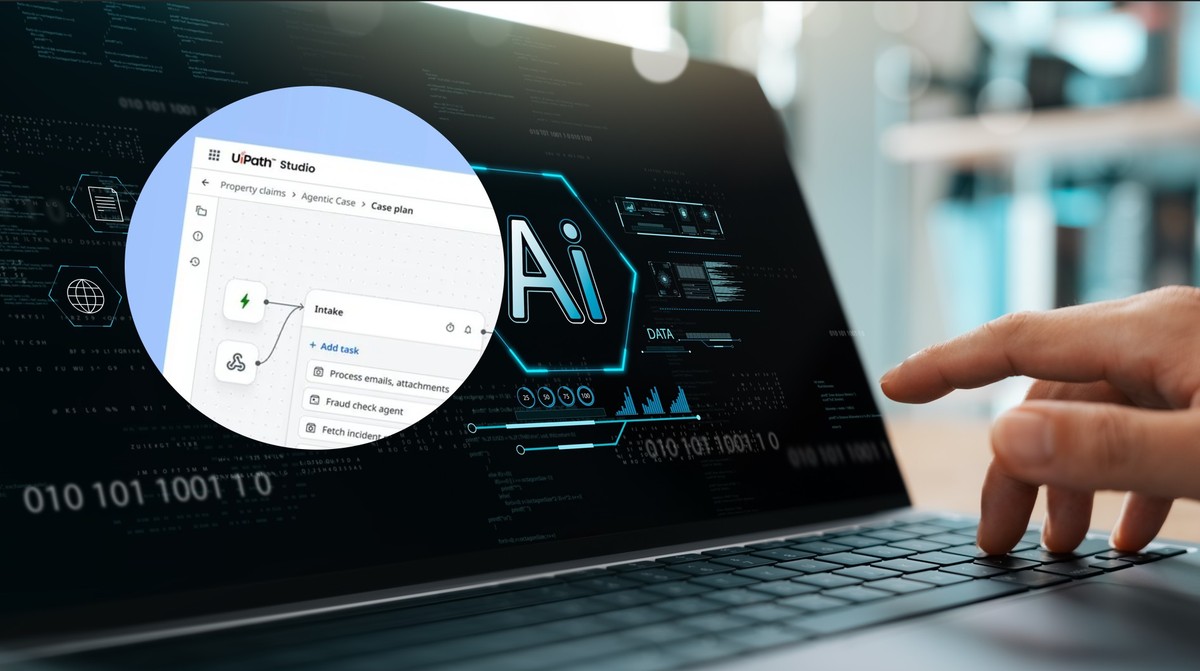
Award-winning platform allows organizations to implement ambitious AI plans not only on the scale of individual tasks, but full processes. Thanks to the introduction of the Maestro layer in 2025, companies coordinate dozens of agents – including those from external suppliers, while maintaining organizational governance, human supervision and compliance with security policies.
So it is modern, with artificial intelligence, but also with data protection. The result is faster decision-making, fewer errors, and easier compliance in environments with multiple systems and teams.
Read also in BUSINESS INSIDER
Practical applications are already there seen in finance, procurement, healthcare, insurance, public sector, supply chains and manufacturing. In banking, AI agents speed up the lending cycle by automating, for example, data extraction or detecting inaccuracies in documents, and also support anti-fraud teams. In public administration and large corporations, agent-based mail processing, classification and redirection of notifications, and automatic content summaries shorten response times and relieve the workload of operational teams.
A transformation plan for companies
Daniel Dines, founder and CEO of UiPath, emphasizes that the “Time” distinction is not only prestigious, but also practical for companies planning transformation. — Since the establishment of our company, we have been striving to unleash human potential. Our platform allows specialists to automate more and more processes and focus on the highest value tasks, and reduces the costs and risks of organizational development. The distinction from Time magazine confirms both our engineering innovation and constant focus on customer needs. Just for them, we have created an AI-based platform that gives them the freedom to act intelligently, flexibly and effectively on a global scale. We are proud that we can support organizations of all sizes in reaping real benefits from transformation based on artificial intelligence – he argues.
For business it is a signal that agent-based automation is moving from the experimental phase to critical infrastructure. These types of solutions not only increase the efficiency and resiliency of operations, but also enable the safe scaling of AI initiatives where integration, compliance and governance have previously been barriers.
In this sense, platforms like UiPath have the opportunity to change the way companies operate. They replace point automation with a coherent layer that connects people, systems and agents into a single, measurable value stream.
Read also: Shorter working hours, same efficiency. AI will help companies balance the six-hour workday
This is how it works in practice
In practice, working with a platform such as UiPath begins with choosing the process that “hurts” us the most today, e.g. places with queues of applications, manual copying of data, many exceptions and a high risk of error. The business team with a process analyst describes the process step by stepindicates the source systems and decisions that humans must make.
AI agents are designed on this basis – everyone has a clearly defined role, set of rights and context, i.e. rules and policies that they must follow. Agents are triggered by events, e.g. receiving an e-mail to a specific mailbox, creating a ticket in the CRM platform or the appearance of an invoice in a folder, and their work is coordinated by the orchestration layer (e.g. Maestro), which monitors queues, priorities and response time.
This is an example of an automated process using the UiPath platform:
You can automate much more than single clicks on the interface. In finance, agents take over the handling of liabilities and, for example, download invoices from the post office or supplier portals, extract data from documents, check compliance with the order and budget, and prepare assignments for approval in the ERP system.
In the area of sales and customer service, they classify correspondence, they create case abbreviations, complete records in CRM and propose answers based on basic knowledge, leaving only verification to the consultant. In the supply chain, they monitor the availability of goods and shipment statuses, detect anomalies and initiate corrective actions. In HR, they conduct onboarding from signing documents, through granting access, to sending the training plan. In IT, they solve simple incidents, reset passwords, create accounts and update configuration documentation. The applications can be multiplied.
The strength of such a platform is the combination of automation, document understanding and natural language with integration into company systems. The AI agent can read the contract, detect missing attachments, refer to company policy and take action in SAP, Salesforce or ServiceNow. If it encounters an exception, it forwards the case to a human with a full audit trail and a suggestion for the next step. With orchestration, you can chain agents into action chains, distribute workload, resume tasks after errors, and implement changes without downtime.
The important thing is that automation does not come at the expense of security and compliance. Agents' access is granted in the least privilege mode, secrets are managed by the “safe”, and logs and decisions are sent to the central register. GDPR, data retention and segregation of duties policies are enforced at the platform level, a Human supervision remains enabled where required by law or risk.
Read also: AI agents allow you to save and earn. This can be your strong competitive advantage
We cannot escape the future
Companies should be interested in agents because they allow you to change the work profile of teams from manual “pushing” tasks to supervision, decision-making and exception handling. Lead times are shortened, the number of errors and complaints decreases, and it is easier to scale operations seasonally and between markets without a proportional increase in employment. At the same time, transparency increases: every step is measured, comparable and optimizable. This makes it easier to talk about return on investment.
AI agents can also quickly wrap legacy systems in modern interfaces and processes without costly migrations. Thanks to this digital transformation is accelerating and project risks are decreasing. From the management's perspective, it is not only savings, but operational resilience. Work takes place 24/7, and process knowledge does not disappear with employee turnover.
Is this the future? Definitely yes. The advantage today does not come from individual macros or bots, but from a layer of AI agents that combines people, systems and data into a coherent decision-making and execution mechanism. Organizations that implement such solutions earlier and wisely will test ideas faster, scale them cheaper and manage risk better. They will also increase productivity. All this translates directly into competitive advantage. But aren't such systems too expensive?
Price for a different type of work
The cost of implementing UiPath depends primarily on the scale and complexity of the automated processes. In a pilot model for a medium-sized organization, e.g. when automating the handling of business trips, an intelligent agent built in UiPath Studio, configured on predefined prompts and the Travel Policy context and supported by the Web Summary Tool for hotel searches, allows you to shorten the query processing time from hours to minutes. The total cost of such a scenario with one process and a limited number of users is approximately PLN 8-9 thousand. hole. annually (approx. PLN 29-32 thousand).
When a company automates the entire process chain – from reporting a need to payment or decision – AI agents verify compliance with the policy, place orders in external systems, update notifications, e.g. in ServiceNow, and in non-standard situations, allow human involvement. Everything is supervised by Maestro, who monitors instances, resumes tasks after errors and enables updates without downtime. Such a scale (several dozen business users, more processes) costs around PLN 30,000-35,000. hole. annually (approx. PLN 100-127 thousand).
In large organizations where automation becomes an element of the operational infrastructure, e.g. ticket classification and redirection systems with integration with Outlook 365 and Slack, content summaries with generative models, human-in-the-loopdata quality control, combining supervised and unsupervised processes – the annual budget is usually in the range of 160-175 thousand. hole. (approx. PLN 580-620 thousand), including the scope of license, process configuration and integration. These amounts do not include the annual subscription to the UiPath platform itself, the price of which depends on the specific offer and purchase date.
Platforms with AI agents, such as UiPath, are not primarily cost-cutting tools, although they can provide tangible savings. Rather, it's a technology layer that enables faster experiments, easier compliance with regulations, and keeps people doing more interesting work than copying data.
Author: Grzegorz Kubera, journalist of Business Insider Polska