The EU promises financial aid to Ukraine, but hesitates at the Brussels summit precisely on the plan regarding the frozen Russian assets. What is Belgium threatening?


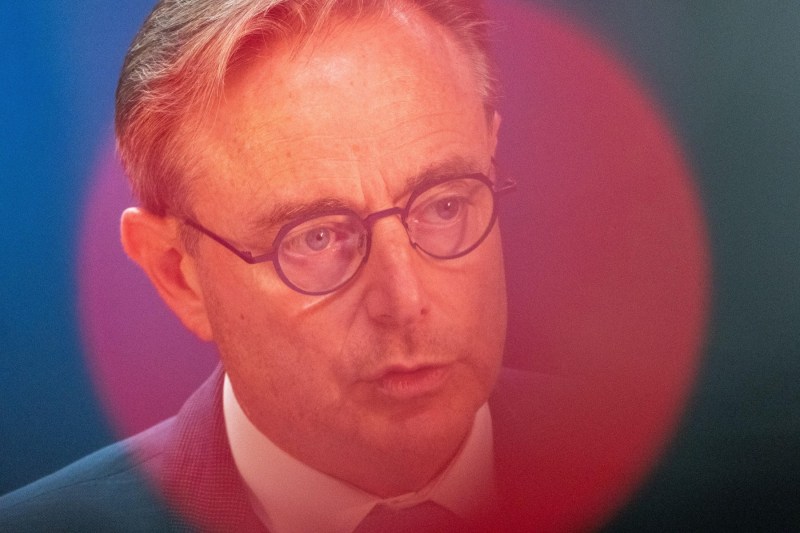
Belgian Prime Minister Bart De Wever during the European Union Heads of State and Government Summit at the European Council in Brussels, Belgium on July 26, 2025. Illustrative image. PHOTO: Martin Bertrand / Alamy / Profimedia
EU leaders agreed on Thursday to meet Ukraine's urgent financial needs for the next two years, but did not explicitly approve the use of frozen Russian assets to give Kiev a bigger loan, after Belgium raised concerns.
“The European Council is committed to meeting Ukraine's urgent financial needs for the period 2026-2027, including for its military and defense efforts,” states the text agreed at the Brussels summit by all EU leaders except Hungary.
The document, seen by Reuters ahead of its official publication, called on the European Commission to present “financial support options based on an assessment of Ukraine's financing needs” as soon as possible.
The text also stated that under EU bloc law, “Russia's assets should remain frozen until Russia ends its war of aggression against Ukraine and compensates for the damage caused by its war.”
However, the text did not explicitly support using the assets to finance a “repair loan” worth around 140 billion euros ($163 billion), as proposed by the Commission with the support of many EU member states.
The latest draft removed a sentence from the previous version of the conclusions, which read: “The European Council therefore invites the Commission to present as soon as possible, based on an assessment of Ukraine's financing needs, concrete proposals on the possible gradual use of cash balances associated with Russian fixed assets, in accordance with EU and international law.”
Many EU diplomats expected European leaders to ask the Commission to present a formal legal proposal on the plan for the reparations loan based on Russian assets.
But Belgian Prime Minister Bart De Wever, whose country holds Russia's frozen assets through securities depository Euroclear that could be used in the plan, made three demands to ensure his country would not bear all the risks.
“If the requirements are met, we can move forward. If not, I will do everything in my power at the European level, but also at the national level, politically and legally, to stop this decision,” said De Wever, upon arrival at the Brussels summit on Thursday.
He called on all EU member states to share the costs of any legal action taken by Russia and to contribute financially if the money had to be repaid. He also said that frozen Russian assets held by other countries should be part of this plan.
“There needs to be transparency about the risk. There needs to be transparency about the legal basis for this decision,” said Bart De Wever.