The Governor of the Bank of England says the effects of Brexit offer a warning to the world about trade barriers


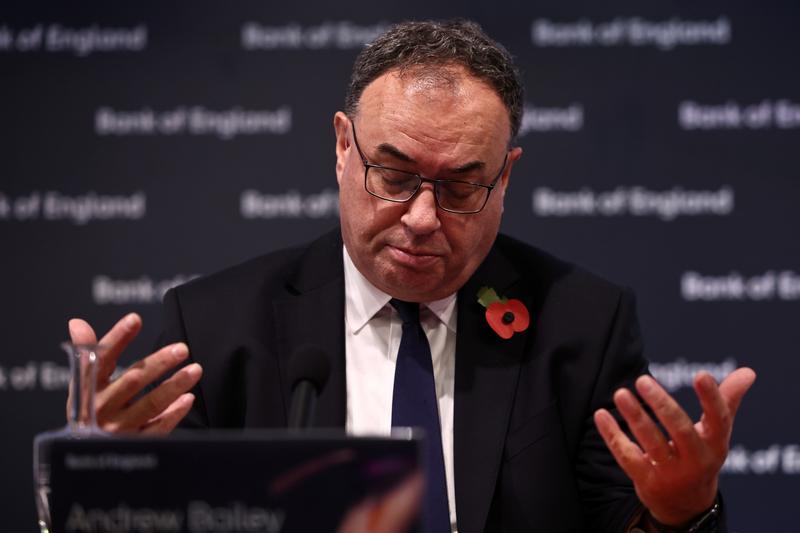
Bank of England Governor Andrew Bailey Photo: Henry Nicholls / PA Images / Profimedia
Britain's exit from the European Union is likely to continue to hurt the country's economic growth in the coming years, providing a warning to the world about the damage caused by the creation of trade barriers, Bank of England (BoE) Governor Andrew Bailey said on Saturday, according to Reuters.
The BoE has long forecast that the Brexit vote in 2016 would hurt exports due to regulatory frictions, despite the 2020 deal to maintain tariff-free trade between the UK and the EU.
“If you ask me what is the impact on economic growth … the answer is that for the foreseeable future it is negative, but over the long term (horizons) there should be a positive counterbalance, albeit partial,” Bailey told the Washington meeting of the Group of 30, an international advisory body that includes central bankers and financiers.
Financial leaders from around the world met in Washington this week for the annual meeting of the International Monetary Fund, where the impact of US tariffs was one of the main topics of discussion.
According to the BoE governor, Brexit highlighted that businesses can adapt to tougher trading conditions, but that this takes time and growth will still be lower.
“Make an economy less open and it will restrict growth, although over the longer term trade will adjust and rebuild. And that seems to have happened. The same argument applies to the world economy and tariffs,” explained Andrew Bailey.
The UK government's Office for Budget Responsibility estimates that Brexit would reduce Britain's long-term productivity level by 4% compared to the scenario in which it had remained in the EU.
Bailey noted that the aging population also poses obstacles to economic growth.