New harsh criticisms of the Superior Council of Magistracy towards the Government: unacceptable attitudes. Persevered in the attitude of defiance of the judicial authority


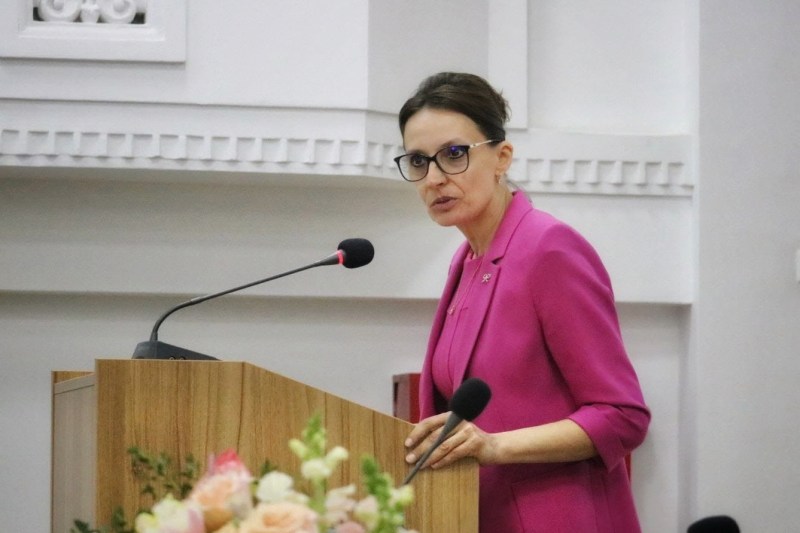
Elena Costache, CSM president. Photo: National Institute of Magistracy
The SCM again accuses the “climate of hostility created against the magistrates, through positions of the political factor and through media campaigns that have sought to discredit its judicial system and to blame it for the economic and social situation in which Romania is”. The reaction comes on the day when the Constitutional Court postponed, for the second time, a decision on the Bolojan Government project to amend the Special Pension System, which has generated harsh criticisms of the Superior Council of Magistracy and protests of prosecutors and judges.
In a statement sent on Wednesday, the SCM says that “the judicial authority is facing an exceptional severity generated by the unacceptable attitudes of some exponents of the political factor against the judicial system, which culminated in the initiation and adoption of the legislative approach to the modification of the judges and prosecutors”.
“There is no concern regarding the impact of the political factor's steps on the independence of justice”
“On several occasions, the Superior Council of Magistracy drew attention to the risks caused by the hostility climate created against the magistrates, by taking positions of the political factor and through media campaigns that aimed to discredit its judicial system and to blame for the economic and social situation in which Romania is located.
The aspects reported by the Council are still topical, as none of the cases that generated the reaction of the judicial system has been removed, as there is no concern about the impact of the political factor on the independence of justice, which represents the fundamental guarantee of the citizen's right to a fair trial. Equally, an independent and fully functional justice is indispensable for the other professionals of the law whose activity is convergent with the same objective of guaranteeing the rights and freedoms of citizens ”, accuses the SCM.
The representatives of the institution headed by Judge Elena Costache also claim that, “despite the significant period of time passed from the firm reaction of the judicial system, the political factor persevered in the attitude of challenging the judicial authority, not an opening for dialogue and honest cooperation with its representatives, but on the same rhetoric Romanians ”.
As the Bolojan government wants to modify the special pensions. The law, blocked at the CCR
The reaction on Thursday is part of a series of criticisms launched by the SCM after the Bolojan government initiated the draft modification of the magistrate's pension system, for which the Executive assumed the responsibility in Parliament on September 1. The project was stipulated that the changes would enter into force on October 1, but the law was challenged at the Constitutional Court by the Supreme Court. On Wednesday, October 8, the CCR postponed, for the second time, a decision on this law.
The project on magistrate's pensions changes includes the following changes:
- Establishing the retirement age for magistrates at the standard age of the public pension system, respectively 65 years.
- To retire the magistrates will have to be 35 years old. Now, magistrates can retire if they are 25 years old.
- The pension of the magistrates will not be able to be more than 70% of the last net salary collected. Now, it is 80% of the last gross salary collected.
- For the magistrates who are currently in office: the new staggering of the increase of the retirement age for magistrates, by adding an additional period of 1 year and 6 months, until 2036.
By 2036, there are transient norms – the magistrates will be added, gradually, every year, one year and six more months at the retirement age, ie it will increase gradually. From 2036, the retirement age will be at 65.
Magistrates will be able to retire in advance, provided they are 35 years old, but if they are not 65 years old, an annual penalty “2% until the standard retirement age in the public system” will be applied.
The project has generated harsh reactions in the judicial system and led to the triggering of protest actions at the level of courts and prosecutor's offices throughout the country.