INTERVIEW “A multi-level operation.” Political scientist Cristian Pîrvulescu, about the messages sent by PNL and USR to PSD / “The gift” that PSD risks giving


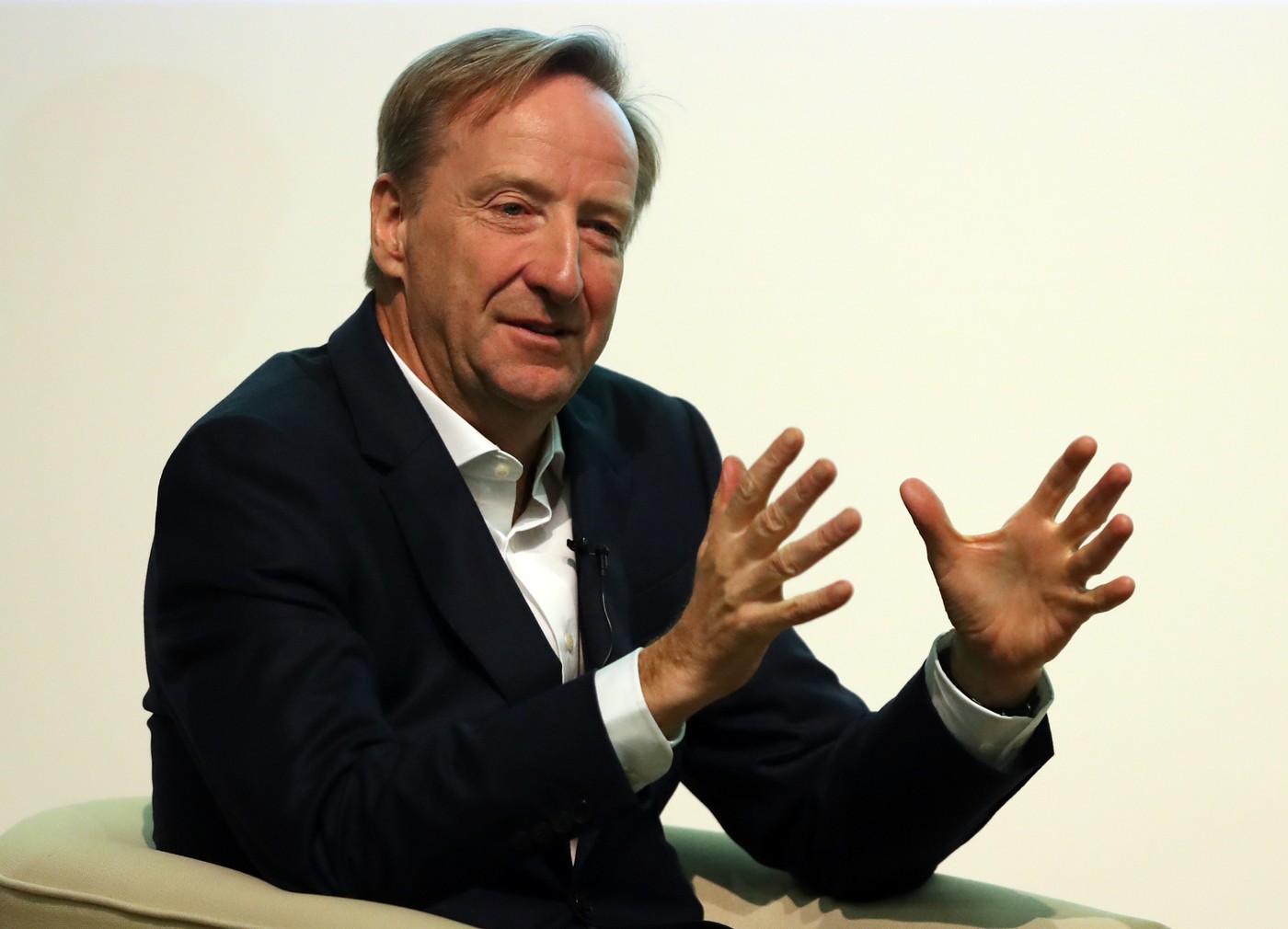
PNL and USR are trying to recover their “image” after the budget law scandalbelieves political scientist Cristian Pîrvulescu, who commented for HotNews on the signals sent by the two parties to the PSD. In a dialogue with HotNews, he stated that the PNL-USR move increases PSD's political costs in the event of a no-confidence motion and also explained what can happen if the PSD votes on a no-confidence motion.
USR and PNL had separate meetings on Monday evening, but at the end of them the two parties each came out with a similar decision: if PSD will create a government crisis by overthrowing the current Government, then neither PNL nor USR will negotiate a future government with the social democrats.
In this situation, practically PNL and USR send a clear message to PSD: either with us, or with AUR. If the PSD votes a censure motion in the Parliament against the Bolojan Government, then the only option for the social democrats to form a future majority are those from the AUR, because only with the UDMR they would not gather the necessary votes.
HotNews spoke with the political scientist Cristian Pîrvulescu to understand what may be the unseen reasons for the decisions of the PNL and USR and what are the options that remain on the social democrats' table.
The real stake of PNL and USR seems to be the gradual construction of a right-wing pole around Prime Minister Ilie Bolojan, believes Cristian Pîrvulescu.
“A preventive signal intended to increase political costs for the PSD”
– HotNews: What does this almost identical decision from PNL and USR mean, coming on the same day?
– Cristian Pîrvulescu: The simultaneous declarations of the two parties represent an operation on several levels. First of all, it is an attempt to recover the image after a real surrender to the Budget, publicly presented as a rational and thoughtful decision in the interest of political stability in a difficult geopolitical context.
Secondly, a preventive signal intended to increase the political costs for the PSD in case of an attempt to change the prime minister or trigger a crisis.
Thirdly, a reinforcement of a narrative already settled in the public space, in which any movement of the social democrats is read as destabilization, not as a legitimate negotiation within the coalition.
The “electoral gift” that PSD risks giving to PNL and USR
– Are PNL and USR trying to limit the possibility of a censure motion from the PSD and thus somewhat isolate the social democrats in their own coalition?
– The censure motion is not a tool that the PSD can use against its own government without publicly taking responsibility for the destruction of the coalition. PNL and USR are not so much trying to block a formal mechanism as making its political price prohibitive for PSD.
If they succeed in cementing the image of an isolated and destabilizing PSD, any step by the social democrats towards a motion automatically becomes a confirmation of that narrative – and an electoral gift to the other two parties.
The main scenario, if the PSD votes for a no-confidence motion
– Let's take the scenario of the fall of the Government with PSD votes. What practically comes next? Without an alliance of PNL and USR with PSD, two options remain: either PSD makes an alliance with AUR, or PNL and USR make an alliance with AUR. Or do you think a minority Government will be possible?
– In the absolutely hypothetical case of a successful Motion of Censure with the PSD vote, the most likely scenario is neither a stable minority government, nor a clear and assumed alliance, but a logic of the First Italian Republic type – permanently reconfigured coalitions, the same actors in different combinations, successive governments without a coherent majority.
The minority government is fragile by definition, and an explicit alliance with the AUR has asymmetric reputational costs for all traditional actors, not just for the PSD, which, moreover, sees the AUR as an uncomfortable competitor rather than a natural partner.
“The real stake of PNL and USR”
Beyond managing the immediate crisis, the real stake of PNL and USR seems to be the gradual building of a common platform around Ilie Bolojan, which will be functional for the 2028 elections. The current coalition is thus not only a governing arrangement, but also a medium-term political fusion laboratory.
– Do you see any chance that the PSD will remain on the outside and the PNL and the USR will make an alliance, even for a minority Government, with the AUR?
– The chances are limited, but not non-existent. Such a formula would be deeply uncomfortable for the USR, whose electoral base is explicitly incompatible with the AUR, and costly for the PNL, which should justify such a rapprochement with external partners.
Moreover, the AUR itself has less to gain from institutional legitimation than from the role of pressure force in the opposition. If such a government were to emerge, however, it would be presented as a technical solution, not a political alliance, and its duration would by definition be limited. The scenario is rather a backup one to keep the pressure on the PSD.
Why is PSD postponing a decision on governance
– PSD consulted yesterday and decided to consult again in a month. Then they will decide whether to remain in government and in what form. Why do you think that the PSD postpones this moment of the final consultation in the party for so long?
– Because procrastination is itself a form of power. The Easter break gives PSD a month – enough time to observe how the situation evolves in the PNL and what the internal dynamics of the coalition will be. It also means maintaining a permanent diffuse threat to partners.
PSD knows that uncertainty works in its favor, and both PNL and USR are obliged to remain on guard, possibly making preventive concessions and avoiding escalations. In addition, a premature decision would close options that remain open for now, including obtaining better terms for a possible renegotiation of the coalition protocol.
Will the coalition change the governing protocol?
– The possibility of revising the governance protocol is being discussed at the political level, in order to impose much clearer rules. Do you think that would help the current coalition?
– Modifying the protocol would help somewhat marginally, but in no way structurally the actual functioning of the coalition. Formal protocols only work when there is already a minimum level of trust between the partners. They cannot create cooperation where it is lacking.
In a coalition where power relations are negotiated episodically and where each actor optimizes in the short term, clearer rules risk becoming instruments of mutual accusation rather than coordination.
Moreover, a revised protocol without a credible arbitration mechanism risks remaining a mere piece of paper. The only situation where review would really matter would be if all parties agreed that the cost of breaching the agreement was greater than the benefit. But nothing in the current dynamics suggests that such a moment has been reached.