INTERVIEW Former Minister of Energy on invoice prices: “Some companies do not understand that they exist because there is demand and customers”


Romania is entering a period of energy uncertainty amid tensions in the Middle East, but the reduced dependence on imports offers an important advantage, says energy expert Răzvan Nicolescu, former Minister of Energy, in an interview for HotNews.
Răzvan Nicolescu states that the great vulnerabilities in Romania do not come from the global energy market, but “from within”. Specifically: political appointments, financial blockages, fantasy projects and the lack of responsibility of some companies towards consumers.
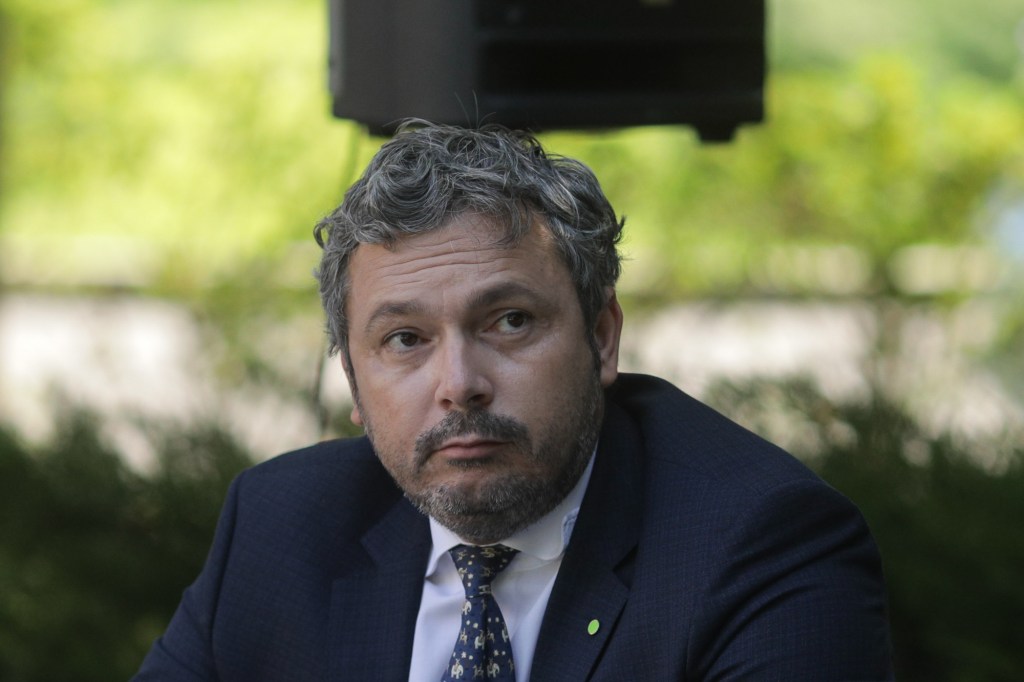
In the context of fuel price increases, Nicolescu draws attention to the fact that there are companies that do not miss the opportunity to ask for more money and only want to “skin” Romanians in these moments of crisis, ignoring business ethics. For this reason, state control authorities must be vigilant.
At the same time, the Government must avoid in any way measures such as generalized caps, which can create bigger problems in the long term, he also said.
Răzvan Nicolescu is a specialist in energy and a former minister in charge. He was also a director at OMV Petrom and Deloitte, as well as Romania's representative on energy issues in Brussels.
“Never has the world been ruled by so many madmen at the same time”
– HotNews: Mr. Nicolescu, what are the main threats in the coming period for Romania?
– Răzvan Nicolescu: The EU has given us billions of euros to modernize our energy sector. Our main threats come more from within than from without.
Outsiders did not invent a social protection scheme for electricity in which the state does not honor its obligations and does not settle what it promised.
It was not the outsiders who created the financial blockages of billions of euros with the money from the modernization fund that is not reimbursed, although the power lines were modernized with the money of the companies. It is not outsiders who push us to venture into all sorts of fancy projects, and they do not make appointments based on exclusively political criteria, ignoring professional competence.
From the outside I worry about the risks of physical and military attacks on important energy facilities. I doubt that the energy system can currently withstand a massive cyber attack, while we are massively installing equipment produced outside the EU.
We live in a difficult time, never in its history has the world been ruled by so many madmen at the same time. We dream that others will defend us and that we don't have to do anything, including at the company level. It is a wrong approach that needs to be changed quickly.
– What are our main strengths, but also our greatest vulnerabilities against the background of the war in Iran?
Răzvan Nicolescu: We have much less dependence on imports compared to others and this helps us in managing security of supply issues.
Unfortunately, however, some operators do not show concern for customers, towards consumers, especially in emotional periods when they do not miss the opportunity to ask them for more money, although this is sometimes required, sometimes not.
Some companies don't understand that they exist because there is demand and customers, and they need to be treated with more respect.
Here also appears the responsibility and institutional sobriety of some authorities who must raise their level of vigilance in delicate situations. They must check that the commercial policies of each company involved are implemented correctly.
In case of misfortunes we need to be more supportive of each other, not to flay each other. This is not only about civilization, but also about medium and long-term strategic thinking that also aims at the construction and perception of brands.
– Are you referring to a specific situation?
– In general, in all situations where there are incidents that lead to price increases, do you give importance to the relationship with customers or do you want to burn their pockets? It's about business conduct and more.
– What are the bleakest scenarios you see?
– A perpetuation and increase of the current military conflicts in the context in which the Romanian society is increasingly divided, instead of being more united.
The price of a barrel of oil is visible after 10 days at the pump
– Do you consider that the price increases at the pump in recent days are justified? How long does it take for the oil price increase to be seen at the pump?
– On average, the increase in the price per barrel is seen after about ten days at the pump. I have not seen the evolution of Platts Mediterranean quotes for diesel and gasoline and what generated the increases, whether it is the increase in profit margins on a speculative emotional background or whether there are economic, technical or commercial justifications. Best to ask the companies involved about this. They have all the data, and the Competition Council also has access to this data.
“There is the instrument of excises and taxes”
– What measures should be taken urgently at the level of the Romanian Government to moderate the increase in prices?
– First of all, the state must ensure that the market functions correctly. Secondly there is the instrument of excises and taxes. Then there is a need for a discussion regarding the level of stocks and the prices at which these stocks were realized.
– What should the authorities do to temper people's panic reactions?
– To communicate soberly, i.e. to speak after they have analyzed, not before. People need to know what we are going through and what can really be done. Trust and the decision-maker-population relationship are essential in times of crisis.
– Under what conditions would there be a risk of fuel shortages on the European market?
– The risk exists, but I think it is small, especially in our case, which has a low dependence on imports.
“All energy price increases create competitiveness problems”
– What are the economic effects of fuel price increases?
– Because we are talking about quotations in euros and dollars, inflation generates increases at the pump, and energy price increases generate inflation. In addition, all energy price increases create competitiveness problems in the economy and affect the standard of living of the population.
– What about the effects of increasing gas prices?
– In Romania, gas prices will, in my opinion, go down, not up. Next year we will have a significantly higher domestic production than consumption, and now the temperatures are already spring, which means that consumption is low.
– What measures should the Government not take under any circumstances?
– Let's avoid ceilings that can draw us into a dangerous spiral. It's quite how much money we've lost with the irresponsible caps made in the not-too-distant past on electricity.
– What measures do you think should be taken at European level?
– More interconnections and a more harmonized regulatory framework should be achieved. You can't have a market decided by marginal price and regulated by 27 different regulatory authorities. It's true, here the energy regulatory authority stands out for the level of salaries and that's all, that is, it exists only to pay salaries.
– How do you think this year will look for the energy market?
– I am cautiously optimistic, believing that 2026 can be better than 2025.