Are Keir Starmer's days at the head of the British government? Who could take his place at the forehead of the labios


With a governance drowned in self-prevolved scandals, with a party in a state of apathy and with a free popularity, British Prime Minister Keir Starmer seems to have lost his own party.
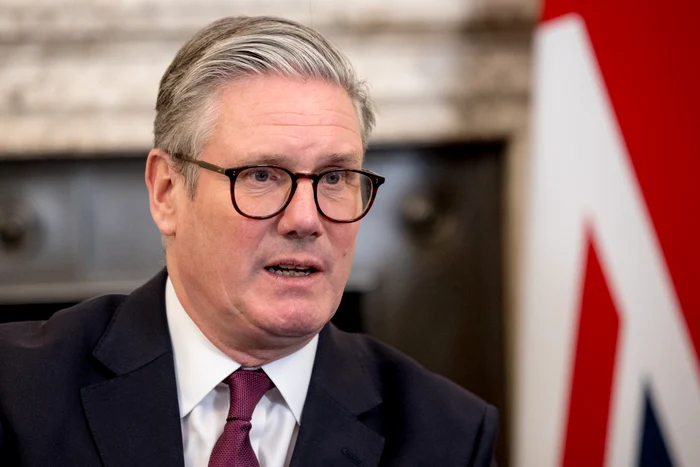
Keir Starmer, Britain's Prime Minister/Photo: AFP
Of the shadow, plans for a political puck
Far from microphones, in the westminster's corridors and in discrete meetings, an increasingly articulated plan for landing the prime minister is outlined. There is no question of “if”, say sources close to the Labor peak. It is a matter of “who” and, above all, “how”.
The opposition does not come from Reform UK or the right press, but even from the inside. The frustration increased among the Labor MPs, especially after the last controversial decisions of the prime minister: the appointment and public defense of Peter Mandelson, despite the warnings from the intelligence services, was the drop that filled the glass, writes The Guardian.
More serious is that, some ministers say, it is no longer clear what Keir Starmer wants. It does not have an articulated ideological vision, it avoids the debates about the “direction” of the government and it seems rather a manager than a political leader. “We do good things, but nothing is seen. The country feels it is in decline. People want big solutions, not minor retouching,” says a government official.
Mandelson crisis and Epstein's shadows
The last scandal, related to Mandelson's proximity to Jeffrey Epstein, detonated the latent dissatisfaction. Even after the former counselor acknowledged his involvement in “compromising” correspondence, Starmer decided to defend him publicly, at the Parliament's questions session. It was not a proof of loyalty, but of political blindness, say his critics.
After the left -handed team reaction from Downing Street, the target of the anger moved Morgan McSweeney, the prime minister's office. But, as a former minister from the Blair era observed: “Mcsweeney is just a para-Petasnet. The real anger is directed to Keir. It is not clear if it resists until May.”
Laburiists, a party with heavy rules but with large ambitions
Unlike conservatives, which can quickly trigger a vote of confidence through the 1922 Committee, Laborists still work according to less direct rules. A leader can only be landed if 20% of parliamentarians agree for an internal challenge, which means at least 80 supporters for a counter -candidate. And if Starmer decides to stay on the ballot, the fight becomes complicated.
However, some claim that there are already movements to suggest “honorable” that it is time to withdraw. The rapid fall in the polls, the ascension of Nigel Farage and the gloomy prospects of the local elections in May are considered critical points. “There is another scandal, and the dam breaks,” warns another veteran of the party.
Succession: a goal of leaders or an opportunity for Burnham?
Here begins the great dilemma. Even if the landing plan takes shape, the question remains: who comes in the place of Starmer? Angela Rayner was the natural candidate, but her withdrawal from the government complicates things.
Names conveyed: Ed Miliband (a return to the past?), Louise Haigh, feared organizers, but without current network, or wes streeting, charismatic, but perceived as a politician too close to the right and with a fragile position after the weak result in the elections.
But the one who draws more and more attention is Andy Burnham, the mayor of Manchester. He is not a parliamentarian, but he has popular support, an articulated speech and an image of politician close to people. Moreover, he is the only Labor leader with a positive net rating in national polls.
A sick deputy from Manchester would be ready to give up his place for Burnham to enter Parliament. Sources say that it is “ready to return” and that it is supported by the “mainstream” network, a movement that can quickly become an electoral vehicle.
A new leader – strategic solution or mistake?
However, among those who will leave the Starmer, there is an uncomfortable question: if the problem is not only the man, but the system? “Do we change the leader, but if he fails too? If we seem to play the governance like the Conservatives?”, A minister asks rhetorically.
In addition, external challenges are huge: economic crisis, collapse of public services, migration, social dissatisfaction. Even Hatcher or Blair leaders would have difficulty in such a climate, say voices from within.
What can the Starmer government save?
In the prime minister's close circle, the tone is of deep dissatisfaction. “He worked all summer to rethink the governance, but was pulled down by Rayner, by Mandelson scandals, a team that communicates poorly,” says a counselor.
However, Starmer's allies believe that there is still a way: to return to the essence, what he promised – a pragmatic, decent leader, which brings change through small, but concrete steps. They argue that Farage and populism should not be countered with a copy, but with an authentic alternative.
But with a crisis of migrants boats on the horizon, a budget that is painfully announced and a party on the verge of revolt, the real question is no longer whether Starmer wants to continue. But if anyone will leave him, concludes The Guardian.