The origin of the Romanian lion. The name desired by Cuza and the purchasing power in the time of Carol I

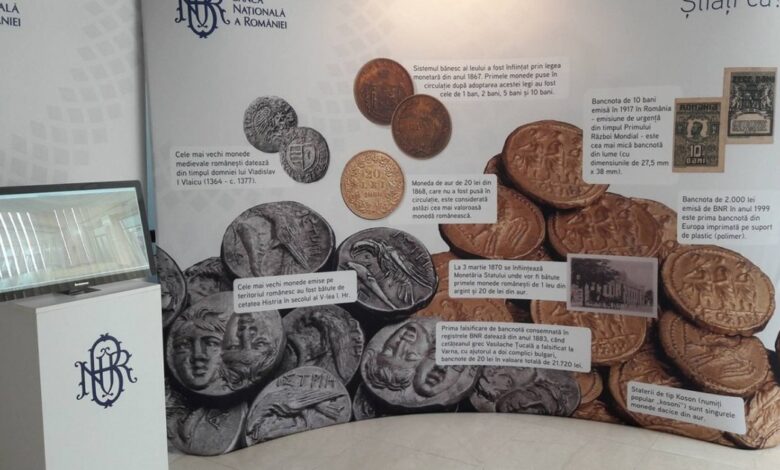
The name of our national currency comes, above all, from the symbol on the Dutch money that circulated on the territory of the Principalities since the 17th century. In the 19th century, the Romanian leu was so strong that you could fill a grocery basket with just one coin.
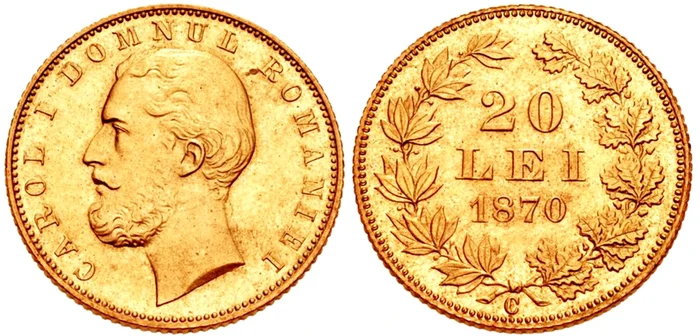
The Romanian lion in 1870 PHOTO wikipedia
The Romanian national currency is actually inspired by the Dutch money that circulated in the Middle Ages through the Romanian Countries. In fact, the Romanians called “lei” all the coins that circulated in the Middle Ages and at the beginning of the 19th century on the territory of the Principalities. Only in 1867, an official Romanian currency appeared, during the reign of Alexandru Ioan Cuza. At the end of the 19th century, the Romanian currency was so strong that with a single leu you could fill a basket with bread, wine, meat and even potatoes.
The Romanian leu was in the beginning….the Dutch leu
Romanians rarely had their own currency in the Middle Ages. And that's because few medieval rulers had such political stability and prosperity in the country that they could afford to mint their own currency. One of them was Stephen the Great. He ordered the minting of silver coins called “thick”. Otherwise, Romanians used a lot of foreign coins. Of these, the leeuwendaalder or Dutch thaler had a large circulation. These Dutch thalers issued in the United Netherlands Provinces had a lion rampant (ie raised on its hind legs) on the reverse. The first issue of these thalers was put into circulation in 1575 in the Dutch province of Holland.
They arrived in our country in the 17th century, during the reign of Matei Basarab. At that time the Dutch thaler was the most common silver coin of high value in the Principalities, but also in the Balkan Peninsula. And that's because he had arrived in the Ottoman Empire following trade exchanges with the Dutch. Without knowing the Dutch name they turned the thaler into a leu. I mean, that's what they called this type of coin, because of the lion on the reverse. Even after, in the middle of the 18th century, the issuance of the Dutch thaler ceases, the Romanians called all coins, leu. Although many foreign currencies were used in the transactions, especially Austrian, Russian or Turkish. They were all lei for the Romanians, that's how much the Dutch thaler impressed them. However, the lack of a monetary unit meant an obstacle to economic development.
Monetary experiments, from the coins of Sadagura to the “Romanate”
This was also noticed by the great empires that roamed the Romanian territories. Hello Russians. During the Russian-Turkish wars, the Romanian Principalities were occupied several times by the tsarist armies. For example, during the Russo-Turkish war of 1768-1774, ended with the peace of Kuciuk-Kainargi, the Russians imposed the use in the Romanian Principalities of a unique monetary system with bronze coins minted at Sadagura, a locality located near Chernivtsi, North Bucovina.
This Sadagura coin had a fixed value recognized in both the Russian and Ottoman systems and bore the name para. The paraua had on the obverse two oval shields with the coat of arms of Romania and Moldavia, under the crown of the Russian Empire, a symbol of tsarist dreams regarding the future of the Principalities. On the reverse was the nominal value, one par, two pars and so on. Also under Russian influence, during the Organic Regulations, in the third decade of the 19th century, the unification of monetary rates in the Romanian Principalities was attempted for the first time.
However, the system did not work very well and was abandoned. The same happened during the time of Alexandru Ioan Cuza. In 1860, the ruler of the United Principalities of Moldavia and Wallachia wanted to introduce a national currency. The model taken was the French franc, and the Romanian currency had to be called simply “Romanian”. Later, it was also used other names such as “romanat”, for example. In fact, the subdivisions of the “Romanian” were also found, which were the money or banișori. Cuza had also negotiated, through his ministers, a contract for the execution of the coins with a number of banks in Paris. Cuza's ideas never came to fruition because Napoleon III withdrew his support for this project. The principalities were vassals of the Ottoman Empire and no one wanted a diplomatic conflict. More precisely, the coins were to be minted only with the knowledge and approval of the suzerain power, which was obviously not very pleased with the increased independence of the Principalities.
The Lion of Charles I, a powerful European coin
Given that the majority of the population called the money lei, that is how the name of the national currency remained, minted for the first time in 1867 during the reign of Carol I. The monetary law of May 4, 1867 provided for the issuance of the gold leu of 5, 10 and 20 lei, the silver one of 1 and 2 lei, but also the subdivision, called ban, executed in bronze with the value of 1, 2, 5 and 10 money. In other words, the first leu represented a coin with 5 grams of silver and 0.3 grams of gold. In 1870, the State Mint was established in Bucharest. After obtaining state independence, gold coins of 20 lei and silver coins of 1 leu were put into circulation, all minted in Romania. The first Romanian banknotes appeared after 1877 and were made according to the design of the French artists Bramtot and Duval, based on the drawings made by Nicolae Grigorescu.
The printing of the banknotes was done in Paris. In the 19th century, the Romanian currency, i.e. the leu, was quite strong. Having 20 lei in your pocket was something. To give you an idea, in 1881 a kilogram of bread cost 23 bani, a kilogram of potatoes 12 bani, pork 75 bani, sheep's cheese 84 bani and an egg 8 bani. It is estimated that a Romanian could buy meat, potatoes, wine, eggs and a loaf of bread (not even a kilogram) with one leu. Right up to the threshold of the First World War, the Romanian lion resisted. Later, due to foreign loans but also due to the transition to the fiat currency regime, i.e. banknotes printed without an equivalent in gold, plus the problems following the unification of the monetary systems of the new provinces, the Romanian leu collapsed gradually, gradually.