Leninian policy “return to the roots” – the so -called Korienization, implemented since the 1920s, promoted the development of national minorities in the spirit of communism. In Leningrad, as in other parts of the USSR, numerous Polish institutions were created – schools, cultural organizations and publishing houses – supported by the state.
Corrienization was gradually replaced by brutal Stalinist centralization, based on the idea of Russian nationalism as a binder of the Empire. National minorities began to be seen as a potential threat to the unity of the country of councils. Institutions were opened recently, autonomous areas were liquidated, the possibility of using national languages was limited.
A great terror has become a turning point. Leningrad, located only several dozen kilometers from the border with Finland, was recognized as a border zone requiring “purification” of uncertain and anti -Soviet elements. In this context, brutal repression began at Poles who took on a scale unheard of in other parts of the USSR. As a result of purges, the Polish community was almost completely destroyed in a city founded by Piotr the Great.
Political Police of the Leningrad District, led by Latvian Leonid Zakowski, began a brutal hate campaign. In the collective memory of the inhabitants of the second largest city of Russia, one word arouses the threat to this day – Szpalenaja. It was on this street that the NKVD detention center was located, in which the infamous “three” operated – special committees that, without court and the right to defense, issued judgments in matters of “anti -Soviet elements”. Only one day, September 26, 1937, 93 death sentences were passed. 92 was made – one of the convicts managed to commit suicide.
Continued article under video material
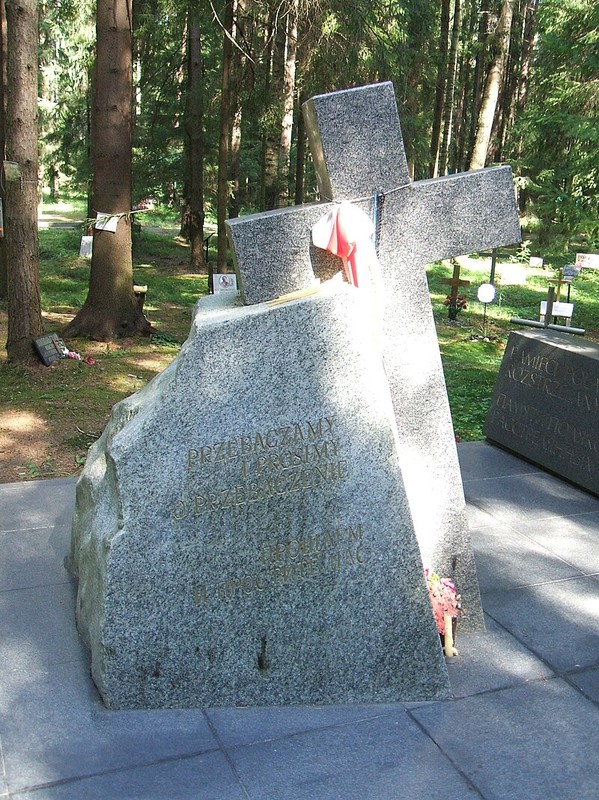
The murdered secretly were buried at night in the forests on the outskirts of the city, in today's cemetery in Lewaszów (Lewaszów Pustków). Currently, it is a place of memory at which a stone Polish cross and a granite block dedicated to victims of repression from 1937–1938 were erected. Hundreds of trees in this symbolic forest are decorated with photographs and epitaphs commemorating the murdered.
Monument to the murdered Poles at the cemetery in LewaszówPublic domain/Wikimedia
One of the witnesses of the night burials was Aleksiej Wołczenkow's teenage then: “They brought beams and built a high fence. Nobody knew what was behind him. Only at night cars arrived. […] It was impossible to approach – the guards with dogs guarded the area. Nobody said anything in the village, it was uncertain times, you had to keep the tongue behind the teeth. People were afraid to open their mouths. “
For decades, the inhabitants of St. Petersburg did not know the fate of their loved ones. Even in the 1960s, official letters informed families about the death of relatives allegedly due to cancer in distant corners of the USSR – most often during the war. The truth saw the light of day only after the collapse of the communist system.
“Terror has just begun against Soviet Poles”
Repression in Leningrad began with a hit the remains of the Polish intelligentsia – the one that, despite the revolution, remained in the USSR. For many of them, the return path to the reborn Republic of Poland has been closed. An example would be the history of the Makowski family.
Alfons Makowski, a colonel of the tsarist army, did not continue the military service after the Bolshevik took power. He had nine children. The family led a prosperous life – they lived in a large house, employed service, and spoke only Polish. When they planned to return to Poland, the Soviet authorities closed the borders. In 1937, the senior of the family was already dead. The family was supported by the oldest: Stanisław and Władysław. One day there was a doorbell.
Jurij's younger son recalls: “At the same time, three men entered two sides. Two of them had a weapon. They showed a document to the mother. Mama read loudly and slowly:” order to conduct a search and arrest according to the results “. These words stuck in my mind. They woke up Stanisław. He understood everything right away.”
After two days, NKVD also took Władysław. The reason for the arrest was not known. Yuri Makowski remembers the only thing that could arouse suspicions: “Shortly before that, Staszek took a book to work in Polish. Maybe he wanted to read during the lunch break? We could not come up with another reason. We did not allow the thought that an organized terror began against Soviet Poles. Why?
The family was announced that the brothers were sentenced to “ten years of isolation without the law of correspondence”. They never came back. Many years later their names were on the so -called Lewaszów list, a list of victims of great terror.
The repression also affected those Poles who had previously tried to cut themselves off from their roots. Irena Kwiatkowska, who was only 12 years old in 1938, later said that being a Pole over Nowa meant “great pain and suffering.” She remembered that year the most – the arrest of her father, his shooting, confiscation of property, deportation.
“The small windows were shouted straight in the face that we are the enemies of the people”
A similar fate met many intellectual families living in the former capital of the Romanow Empire. At the house of Irena Borodziuli, daughter of a veterinarian and biology teacher, Polish traditions were cultivated – a Christmas tree was dressed for Christmas, mazurkas were baked, “Pan Tadeusz” was read. Her grandmother, the owner of the estate near Bialystok, moved from Warsaw nad Neva, following her husband before the revolution.
In the summer of 1937, Irena's father, Adam Borodzula, was arrested.
“We sat still and they searched the apartment. We were not allowed to get up”
– the daughter recalled. When he left the house, he had a sign of his status – a brown wallet with a silver monogram. He was sentenced to “ten years of isolation without the law of correspondence”. His brother, priest Józef Borodzula, has been imprisoned in labor camps for years. Adam's wife and daughter survived the siege of Leningrad, all the time remembering the experience from Szpaleja Street – “We were shouted straight in the face from small windows that we were the enemies of the people.”
In 1960, the family received a letter about Adam Borodziuli's “rehabilitation”. Only years later, thanks to Lewaszów list, did they know the truth – The death sentence was carried out two months after the arrest.
On November 1, 1993, Irena went to the place of the alleged burial of her father: “Dark, Dark Fir – thousands of hands tied trees with photos and documents of their loved ones.”
Poles in Leningrad, due to the proximity of Europe and historical relationships of the city with Polish emigration and intelligence, were perceived by the Soviet authorities as a “foreign element” and potential spies.
As a result, the scale of repression was greater there than in other regions of the USSR. In Moscow, persecution focused mainly on the management of the Communist Party of Poland, Komintern activists, journalists and heavy industry employees.
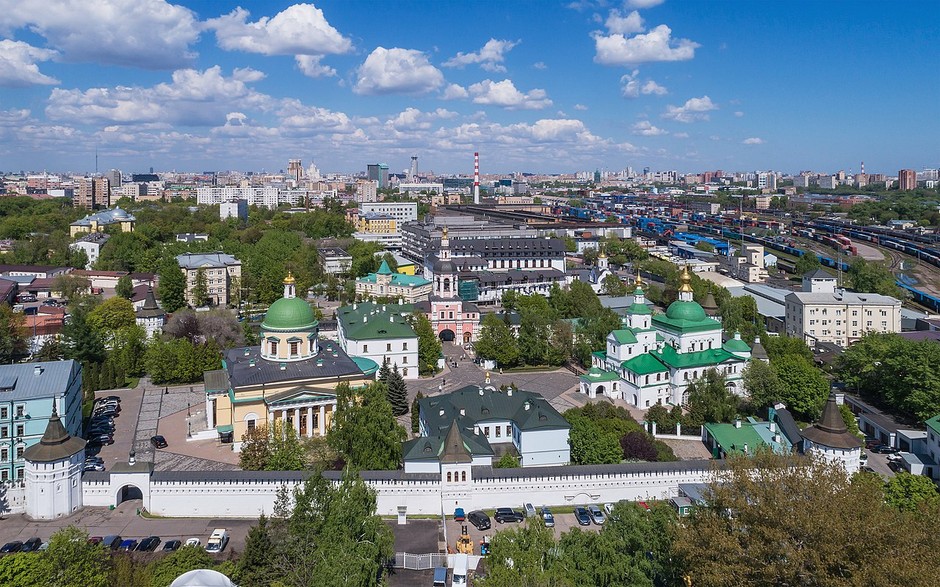
Terror in the capital of the state, as the head of the Moscow District NKVD, was initially managed by Polish communist Stanisław Redens, who was replaced by the known from Leningrad Zakowski. He believed that “with the arrested one should not be stuck, beat after the murder, beat without restrictions.” Detailed children went to Daniłowski's monastery, which served as a switchboard before sending them to orphanages. One of the orphans was then eight -year -old Olgierd Wołyński, who after years described the communist environment as “a mafia from which there was no way out.”
Daniłowski monasteryA.Savin, Wikipedia
The moods in the Soviet Union in 1938. It is well reflected in the account of Janina Dobrzańska, a communist of Polish origin: “Each subsequent arrest gets off my balance. I have a terrible mood, I don't know where to hide, where to get away – just not to see, not hear, don't know anything about these arrests. But there is no escape from them. We live like rabbits in a snake It disappears.
I’m Ashley Davis as an editor, I’m committed to upholding the highest standards of integrity and accuracy in every piece we publish. My work is driven by curiosity, a passion for truth, and a belief that journalism plays a crucial role in shaping public discourse. I strive to tell stories that not only inform but also inspire action and conversation.