Does Europe remain alone in front of Russia? The decision that can rewrite the security map

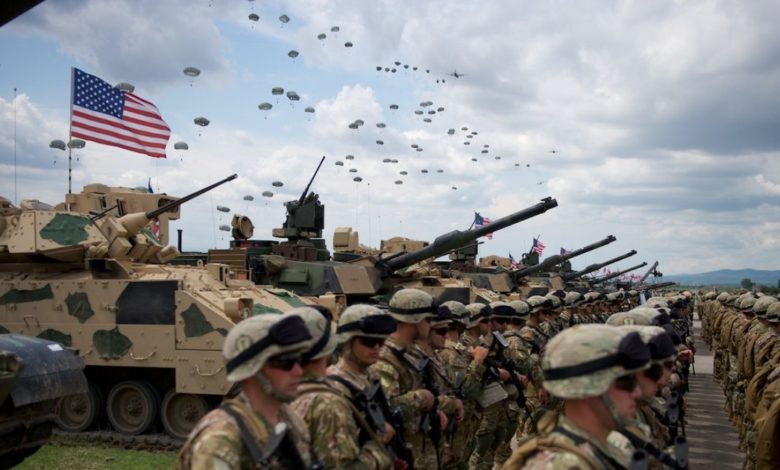
After European leaders have made a common front at the NATO Summit in June to convince Donald Trump that the Alliance takes its defense spending commitments, a new test is approaching: the future of American military presence in Europe, writes AFP.
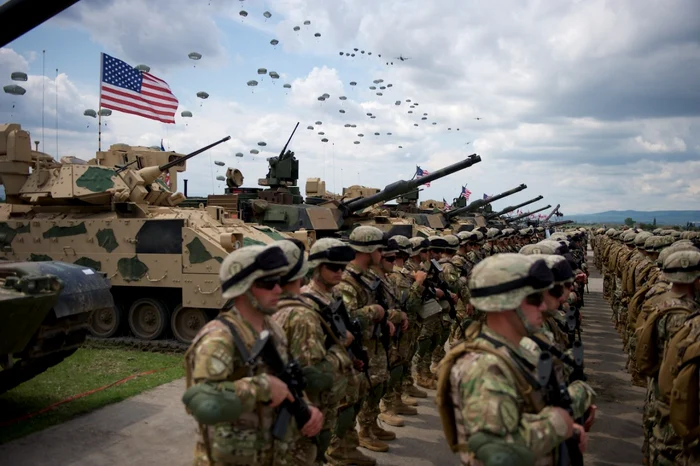
American soldiers/photo: Archive
The Washington administration is currently carrying out a large evaluation of the global conduct of American troops – a process that could lead, according to expectations from diplomatic slides, to a gradual reduction in Europe in the coming months.
This perspective, even if it is currently enveloped in ambiguity, generates anxiety among European allies, especially against the background of fears that, in the event of a deadlock in the Ukraine war, Russia could test NATO cohesion through an aggressive gesture to a Member State.
However, the current climate inside the Alliance is, at least apparently, less tense than in the first months of Trump's return to the White House. NATO leaders have obtained a verbal commitment from US officials that there will be no “strategic surprises” in Europe.
“We agreed that there are no surprises and keep the strategic strategic framework in Europe.”said Matthew Whitaker, US ambassador to NATO. He said that the results of the evaluation are expected “at the end of summer or the beginning of autumn”.
Despite the soothing signals, uncertainty persists. Regional security experts warn that a partial withdrawal of American forces is “almost inevitable”. Marta Muznik, an analyst at the International Crisis Group, argues that “it is no longer a matter if, but how fast.”
From panic to caution
The atmosphere in the European capitals is visibly calmer than in January, when Trump's return has generated real fears about the possible destruction of the Alliance. European diplomatic sources are now talking about a “prudent optimism”, fueled by the signals transmitted by Washington after the Hague summit.
“There is a reserved-optimistic mood. Much speculation, but preliminary signals are encouraging,” said a high -ranking European diplomat under the protection of anonymity. Another official, equally cautious, admitted: “There is neither panic nor despair.”
Currently, in Europe there are about 85,000 American soldiers, a number that oscillated between 75,000 and 105,000 starting in 2022, as a reaction to the invasion of Russia in Ukraine. A first step in the withdrawal could target the additional troops carried out by the Biden administration, especially the 20,000 mobilized immediately after the beginning of the war.
Even if such a reduction would not dramatically affect NATO's discouragement capacity, analysts warn that any more drastic decisions – such as closing key bases or reducing strategic infrastructure – would raise serious question marks.
Real stakes: capabilities, not just the number of troops
The problem is not limited to the mere physical presence of American troops. The United States provides advanced military capacities in Europe, such as anti -aircraft defense systems, long -range rockets and satellite surveillance resources – hard -term technologies by European allies, AFP notes.
“The defense investments decided at the Hague Summit will have real effects only over a few years”warns Ian Lesser, director of the German Marshall Fund. “For this reason, the calendar of a withdrawal becomes essential.”
Although Trump has adopted in the last year a stronger tone compared to Moscow, trying – without success – to force a conclusion of the Ukraine war, the declared intention to reduce the American military presence in Europe is in contradiction with this objective.
“It is at least inopportune to transmit weakness signals in terms of American security in Europe.”added Lesser.
The lessons of the past and the uncertainties of the present
Trump's previous attempts to withdraw troops from Germany, in his first term, were blocked by high costs and opposition from Congress. It is not excluded that a similar scenario will be repeated, especially if the decisions involve complex logistics.
Despite the apparent calm, European diplomats recognize that nothing is guaranteed in the current geopolitical landscape. Commercial relations between the US and the European Union remain vulnerable, and any tensions on this line could also have repercussions on the security file.
“For the moment, the signals are positive“, Another European diplomat said.” But if we deceive the withdrawals, they will start in 2026? The truth is that, for now, we have too little concrete data. “