Furious China sweeps to “fight to the end” and win a start of superpowers. The Chinese dragon challenges and turns the storm of the century

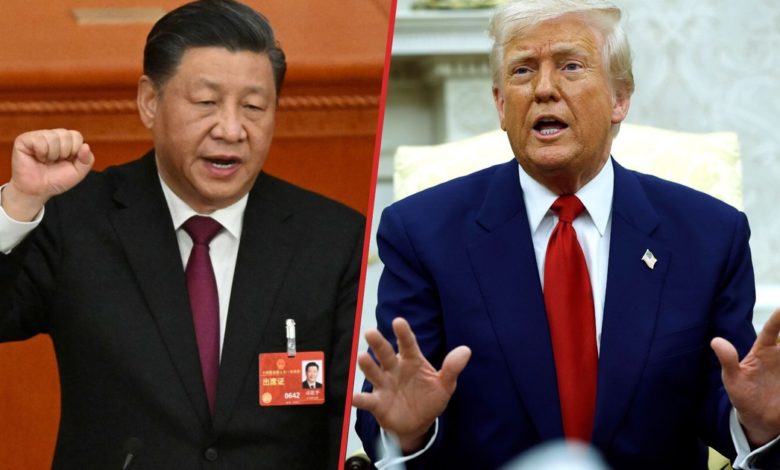
Beijing believes that he can win a trade war with Trump. However, instead of “fighting to the end”, China may only have to fight until American consumer prices begin to rise and employment will start to fall.
Advisors, experts and economists indicate that this is the easiest way to force Trump to sit at the negotiating table. However, the Chinese have a number of other aces up their sleeve, which they can hit Trump from their heads. The China economy still has unrecognized advantages, and Trump can paradoxically force the Chinese leader XI Jinping to “make China great again.”
“China has already rejected these calculations”
When it comes to technological competition, Chinese industrial companies crush Western rivals in everything, from electric vehicles to drones and flying taxis.
On April 9, the US President announced a 90-day pause in applying elevated duties to the rest of the world (he maintained the basic rate of 10 % for most countries) and focused at the hearing with Beijing.
China can answer and tighten the situation in many ways. Some commentators point to the possibility of strengthening the Juan course. It would be quite risky. Until inflation in America, Chinese industry and supply chains could suffer.
Either way, it seems that little can prevent the separation of the two largest economies in the world. Chinese officials do not exclude conversations with the Trump administration, but their hard reaction probably excludes this possibility.
Until the last escalation, the duties imposed by Trump to China met with a quick but stimulated reaction. Chinese officials wanted to show that they would not be pushed to the side track. They dealt a retaliation blow, but decided to limit damage to their own economy, trying to avoid further escalation. It would seem that this attitude will facilitate negotiations. Now China has apparently rejected these calculations.
“It has a huge impact on the US government”
One of the reasons for this change may be the sense of China leaders that they can win a trade war. Trump wants a lot from his geopolitical rival, including the stopping of the flow of fentanyl precursors and help at the end of Russia's war in Ukraine.
The American president said that he did not want to be responsible for closing Tiktok, a Chinese application popular among young Americans. Tesla, a company producing electric vehicles belonging to Elon Musk, Trump's adviser, is exposed to retaliation, because about one fifth of its activity conducts in China.
“It has a huge impact on the US government, unless Elon is asked to leave [wycofanie się z amerykańskiej polityki i otoczenia prezydenta USA] – says Alicia Garcia Herrero from the French bank Natixis.
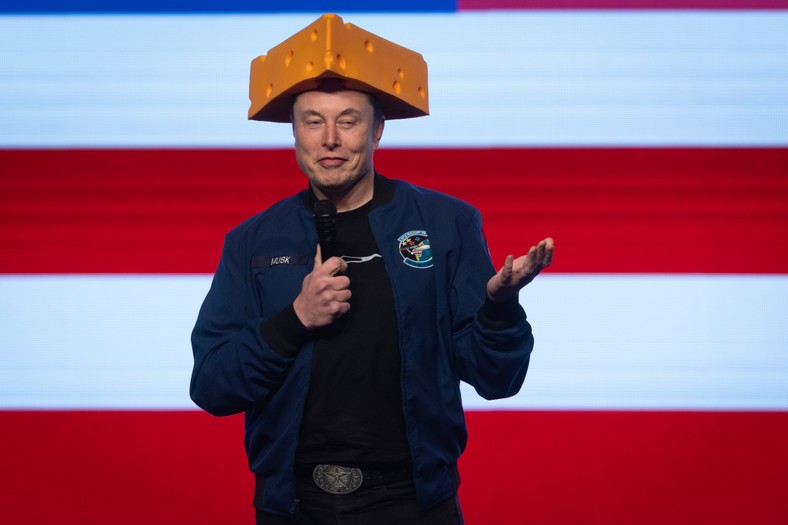
Elon Musk (illustrative photos)
The escalation of the trade war means that Xi Jinping will have to do more to support the Chinese economy. The potential shock is compared to the global financial crisis of 2007-09. China then decided on a stimulatory package of 4 trillion yuan ($ 590 billion, or over 2 trillion PLN 280 billion, counting at the current exchange rate).
Li Qiang, deputy Chinese leader of the 11th Jinping, said in March that the country is preparing for “larger external shocks than expected” and that it is ready to implement a policy ensuring economic stability. He is still unclear what it means in practice.
The Chinese state newspaper “The People's Daily” on April 6 stated that the cuts of interest rates and bank reserves may occur at any time. The newspaper also stated that local governments will help you find new sources of demand in the country and markets outside America struggling with difficulties.
The Chinese Soochow Securities broker suggested that China can lower the duties to the rest of the world, while increasing export subsidies.
Divorce of the two largest world powers
When the markets around the world collapsed, China quickly increased support [dla krajowej gospodarki]. On April 7 and 8, state -owned companies entered the Chinese market to buy shares. Thanks to this assistance on April 8, the CSI 300 index on the Shanghai Stock Exchange increased by 1.7 percent.
Economists are afraid that stimuli for the Chinese economy will flow much more slowly, and all interventions will be fragmentary and reactive and materialize only after a rapid economic slowdown. According to the expert Larry Hu from Bank Macquarie, the situation [gospodarcza Chin] It will deteriorate before it improves.
XI Jinping will also have to consider the full separation of the Chinese economy from the American economy. Although China strives for technological self -sufficiency, they have largely rejected the concept of “separation” [decouplingu]perceiving her as a way to punish China through the West.
Now, however, support for this concept is growing in China. A short list of planned reactions, published on the web by various commentators on April 8, suggests that China is considering suspending all cooperation with America regarding fentanyl smuggling to the USA. Another idea is the ban on the import of American poultry and other agricultural products, such as soy and sorch, which come mainly from republican states.
China can also impose restrictions on American services, where Uncle still records a commercial surplus. This would include restrictions on American consulting and legal companies still operating in the People's Republic of China. Beijing can also try to impose restrictions on the intellectual property of American companies.
This may affect such profitable branches of the economy as, for example, cinematography. The success of the Chinese animated film “Ne Zha 2” and the poor results of “Snow White” in America can help justify the limitation of the display of American films in China or their total ban. If the “fight to the end” means adapting to new American duties, XI will have to enter the logic of separating superpower economies/