Video Prague and a difficult choice between monuments and transport infrastructure: He wants to demolish one of his most famous bridges

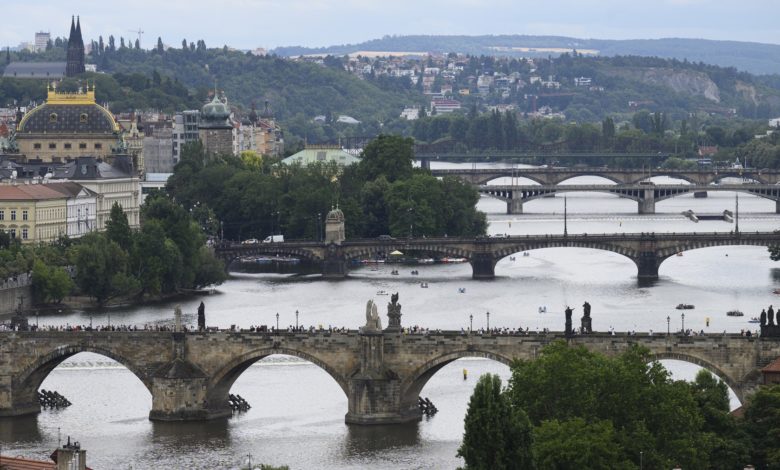
One of the most famous bridges in Prague is in the center of an intense dispute between the railway authorities and the conservatives of the cultural heritage: to be disassembled and moved elsewhere to make the place of a new and modern construction or to be renovated and consolidated?
Czech officials claim that the structure is too degraded to support modern traffic, while architects and activists demand its restoration and preservation.
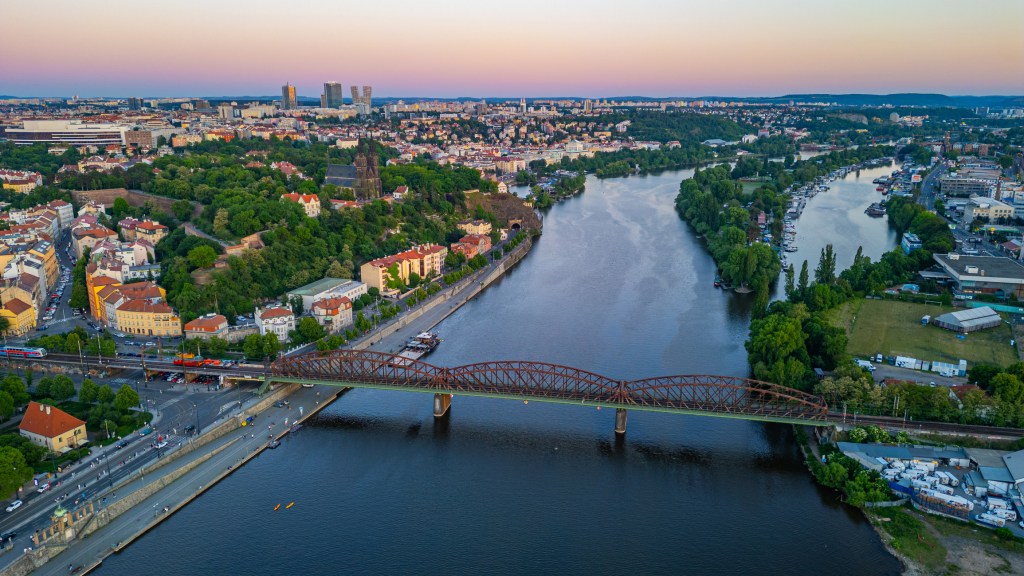
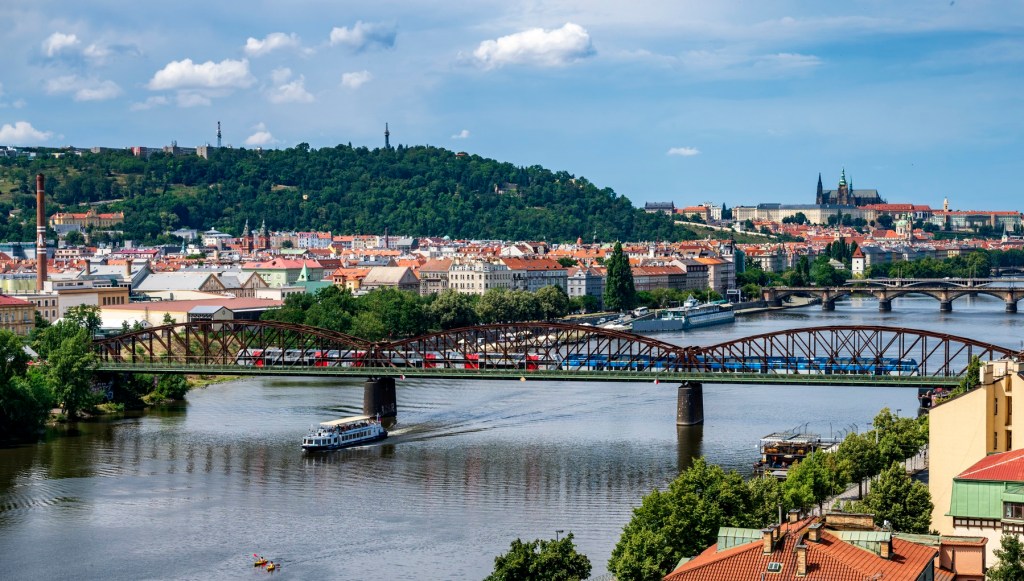
The Vyšehrad railway bridge in Prague, built in 1901, crosses the Vltava river and is in the vicinity of the Vyšehrad fortress. It is considered an emblem of the Austro-Hungarian era and a monument protected by UNESCO, but the Ministry of Transport in the Czech Republic claims that a new bridge is needed, with three railway lines, to allow better regional connectivity.
In the plans of the authorities the current bridge would not be demolished by everything, and partially disassembled and relocated somewhere in the south, also over Vltava, but rethought only for cyclists and pedestrians.
On the other hand, the conservation supporters say that the structure can be restored and believe that the plans to disassemble and move elsewhere are equivalent to losing part of the architectural identity of the city.
The dispute also came to the attention of international public opinion, in the context in which Prague is recognized for the preservation of its historical heritage, and the project could create a sensitive precedent.
Symbolic value
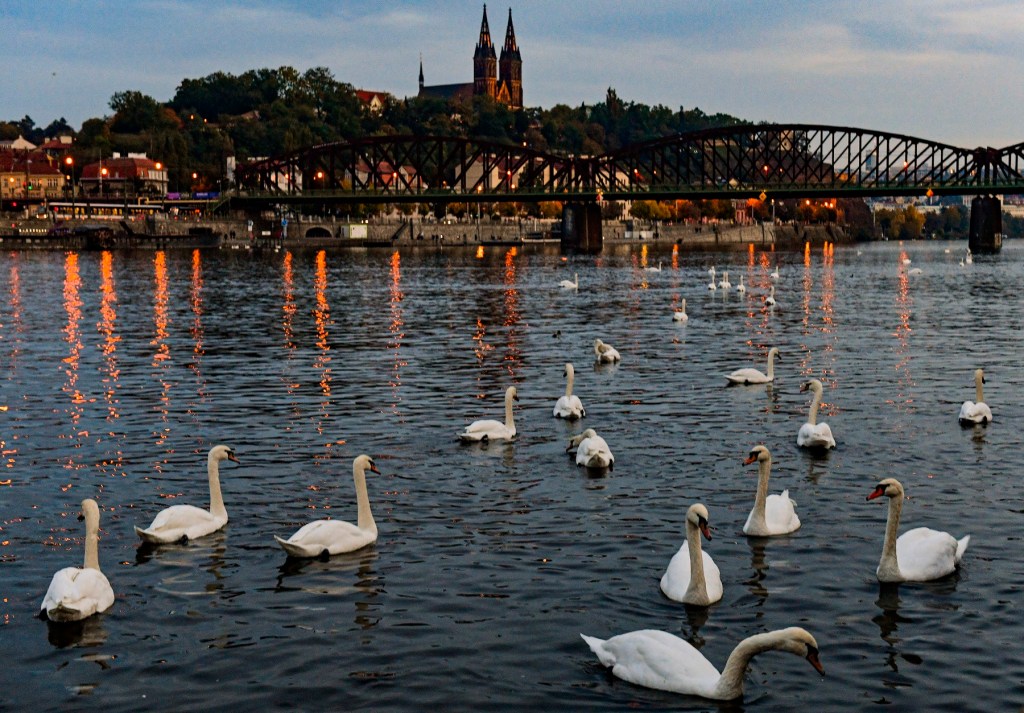
One of the most emblematic bridges in the Czech capital, the Vyšehrad railway bridge, is at the center of an increasingly heated conflict between transport authorities and architects, historians, but also part of civil society. The reason: the intention of the Czech officials to demolish the bridge built in 1901, considered dangerous and technically exceeded, and to build in its place a new, modern structure, with extensive capacity.
The Vyšehrad Bridge, in the vicinity of the medieval fortress of the same name, was erected during the Austro-Hungarian Empire and is one of the latest metal bridges of Prague. With an industrial architecture specific to the beginning of the 20th century, the structure is considered by many urbanists and historians an important part of the visual identity of the city.
“This bridge is essential for Prague. The panorama that it forms together with the Vysehrad fortress on the background is at the same level as the panorama on the Charles bridge with Prague Castle. These two panoramas are – in my opinion – crucial for Prague and we must keep them,” says Petr Tej, Architect and Engineer specialized in historical structures.
“It is important to respect the value of heritage, but we must also admit that it is a technical structure that must first fulfill its function,” says Matouš Hutník, the head of the Communication Bureau of the Prague Capital Planning and Development Institute (IPR), quoted by Prague Morning.
A new modern bridge but with a similar architecture
The administration of the Czech railway, however, argues that the bridge is seriously degraded: according to the technical evaluations, over 70% of its structure is affected by corrosion, and the current traffic must be restricted. In addition, the plans for the modernization of the railway infrastructure of the city – in full expansion – involve a three -line bridge, which the current structure could not bear.
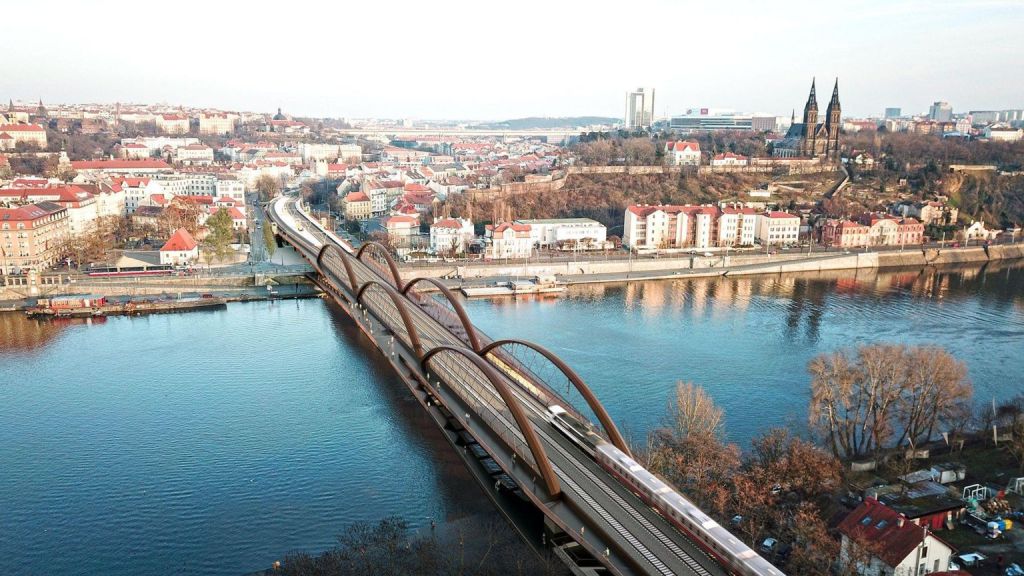
The solution proposed by the authorities is the complete disassembly of the bridge and its replacement with a new structure, but which is architecturally inspired by the original one. The new bridge would have to have a construction in three metal arches, but it will be wider and will accommodate three lines, as well as sidewalks and areas for cyclists, including climbing and descent ramps from both banks of the river.
As a symbolic gesture, the current bridge would be reassembled in another area of the city, about 8 km south, in the Modray district, and transformed into a pedestrian bridge and cyclists.
A foundation that militates for the bridge
Petr Tej, which is part of the Vysehrad Bridge Foundation, an international coalition of experts who have restored similar steel bridges around the world – some of them in a much worse condition, says that the railway authority plan is completely useless.
“The previous reports of the experts said that 70% of the steel should be replaced. Our study says it is only 15%. It is a huge difference,” says Tej.
The proposal of the foundation is simple: repairing the bridge on the spot, maintaining train traffic, minimizing disturbances and saving money in this process.
Earlier this month, the foundation's conclusions were approved by UNESCO, which protects much of the historical center of Prague. UNESCO World Heritage Committee officially recommended that Prague rehabilitate the current bridge instead of lifting a new one.
In addition, at the end of October 2024, the restoration plan presented by the Vyšehrad Bridge Foundation had also received support from the Institute of National Monuments (NPú) – Czech State Authority.
A relocation considered “absurd” by experts
The idea of moving the current monument bridge is viewed with skepticism by specialists.
The location in a peripheral area, without a comparable historical or visual context, would break the symbolic connection of the bridge with Vyšehrad, say architects. Also, the costs of moving and restoring could approach those of a renovation on the spot.
“It is as if you were moving the Eiffel Tower to the outskirts of Paris and you would expect it to have the same impact,” says a member of the Association for the Protection of Heritage.
“To throw the existing bridge is a terrible shame, because it is a wonderful work. Imagine your scandal around the world if Tower Bridge in London would have been improper for use, and the authorities would have decided to demolish it and build something else. It's the same scenario,” said the Guardian Ian Firth, a specialized structural engineer in the design of the bridge. Either as a pedestrian installation, or as a single -way rail installation, while its possible move is only a small distance of 50 meters, to stand next to a new discreet railway bridge.
There is also an aspect quoted by those who do not want to relocate the current bridge: the Vltava river at Modray has a width of about half of the one in the center of Prague. Thus, they say, an urban railway bridge will seem completely its non -olive, placed in the middle of a meadow.
The bridge manages three quarters of the railway traffic in Prague
Designed by Francešek Prášil, a Czech engineer from the late Habsburg era, the bridge was built in 1901 and crosses the Vltava River. All the main trains between Prague and several European cities, including Munich, pass over it.
The railway bridge is the connection between the right bank Výtoň and SMíchov, respectively between the main station and the Smíchov station. The bridge is crossed by two railway rails and pedestrian sidewalks, consists of three metal arches each with an opening of 69.9 meters and an 8.1 meter width.
The director of the Department of Preparation for Construction within the Railway Authority, Pavel Paidar, says for the BBC that the only modern solution is to replace with a new bridge.
“This bridge already manages about three quarters of the railway traffic in Prague. It could manage more, but due to corrosion, it can only carry about 60% of its capacity,” Paidar told the BBC.
“Given the expected growth of train travel, this will be a major transport problem. Yes, it is a protected historical monument, but it is becoming more and more clear that it is simply not possible to reconcile these two things – the needs of transport and the conservation of heritage,” says Paidar.
The new bridge will include a third railway and, according to 3D views in the current project, will be a correct tribute to the original. The entire area will be revitalized, and the transport connections from the main station in Prague to the west of the country will be improved.
The defenders of the current bridge, however, insist that there are room for both intentions.
“There is an erroneous perception that here are two contradictory interests – the transport and protection of our cultural heritage,” said BBC Tomas Bistricky, philanthropist and co -founder of the Vysehrad Bridge Foundation, which proposes a second narrow bridge, next to the original one to ensure the third railway line.
“Our study shows that, in fact, there is no conflict; on the contrary, these two things support each other,” he believes.
In the middle, between the two camps, a local association that supports public, pedestrian and bicycle transport and supporting a compromise solution.
“Solid measures for cyclists can be implemented both by building a new bridge and the preservation of the existing one, provided that the pedestrian bird, says Anna Kociánová, the head of the Communication and PR Department.
The impasse reflects wider tensions in Prague on the future of public space and the value of cultural landmarks in relation to the increase of traffic values and increasing mobility requirements, The Prague Morning reports.
 The fabulous twin story of the Sibiu – Pitesti highway and the Bulgaria highway that the Romanians arrive in Greece, through Kulata. “If you ask us when they are ready, I can offer once”