2025-12-10 18:32, updated 2025-12-10 19:02
publication
2025-12-10 18:32
update
2025-12-10 19:02
Poland is arming itself, but it has a problem because its arms industry is not developed enough, said the Politico portal. The authors of the article pointed out that the largest contracts are signed with foreign companies, because Polish arms companies cannot compete effectively with them.
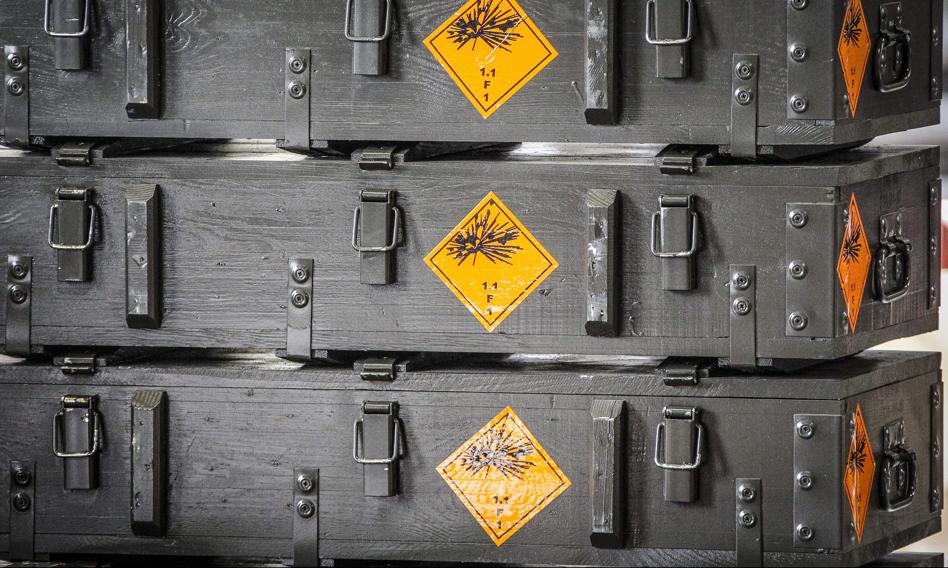
Politico noted that Poland spends the most on arms among European countries in terms of percentage of GDP. This year, the government wants to allocate PLN 186.6 billion for the army.
However, according to the portal, the Polish arms industry will receive only part of this amount. “Almost all large purchases are imports, because local companies either cannot produce equivalents or have never developed the technology to produce them,” the author said.
Politico emphasized that the need to accelerate Polish investments in the army results directly from the threat from Russia. In the first months of the full-scale Russian-Ukrainian war, starting in 2022, Poland transferred a significant part of its Soviet-made weapons to Ukraine. Therefore, Warsaw decided to sign contracts for already manufactured equipment. This is how Politico explains the lack of significant investments in the modernization of the Polish industrial base.
Politico seeks the reasons for the weakness of the industrial base of the arms sector in the history of Poland. The authors pointed out that the Soviet Union carefully located specific factories in its satellite countries to ensure that none of them was too developed in this field. Poland still feels the effects of this strategy today. At that time, satellites, armored vehicles and small-caliber weapons were produced on the Vistula River, but there were no rocket launchers, no modern ammunition, and the latest weapons technologies were not developed.
“PGZ will never build a submarine or an airplane” – Adam Leszkiewicz, president of the Polish Armaments Group, said in an interview with Politico. The portal pointed out that many PGZ factories had not been renovated since the 1980s.
The heating is breaking down, the machines are outdated, and in some workshops in winter it is so cold that you can't weld – admitted the author.
Moreover, the production of equipment already manufactured in Polish plants takes a long time. According to Politico, it takes about two years to produce the Borsuk infantry fighting vehicle.
Polish industry, looking for a niche in the market, focused on the production of drones. Entrepreneurs recognized that this is a sector in which they can compete with foreign concerns. However, as the portal pointed out, compared to the market leaders, these are still companies with small production capabilities.
The Polish government is convinced that the first elements of the so-called anti-drone barriers could be deployed within months. To create such a defense line, Polish radars, vehicles and rocket launchers, which are already part of the anti-aircraft defense, would be used. (PAP)
awm/ rtt/ mhr/