Transform, without their will, into terrorists. How did Ukrainian Pioni young people get in a new type of secret war carried by Moscow, away from the front line

A Russian sabotage campaign began in the spring of last year inside Ukraine and climbed this year. The young Ukrainians are in many cases tools of this campaign – sometimes without their will, writes The Guardian.
A Ukrainian young man identified as Oleh woke up in a shocking posture after he was engaged through a channel of the Telegram Messegress application that offered occasional jobs.
Apparently, his task was quite simple: he had to travel to the city of Rivne, west of the country, to take a backpack that contained a paint can and spray the content in front of the local police station – all for a thousand dollars.
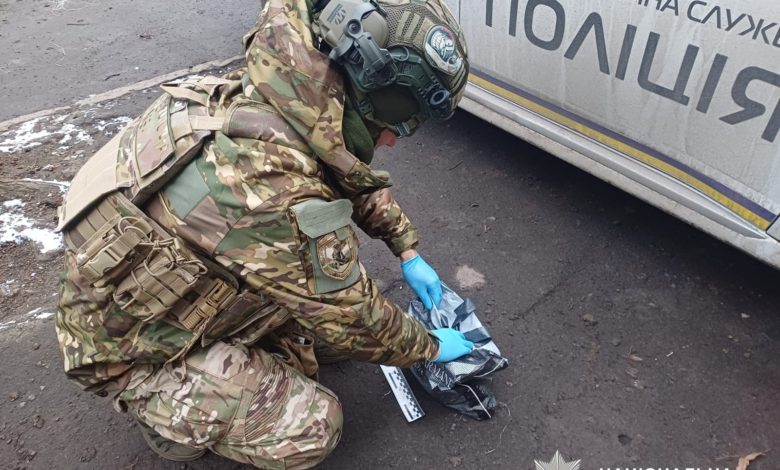
On a February morning, he opened the bag in front of the police station in the rivne and discovered that instead of a paint container, inside was what seemed to be a handmade bomb and a mobile phone attached, apparently a rudimentary remote detonation mechanism.
If detonated, the device would have transformed Oleh into an involuntary Kamikaze, part of a new tendency of attacks on the territory of Ukraine, which the SBU security agency says they are organized by Russian information officers using local recruits.
At least ten attacks in which the author has been injured or killed have taken place so far, according to a Ukrainian source of security services.
A hybrid war
The sabotage campaign inside Ukraine began in 2024, the Guardian spokesman of SBU, Artem Dehtiareko, told The Guardian. To begin with, she involved incendiary attacks on military vehicles, recruitment offices and post office offices.
The targets were mainly the regions of western Ukraine, away from the front.
Ukrainians, often teenagers, were offered money through Telegram and were coordinated by people who used a mixture of reward and blackmail to attract recruits.
The perpetrators then had to record the fire on their phones and send the registration as proof that the deed was committed.
The clips invariably reached the telegram channels favorable to Russia, as alleged evidence of the dissatisfaction in Ukraine, supplying the real social tensions on issues such as recruitment, which broke out during the Russian war against the country.
These attacks are part of a hybrid war, held in parallel with the conflict on the front line, writes The Guardian.
Russia also conducts attacks and sabotages in European countries, according to several Western information agencies, while Ukrainian services are considered behind several firecraft attacks in Russia at the beginning of the war.
A major escalation
At the end of 2024, Russia seems to have decided a major climbing of the campaign, moving from simple incendiary attacks to Ukraine to bombings that remind more of the tactics of terrorist groups.
“The Ukrainian mass recruitment began to plant bombs: in cars, near the recruitment offices, next to the police departments and so on,” Dehtiareko told The Guardian, who also discussed some of the authors in prison and with several SBU agents.
According to SBU, the Russians organize the attacks by recruiting Ukrainian networks, in which each person performs a task.
Thus, a person makes the bomb and leaves it in a agreed place. Another man then collects it, without knowing what he is. Thus, Russian coordinators can trigger explosions inside Ukraine, without having to set foot in the country.
SBU says he has detained over 700 people from the beginning of 2024 for sabotage, arson or terrorism. Many of them are unemployed or need money to feed their families, but about a quarter of them are teenagers, the youngest until now being an 11-year-old girl from the Odessa region.
“In some cases, the agents not only plant the bomb, but they unconsciously fulfill the role of a kamikaze. The Russians throw their agents, it becomes an ordinary practice,” said Dehtiareko.
Recruitment tactics
Russian agents who recruit Ukrainians usually start with simple tasks, say SBU officers.
The photography of the sensitive sites is a common request, the printing and hanging of several copies of subversive leaflets is another task. Then, once the recruit is attracted to the game, they raise the stake.
Often, the people use the slang of young people to give the impression that the recruit speaks with someone of his age.
Sometimes they flirt with recruits or offers them moral support about difficult family situations. Usually, they do not present themselves as Russians; I can claim that they are Ukrainians who have “tired of war” and want to show that there is an opposition to it.
If the recruit proves reluctant, the curator could reveal the connection with Russia and could resort to blackmail to force the continuation of the action, threatening to send evidence of previous cooperation to SBU.
“After people perform the first task, they are caught,” Dehtiareko said.
In one case, a malware was sent to the mobile phone of a recruited teenager, and the Russian agent threatened to publish pirated intimate photos and videos if the girl does not continue to cooperate.
Oleh's mission
In the case of Oleh, he hardly accepted the mission entrusted by a Russian agent-who recommended as Alexander-but called a friend to help-the Serhii.
When they arrived in the rivne, Oleh called his contact on Telegram, who guided him by phone.
“He said,” Take it to the right, between the number 32 garages and the number 33, and you will see a tire “,” Oleh recalls. Hidden inside the tire, he found a black backpack and a white plastic bag. He took them both, according to the instructions.
Alexander called Oleh and told her he should open the white plastic bag and remove the box he will find in it. Then he should go, holding it in his hand, towards the entrance of the police station.
Oleh did this, but became suspicious and opened the box to check the content. He was surprised to see something that resembled a bomb.
Panicat, he decided to rush to the nearest police officer and announced that he was afraid he had explosive.
Even when he did this, the SBU agents crushed on the two young people, taking the packages and forcing them to sit down.
Similar cases
According to an agent involved in this case, it seems that a SBU team was watching Oleh and Serhii since they raised the bomb.
Just three days earlier, Rivne had a similar attack. A 21 -year -old unemployed has been recruited on Telegram to pick up a device and lead to one of the military recruitment offices in the city.
The device exploded, killing the attacker and hurting eight soldiers.
As for Alexander's real identity, SBU is not sure, but it is confident in the assessment that, in one way or another, this is part of Russian secret services.
SBU believes that the role of recruiters is sometimes played by General Staff Officers of the GRU military intelligence services or the FSB internal security service, but both services also recruit intermediaries to make the actual calls.
SBU has not yet found the person who made the bomb that Oleh and Serhii raised, although it is assumed that it was done by another Ukrainian teenager recruited by Alexander.
Previously, the SBU agents from Rivne have detained a teenager for the manufacture of similar explosive devices. It had also been recruited on Telegram and then received video tutorials on how to make the devices from products available.
Will Russia export its last tactic in western Europe?
The big question for the European intelligence services, which have faced a wave of firewood and sabotages in Russia, is to export its last tactic in Ukraine in the West, writes The Guardian.
To date, western attacks have tried to cause chaos and sometimes material damage, but have not been directly conceived to cause blood.
An Ukrainian source said this could change.
“Ukraine is the testing ground for the conventional and hybrid war of Russia. Look at cyber attacks, the fires caused, the sabotage on railways. They test things here, and then do them in Western countries,” the source for The Guardian told.