1 billion streams and zero fans. Bots, AI and the most expensive fiddler in the history of music streaming

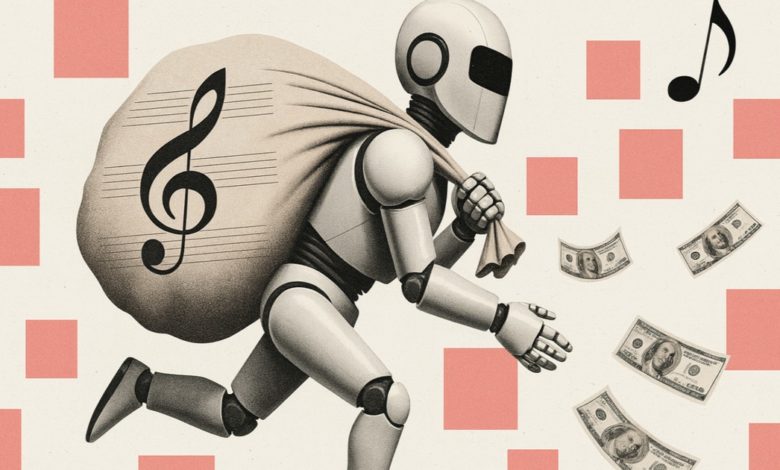
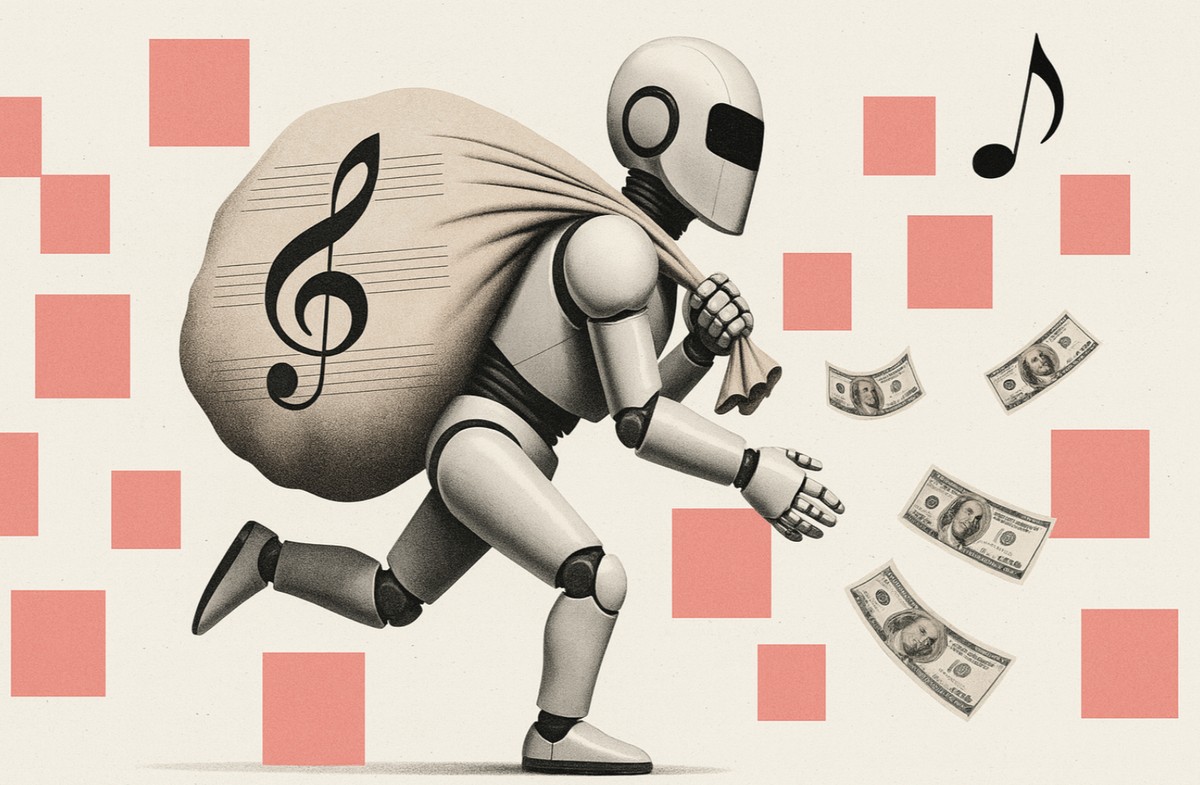
Last year, FBI agents led Michael Smith in handcuffs from his residence in North Carolina. For the music industry it was a symbolic moment. For the first time in the United States, the Federal Prosecutor's Office accused the producer of the so -called AI-Streaming Fraud – many years of practice in which bots played hundreds of thousands of songs generated by artificial intelligence, providing false billion listening and at least $ 10 million. royalty.
The indictment showed the entire chain: from the cooperation of Smith with the start-up booms providing thousands of music files every week by giving them bizarre names like “Ghyphceae” and connecting to fictitious aliasa, until the creation of the network thousands of premium accounts, which “listened” to these works 24 hours a day.
Read also at Business Insider
It is difficult to say how long Smith cheated the music market, but for the first time the authorities became seriously interested in the spring of 2023. It was then mechanical licensing Collective – an organization settling tanties in the USA – stopped transfers and demanded explanations. Smith replied, claiming that the songs were not generated by computer, but investigators considered it a lie.
Up to two billion dollars a year
The Smith case revealed the scale and ease of similar operations. According to Beatdapp, a company that analyzes metadata from streaming services, false listens reduce the global stream of payments by approx. $ 2 billion. annually. With a more conservative approach, it is still at least $ 1 billion, which every year He goes to the pocket of the owners of “farm” streams, not to real performers.
In interviews, Morgan Hayduk, holding the position of Co-COO in Beatdapp, emphasizes that on some platforms from 17 to 25 percent. The whole movement can be regularly marked as suspicious. In extreme cases, half of the listenings turns out to be artificial.
The phenomenon is not limited to the United States. In March 2024, the court in Aarhus sentenced a 53-year-old manufacturer to 18 months in prison for generating approx. 2 million DKK (approx. PLN 1.13 million) using bots. In February 2025, the Danish Supreme Court increased the judgment to 24 months, considering that the fraud reached de facto 3.5 million DKK (approx. PLN 1.98 million). The case was hailed as historical by Danish Rights Alliance and showed that criminal liability for stream manipulation is also becoming a real perspective in Europe.
The data of the French Center National de la Musique, which in cooperation with Deezer, Spotify and Qobuz analyzed all year 2021, suggest that in large markets 1-3 percent. all listenings are artificial. Importantly, 82 percent Framed streams can be found in the long tail of catalogs, away from the charts, where they are easier to hide.
Read also: European sovereignty in the AI world. The French start-up Mistral Ai uses the dominance of the USA
AI receives earnings to real contractors
Artificial intelligence acts as an accelerator. Deezer informs that already 18 percent daily uploads – approx. 20 thousand files – these recordings are fully generated by AI. Although these songs generate only 0.5 percent. listening, but the company suspects that Most of them are the Bots Army behind themand according to the Luminate report in 2024, Deezer deleted a total of 26 million low quality or fake files.
Spotify, the largest player on the market, already in May 2023 blocked part of the catalog of the boom after detecting manipulation, in October 2023. He announced a change in his own settlement model: he introduced a minimum threshold of 1000 plays per year, determining the payment. In addition, he moved a total of $ 1 billion in five years. from the content marked as “spam” to “working artists”.
Critics, however, indicate that the model of streaming platforms itself, in which all influence goes to a common bag, and then are divided according to the participation in the total number of plays, It naturally rewards people who can get a giant, though empty volume. The president of Sony Music, Rob Stringer, simply called the market to “aggressive enforcement or change of payment method to cut the stimulus to fraud.”
Alternatives are already in tests. Deezer, together with Universal, implements the settlement model, which is additionally He rewards songs actively searched by fans and demonetizes music with trace interest. The first results in France indicate that with a constant number of subscribers, payments for top creators are growing, and the income from false streams decreases.
See also: Hundreds of employees from India pretended to be AI. The shocking fall of the star
Security also generates profits
Right next to it is developing, and at a rapid pace, a technology market for fraud. Beatdapp, after the funding round $ 17 million. and partnership with Universal Music, is already analyzing billions of plays in a mode similar to banking money prevention systemsconnecting Machine Learning with heuristic rules. The company also signed a contract with the IFRAH LAW office to transfer verified cases directly to the Department of Justice.
At the same time, the dispute is played with AI generative technology itself. In June 2024, Universal, Sony and Warner filed a lawsuit against Suno and Udio, accusing the unauthorized use of hundreds of songs for training AI models. A year later, the independent artist Tony Justice brought a collective lawsuit to the same companies. License negotiations are ongoing, and the labels demand not only royalties, but also the packets of shares and implementation of fingerprinting content (technique of creating a unique digital “fingerprint” for an audio or video file that allows you to automatically recognize and track its copies on the Internet) like youtube content id.
The investigation in the Smith case, however, shows that Even the won processes will not solve everything. Criminals use the same technologies as legal creators: simple Self-Service tools for distribution and mass automation. Along with cheap computing power and infinite supply of “Instant music” it is difficult to expect that the phenomenon disappears.
However, there are several directions of changes to make. First of all, the mandatory preliminary fees for distribution that deter spam, and secondly – the extension of data audit by independent entities. Added the dissemination of models user-centric or Artist-Centric and transparent labeling of AI content.
Deezer is already tagging “AI music” catalogs, and Spotify announces similar solutions. In practice, however, it is still AI AI race, where algorithms generating recordings are fighting algorithms that try to expose them.
Artists lose the most on all this. The global number of audio plays reached 4.8 trillion in 2024, but along with the explosion of the music directory, every real listener is diluted by hundreds of low -quality files. If regulations and business models do not keep up, Another billions of streams listened to by bots can become a not sad anomaly, but a new norm. The bill will be paid by those who do not have a budget for their own bots of bots and more than hacking the system would just want to create music.
Author: Grzegorz Kubera, Business Insider Polska journalist