Amazing discoveries on the least known continent of the Earth. The secret world below the Antarctic's glaciers

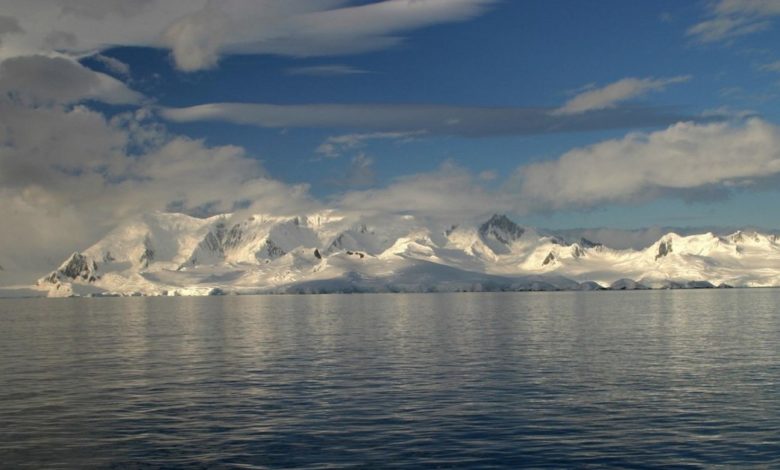
In Antartica, one of the hardest and most continent, under a thick layer of ice, the specialists identified a missing world. It is an incredible landscape stretched on a huge surface, with geographical elements that no one would have expected in an icy world.
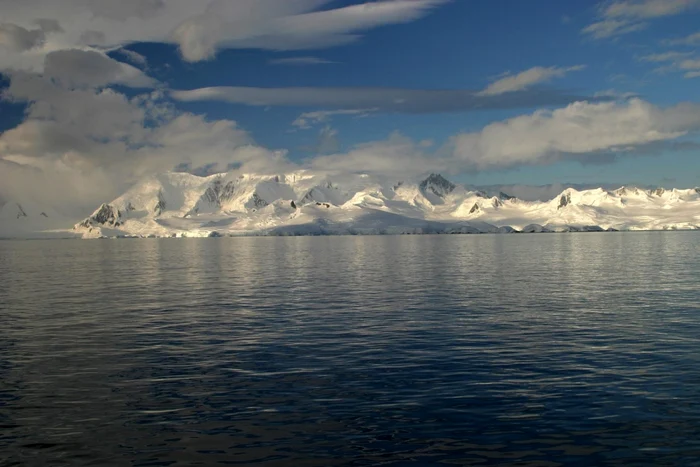
Antartica hides a missing world pixabay
Antartica is a polar desert. A huge stretch of ice, a hostile environment with extremely low temperatures and strong winds to which few explorers have survived. From a geographical point of view it is the most southern and the least populated continent of the Earth. Located almost entirely to the south of the Antarctic Polar Circle and surrounded by the Antarctic Ocean, it is the fifth continent, being about 40% larger than Europe. Most of the Antarctic is covered by the Antarctic glacial cap, with an average thickness of 1.9 km. Antarctica holds the record for the lowest temperature measured on Earth, -89.2 degrees Celsius. Only the coastal regions can reach temperatures above 10 degrees Celsius, only during the summer. The species of living beings that manage to survive in Antartica include mites, nematodes, penguins, seals and tardigrade. Where vegetation appears, it is largely in the form of lichens or muscles. Antartica is the last continent discovered and explored.
Only since the nineteenth century, groups of reckless researchers have ventured into this world of ice. It is not a place for anyone, because it becomes a white tomb for any unprepared individual. Over time, Antartica has been mapped, its relief forms have been baptized by the research teams. However, it is still an almost unknown area of the Earth. Especially what is under the thick layer of ice. “The land under the glacial cap of the East Antarctica is less known than the surface of Mars”said Stewart Jamieson from the University of Durham for “Express UK”. The new research has managed to reveal fascinating things, a real world disappeared under the glacial cap.
An antarticus as no one knows
A project led by specialists from the University of Durham (UK) in Antartica has managed to reveal a real hidden world. The team led by Stewart Jamieson managed to scan the eastern area of Antarctic with Radarsat, a Canadian satellite system. With the help of this technology, they could identify small changes on the surface of the ice, revealing the shape of the land buried below. The discovery left it speechless. Under the ice layer is a missing world. A totally different landscape, on an area of the size of Wales. Under the weight of a layer of two kilometers of ice, this landscape remained effectively untouched. It is about the river of a river that was abroad and gave life to this territory. Around this whites are hills, hills and even traces of mountains. The entire buried landscape was identified in the area called Wilkes Land, a distant and little -known part of the East Antartic, with a width of over 10 million square kilometers.
“It is as if we had discovered a capsule of time.”adds Jamieson for the same publication. The world discovered under the ice is about 180 million years old. At that time, Antartica was part of Gondwana, a supercontinent meeting Africa, South America and Australia. The territory that is now under the ice had many flowing rivers, forests and even palm trees on the beach areas with fine sand. She was inhabited by dinosaurs and other creatures of that period. It all changed 20 million years ago, when due to tectonic and volcanic activities, supercontinent Godwana simply broke into pieces. Antarctica moved to the South Pole and its lush landscapes were swallowed by ice.
At the time when the earth had no ice
It is not the only expedition that finds a world disappeared under the icechers. A research team from the Alfred Wegener Institute, the Helmholtz Center for Polar and Marine research conducted research in 2017. On board the Polarstern ship, German researchers crossed the southern end of the Chilean coast, crossed the Drake Passage and reached the western part of Antarctic.
Leaded by the specialist Johann Klages, German researchers drilled in the bark on the bottom of the ocean, near the Antarctic shores. The discoveries were impressive. And the west of Antartici, like the eastern area, was crossed by a river, with wooded banks and a delta that formed at the exit of the huge river. This is how Antartica looked 85 million years ago, a period when there was no ice on Earth. The researchers continue their studies on a continent that hides many secrets.