Putin risks repeating the mistake that led to the collapse of the USSR: “He now does exactly the same thing”

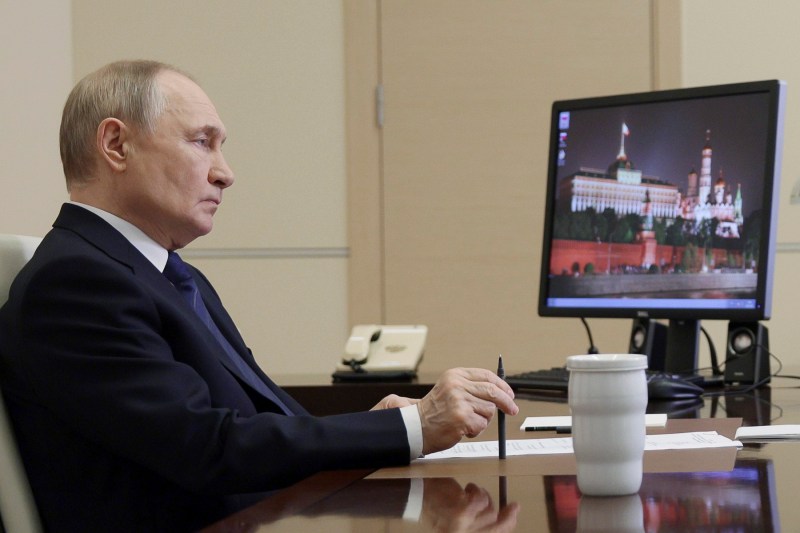
Russian President Vladimir Putin presides over a meeting with the members of the government, through video conference, at the state-of-state residence, near Moscow, Russia, on June 25, 2025. Photo: Gavriil Grigorov / AP / Profimedia
The head of Polish diplomacy Radoslaw Sikorski on Thursday appreciated that a new arming race could speed up the collapse of Russian President Vladimir Putin, just as the Soviet Union collapsed in the 1990s, writes AFP.
The Minister of Foreign Affairs of this NATO member country made the statement one day after the summit at which the Alliance agreed to increase its defense expenses, considered essential to counteract the threat that comes from Russia, notes Agerpres.
Vladimir Putin “should understand that he follows the path (Soviet leader Leonid) Brejnev. He himself spoke about it one day, when he said that the Soviet Union collapsed because she spent too much for arming, and now he does the same,” said Radoslaw Sikorski.
Putin “leads a very expensive war”
The Russian president “takes a very expensive war, terrified and provoked the West for him to increase his defense expenses (…). We did it because Putin threatens us,” said Sikorski, in an interview with the Polish Pap and the German DPA.
“This means that, from an economy of the waist of Texas, Putin will have to extract more funds for defense. At least if it would result in a similar result for the (Russian) regime, but in addition quickly,” added the head of Polish diplomacy.
During the NATO summit in The Hague a day ago, the leaders of the alliance member countries agreed to invest 5% of their gross domestic product (GDP) annually in Security by 2035, according to US President Donald Trump.
The compromise developed by NATO provides for the allies to allocate “at least 3.5% of GDP” for their strict military and 1.5% additional security in the broad sense, including for “protection of critical infrastructures” and the defense of “networks”.
The 32 member countries “reaffirmed” their support for Ukraine, “whose security contributes to ours,” and mentioned the “long-term threat” that Russia constitutes.