
RCA's new benchmark rates, up 5.4% on average. Which drivers will pay more and which will pay less. Huge differences between Bucharest/Ilfov and the rest of the country



Car traffic in Bucharest. Photo: Marian Mocanu Dreamstime.com
The Financial Supervisory Authority (ASF) published on Wednesday the new RCA reference rates, a benchmark in the market for the next 6 months, which indicate an average increase of 5.4% for passenger cars and 5.2% for goods transport vehicles. For some categories of drivers these rates are increasing, while for others they are decreasing. Drivers whose cars are registered in Bucharest and Ilfov have much higher RCA rates than those in the rest of the country because they do the most damage.
What is the reference rate at RCA and why is it important
The RCA reference rate is not the selling price practiced by insurance companies, but has only an indicative role for the next 6 months, being calculated for class B0 and for a period of 12 months.
The RCA reference rate is important, however, for high risk insured.
According to the law, if you receive at least 3 RCA offers from insurers with prices 36% higher than the RCA reference rate, it means that you are considered “high risk insured” and you can contact the Auto Insurance Bureau (BAAR) to receive a lower car insurance price.
The new reference rates were calculated by the association of KPMG firms based on aggregated statistical data from the last five years (January 1, 2020 – December 31, 2024).
Evolution of RCA tariffs. How big they are in Bucharest
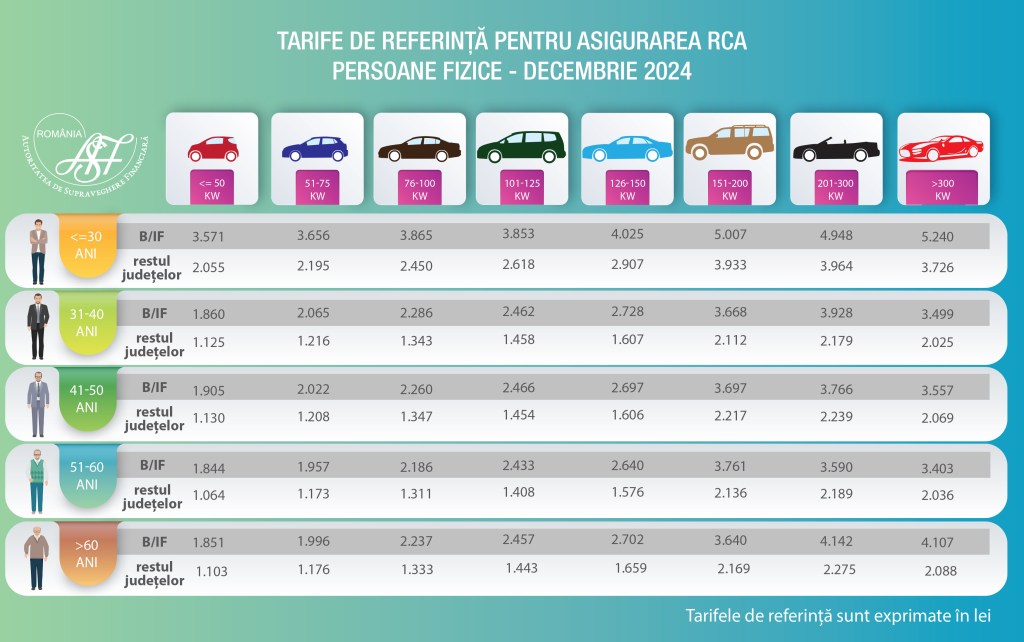
For individuals, the RCA reference tariff increased on average by 5.4% for passenger cars and by 5.2% for goods transport vehicles, compared to the reference tariff published in December 2024.
For legal entities, the increases were moderate: +3.5% for cars and +3.2% for vehicles transporting goods.
The analysis by risk categories shows that for certain categories of drivers the reference rate has increased, while for others it has decreased, the rates in Bucharest Ilfov being much higher than those in the rest of the country.
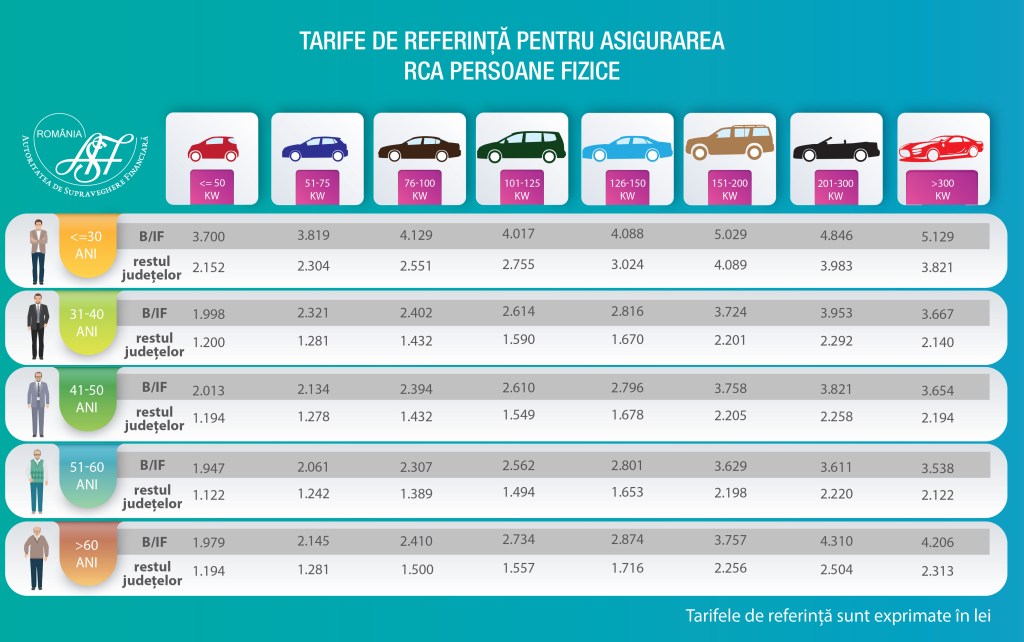
The highest reference rate, of 5129 lei, will be paid by drivers from Bucharest-Ilfov, aged less than or equal to 30 years who drive powerful cars over 300 KW.
On the other hand, for the same category of young drivers who drive equally powerful cars, but registered in the rest of the country, the reference rate is 3821 lei, almost 35% lower.
The good news for this category of drivers is that the new reference rate of 5,129 lei is down by 2.1% (111 lei) compared to the rate at the end of last year.
For drivers aged 41-50, the highest reference rate, of 3821 lei, is for those who drive cars with a power of 201-300 KW registered in Bucharest/Ilfov. for these drivers, the reference rate increased by 55 lei compared to the end of last year.
On the other hand, for the same category of drivers who drive similar cars registered in the rest of the country, the new RCA reference rate is 2,258 lei.
ASF notes that the new report also has decreases in the reference rate.
For example, for a driver from Bucharest-Ilfov, between the ages of 51 and 60 and a car between 151–200 kw, the tariff decreased by 3.5%. Discounts were also registered for drivers under 30 years old, with cars over 200 kw. In the case of passenger vehicles, the increase was only 0.4%, practically a stagnation.


