Overheating in children – more dangerous than it seems, but easy to prevent. When it becomes an emergency: “When a child suddenly becomes pale, sleepy or complain of dizziness, measures must be taken”

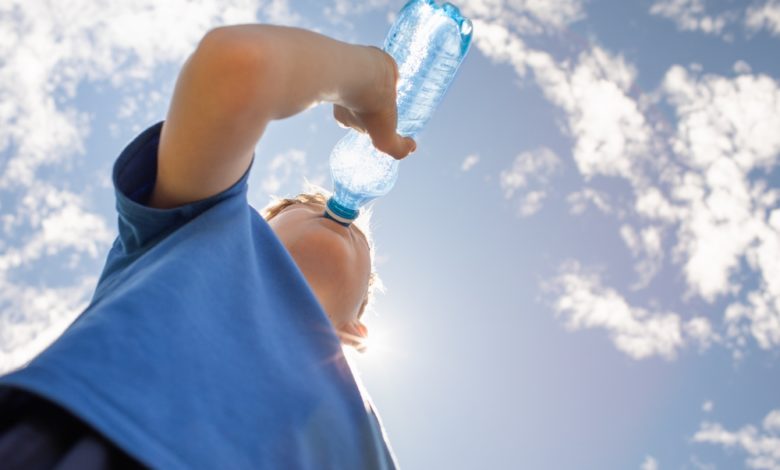
All parents know what the insolation is and carefully avoid the direct exposure of children to the sun. But few are aware of the real danger of intense heat, even in the absence of direct solar rays. Overheating can occur in the house, in the car, under a canopy or in a covered trolley-and the effects can be devastating, especially for young children. From cramps and confusion, to loss of consciousness, the body's reactions can be sudden and severe. Dehydration is just the tip of the iceberg. Here's what we need to know, to prevent serious situations.
It is enough to look at a sweaty, agitated child, with red and hot cheeks and blurred, to realize that something is wrong. In summer, the heat does not need the sun to wreak havoc: the body of the children overheats up to 3 times faster than the adults, warns the specialists. And their temperature adjustment system is still immature-which means they can move from “a little dizzy” to “insulation crisis” in an extremely short time.
Many parents believe that if the little boy is in a shade in the shade or in a sunless room, he is automatically safe. But the reality is that the spaces, the wrong clothes, the lack of liquids and the lack of ventilation can transform any warm day into a real risk of medical emergency. In the following lines, we detail what overheating means, which are the early signs of danger, which must be done in case of emergency, but especially how we can prevent sun in children.
What is overheating?
Overheating occurs when a child's body can no longer effectively adjust the internal temperature and begins to accumulate heat faster than it can eliminate. Unlike insolation, which is directly related to sun exposure, overheating can also occur inside, parked cars, in unarmed rooms or under a blanket drawn over the trolley. It is an insidious problem, which evolves rapidly and can lead to thermal exhaustion or even insolation – a medical emergency.
“Children do not have the same efficient thermoregulation mechanisms as adults-they do not sweat as much, and their body overheats much faster,” explains Dr. Richard SO, pediatric specialist at Cleveland Clinic, in an article on the effects of heat on children. Therefore, even an ambient temperature of 24–26 ° C, combined with high humidity or lack of ventilation, can become dangerous to the little ones.
According to Health Service Executive (HSE) in Ireland, the heat first affects children, but also older children in the open air, who are not sufficiently hydrated or do not take regular breaks in the shade. Overheating is the first step towards serious forms of thermal disease: exhaustion and insolation.
What are the early signs of danger?
The signs do not appear suddenly, but they are installed progressively, but they can be easily overlooked if the child is still “active”. The first indices of overheating include:
- reddened cheeks, hot and wet skin;
- abundant sweating;
- intense thirst;
- sudden fatigue, irritability;
- headaches or muscle cramps.
“When a child sweats abundantly and becomes suddenly pale, sleepy or complaining about dizziness, measures must be taken immediately. It is possible to witness thermal exhaustion – a state preceding insolation,” warns Dr. Richard So.
HSE draws attention that parents have to observe behavioral changes: the child becomes apathetic, refuse to drink water, or complain of nausea. “These are signs that the body no longer cope with the heat and approach the limit,” explains the official guide. Another important indicator is rare urination and dark urine, which signals advanced dehydration. Although dehydration is a component, the actual danger comes from the inability of the body to cool down, which can lead to the central nervous system.
What should be done in case of emergency?
If a child has signs of insolation (temperature above 40 ° C, confusion, dry and hot skin, seizures or fainting), this is a medical emergency. It must be called immediately at 112.
The first aid in case of dehydration in children is very important. Until the help comes, parents can make a difference through correct actions:
- moving the child to a cool and shaded place;
- removal of thick clothes;
- applying cold compresses or spraying with cold water on the skin;
- ventilation with a fan or fan;
- If it is conscious and not vomiting, offering water with electrolytes, not just simple water.
“Put the child in a bathtub with cold water or wet it with a hose, if available. The goal is to drop the temperature as soon as possible,” recommends Dr. SO in the article published on the Cleveland clinic.
It is important to know that antipyretics (paracetamol, ibuprofen) are not recommended. They do not act on the temperature rise caused by the sun. Also, Medicinal alcohol for rubbing caffeine and sugar drinks are contraindicated.
If convulsions appear or the loss of consciousness, the child should be placed on one side, with the head slightly inclined and carefully supervised until the ambulance arrives.
How do we prevent overheating?
Prevention is always simpler than treatment. One of the most important things is not to underestimate the heat – even if it is not the sun, the hot air and the humidity can be as dangerous for children, especially those under 4 years.
Key recommendations for prevention are:
- Avoid exposure between 11:00 and 17:00;
- Dress the child with light clothes, made of natural materials, light in color;
- Provide regular water – do not wait to ask;
- Plan frequent breaks in the shade or inside;
- Do not cover the stroller with textile materials, no matter how light they are, because they stop the air circulation, which creates greenhouse effect and can lead to overheating;
- Use hat, UV protection glasses and specially formulated solar cream.
Hydration should not start only when the child is already in the heat. According to pediatrician Richard So, you can help combat heat hydrating the night before.
“If I start with the tank half full, as the day passes, the Lore reserves will diminish. Give a bottle of water before going to bed and another before starting in the morning, so that they start their day with the full tank,” said Dr. So. “Then, as they play and dehydrate, they can still maintain higher levels, without reaching the risk area.”
This recommendation is valid not only for older children, but also for parents who supervise children or active teenagers. For young children, this principle is applied by constantly offering them nutritional liquids: water, light soups, milk, drinking yogurt, water-rich fruits (watermelon, peaches, cucumbers). In hot days, a well -hydrated child, well protected and kept away from excessive heat will be able to enjoy summer without major risks.
“Instead of reacting to the signs of evil, we should anticipate – every summer we see children brought to emergencies with symptoms of insolation that could have been prevented with a dash of caution,” concludes Dr. SO.
Checklist for parents: Prevention of overheating in children
- Moisturizes the child from the previous evening.
As Dr. Richard SO recommends: “I want to drink a bottle of water before going to bed and another in the morning, to start with the full tank.”
- Do not go out between 11: 00–17: 00.
The maximum heat is recorded in this interval – even without direct sun, the risk is high.
- Avoid fully covered trolleys.
Any textile material placed over the stroller stops the ventilation and can create an extremely dangerous greenhouse effect.
- Use light clothes, in light colors, and a wide boron hat.
Cotton and flax allow the skin to breathe; Avoid synthetic materials that retain heat.
- Provides water or nutritional liquids every 20–30 minutes.
Do not wait to ask for water – especially during the active game or in travel.
- Plan frequent pauses in the shade or inside.
Whether it's the park or the road to kindergarten, look for regular cooling places.
- Pay attention to the early signs: redness, apathy, excessive thirst, irritability.
It intervenes immediately with cooling, hydration and rest. If he doesn't give up, call 112.