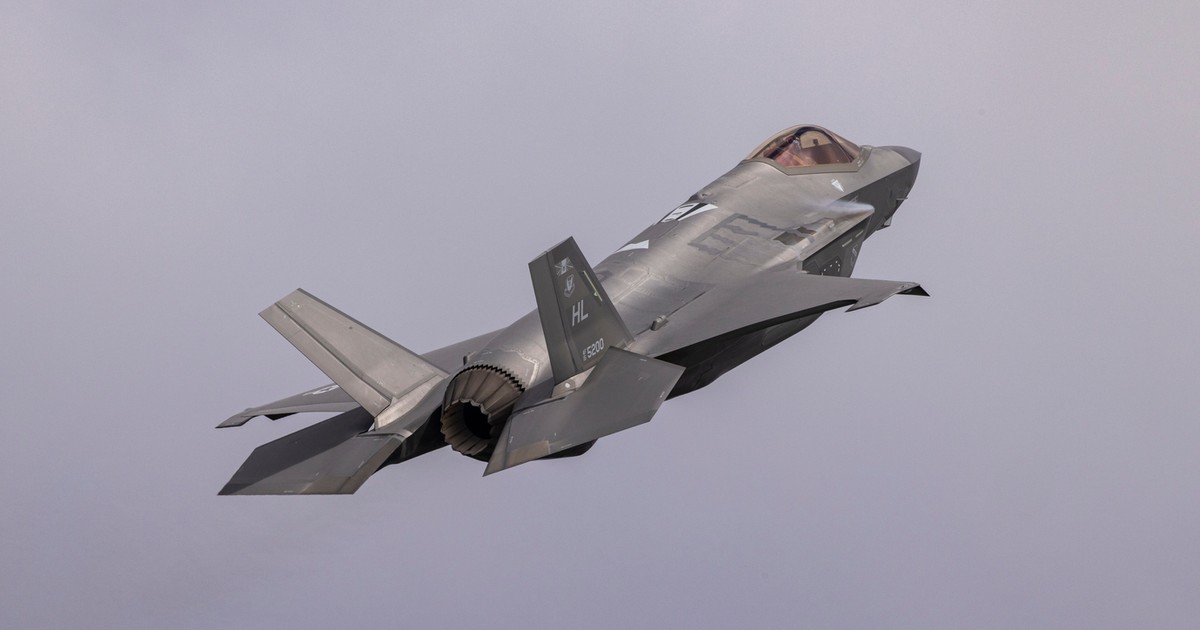
Israel destroyed 2/3 of the ballistic missile launchers in Iran. Putin and XI condemned the attacks

Israel's defense forces estimate that they destroyed two -thirds of Iranian ballistic missiles, “Reuters said on Thursday, citing a representative of the Israeli army. According to the official, Iran still maintains that he has over a hundred rocket launchers.
The Israeli army said that these launchers are the main target of attacks – their destruction is to prevent Tehran from launching thousands of rockets towards Israel.
At the same time, the command of the Israeli army confirmed that Iran launched on Thursday towards the central part of Israel at least one ballistic missile carrying a cassette bomb. This type of bomb hit a house located in the city of Azor. According to the army, the destruction of the building is comparable to the small rocket.
Iran fired about 30 ballistic missiles in Israel in the morning. One of the bullets hit directly at the hospital in Beer Szewie in the south of the country. Rockets also hit Tel Aviv and located near the city of Holon and Ramat Gan. In retaliation, Israel announced an intensification of Iran attacks.
The Israeli authorities began on June 13 massive attacks on Iran, claiming that their goal is nuclear and military facilities. Iran called the attack “Declaration of War” and responded with air rockets on Israel.
Putin and XI condemned Israeli attacks on Iran
The leaders of Russia and China, Vladimir Putin and XI Jinping, in the Thursday telephone conversation strongly condemned Israeli attacks on Iran, calling for resolving the conflict by political and diplomatic path – informed on Thursday at a press conference Advisor Putin Jurij Ryzakow.
“Moscow and Beijing share the opinion that the current situation (…) cannot be resolved by force and this can only be achieved by political and diplomatic means,” said Uszakow.
“The most important priority is to bring to a truce and suspend armed actions. Strength is not a good way to solve the differences of sentences between states,” said XI, quoted by the Chinese agency Xinhua.
Putin, in turn, confirmed Russia's readiness to play the role of a mediator if necessary. According to Uszaków, XI supported this idea. The conversation lasted about an hour.
The Kremlin said on Thursday that Putin would go to China at the end of August at the top of the Shanghai Cooperation Organization from August 31 -1 September and for the celebration of the 80th anniversary of the end of World War II in Beijing. His visit, during which bilateral talks are also foreseen, will last until September 3.
“WP”: In the interest of the USA is not Iran capable of rebuilding its nuclear program after the war
In the interest of the USA is not Iran capable of rebuilding after the war of his nuclear program, but there are other methods to avoid this scenario in addition to Ford's bombing – says in Thursday Washington Post “Max Boot, a journal commentator and expert of the American Council of Foreign Relations.
It is not a priori to reject the solution consisting in bombing the enrichment complex of Ford's uranium; After all, the war cannot be avoided – it is already fought. And the US should not give Iran a chance to build nuclear weapons after the war with Israel based on what will remain from his nuclear program. And only American bombs called “Bunker Buster”, or GBU -57 penetrating bombs, are able to liquidate the Fordo plants that would survive other air attacks – writes Boot.
However, President Donald Trump, who from the preferring “deal” with Tehran has unexpectedly gone to the threats of attacking Iran, should remember that there are other solutions. Israel has signaled that it is considering alternative options that may consist, e.g. of commandos attack on Fordo installations, which seems to be feasible, because Israeli aviation has a significant advantage over the Iranian air defense – says the author.
He emphasizes that Washington should still consider entering into an agreement – either with Iran or Israel.
If Tehran agreed to eliminate his nuclear program in exchange for avoiding the attack of the US forces and approved the international inspections of his nuclear plants, even if it is unlikely – it is worth asking Iranian authorities such a question – recommends the journalist.
If Tehran would not agree to the agreement, you should consider whether in exchange for the destruction of Ford by the USA it can be obtained from the prime minister of Israel Benjamin Netanyahu the promise of extinguishing surgery in the Gaza Strip and guaranteeing the Palestinian autonomy a significant role in managing this enclave – he suggests boot.
The attack on Ford would be a risky move, and Iran could attack American bases in the region in retaliation or block the Strait of Ormuz, paralyzing an important sea trail. But the decision to eliminate these plants would be justified – concludes Boot.
The Ford's uranium enrichment plant was built in the mountains about 100 meters underground. Placed under a hard rock, covered with reinforced concrete and surrounded by anti -aircraft defense, the Ford symbolizes the protection of Tehran's nuclear program, designed to survive the full -scale attack.
Think Tank Institute of International Science and Security (Institute for Science and International Security, ISIS) estimates that the Fordo center could transform the entire Iranian supply of highly enriched uranium to produce nine nuclear weapons in just three weeks.
“Spiegel” about Iran: Trump should not forget about the experiences from Iraq
Israeli Prime Minister Benjamin Netanyahu wants to draw America into the war with Iran. However, Donald Trump should remember that the strength change of the regime in neighboring Iraq has brought tragic consequences – writes “Spiegel” on Thursday.
Recalling that “wars are assessed after their end and effects, not after the beginning”, the German weekly indicates in the case of Iran to “disturbing parallels” to the American war from two decades ago, i.e. the Second War in the Gulf of Persian.
As he reminds, the United States attacked Iraq Saddam Hussejna in 2003 to “overthrow a dangerous regime, destroy the alleged weapon of mass destruction and bring peace in the Middle East.”
Consequently, “Spiegel” continues – over one hundred thousand people died in the war, and the “ruins of Iraq” emerged the terrorist Islamic State (IS). “The alleged weapon of mass destruction turned out to be an invention,” he adds.
“The war in Iraq was a historic lesson about Western pride, political illusions and dangerous dynamics of military escalation. She showed how difficult it is to overthrow the regime from the outside and replace it with a new stable government” – assesses the weekly. “It would be a bitter irony of history if Trump joined a war based on such dubious premises as Iraqi,” he says.
The weekly notes that the Netanyahu war he has started justifies that the Iranian regime is close to building a nuclear bomb. However, these are the claims “he has repeated for the last thirty years”. “Bibiego” assessments “do not share the American intelligence community”, including “to the irritation of his boss” – US national intelligence director Tulsi Gabbard.
“The goal of Netanyahu in Iran is to change the regime with strength, as it was in Iraq. And in the US the same voices that then supported the war in Iraq, urge Tumpa to attack and fantasize about the cheerful crowd and stable democracy” – we read in “Spring”.
At the same time – he warns the magazine – “it would be fatal to be guided by the most optimistic scenario in this war.” Because “it is much more likely that things will go wrong.”
One of this is that the Iranians “despite all political differences are united by a strong sense of national identity”, and “Israel's actions can finally lead to an increase in solidarity between them.”
The German weekly warns that the war “can spread to the whole region and plunge it into chaos.” And Israel will only “increase Tehran's motivation to quickly achieve nuclear deterrence.”
In addition – continues “Spiegel” – “the brutal action of” Netanyahu “meets indignation among the Arab countries of the region” and can “destroy the chances of Israel's diplomatic closer with such countries as Saudi Arabia.”
According to the weekly, Prime Minister Israel cheaned with the successes of the last twenty months “. “However, there is a huge risk that Netanyahu will overdo it and instead of increasing Israel's safety, threatens his position in the long term,” Alerts “Spiegel”. “The Prime Minister of Israel has therefore become one of the greatest instability factors in the region,” he states.
Finally, “Spiegel” notes that, according to most experts, Israeli assault on Iran “is illegal in the light of international law” because “there was no risk of Iran's direct attack on Israel.” Thus, “self -defense argument is not apt.”
“The one who agrees with the preventive war of Netanyahu cannot reliably condemn Putin's attack on Ukraine. International law is not an end in itself. It is to prevent the world to become a place where only strength counts. The world of wolves, in which the right of the strongest prevails. The more the west and its allies will violate international law, the greater the liability for the world He is sinking into more and more chaos, “believes” Spiegel “. (PAP)
MW/ AKL/ MZB/ MMS/ MOBR/