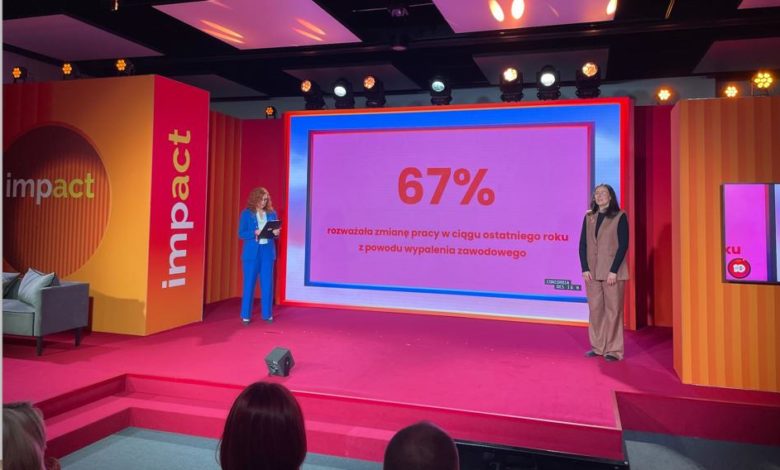
As much as 67 percent Polish leaders and leaders considered changing work over the past year due to professional burnout. It turns out that over 75 percent experience it. management – results from a study conducted by Concordia Design, the results of which were announced at this year's IMPACT conference in Poznań.
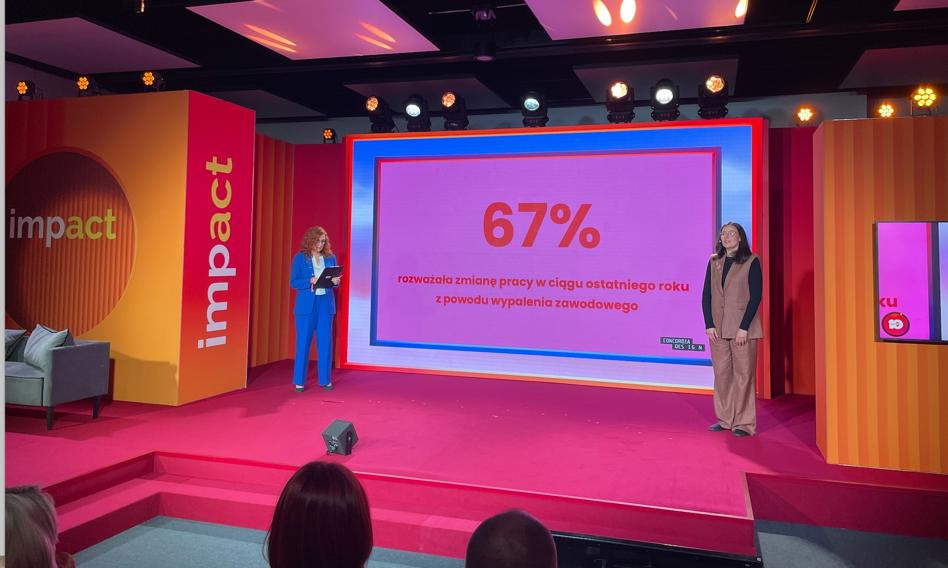
Concordia Design conducted research among the management staff regarding, among others well -being at work. They show that As much as 67 percent She belonged to her people who belonged to the change of work in the last year due to burnout. It turns out that over 75 percent experience it. leaders and leaders. While 58 percent He reports difficulties in maintaining a balance between work and private life.
You have to be hard?
People reporting burnout and considering change of work often felt lonely and without support, and also noticed the discrepancy between what they were publicly about the company and what they think privately. They also noted that The success in their organization often depends on politics, not the results of work. All this makes them feel insecure in their position, which leads to a sense of discomfort in connection with their function or position in the company.
In addition, in the face of a sense of loneliness and overwork, as much as a quarter of the management staff maintains the belief that they should not show signs of fatigue even in a state of exhaustion.
Greater anonymity does not help
It turns out that The highest percentage of people declaring burnout and thoughts about changing work occurs in organizations employing between 1001 and 5000 employees (82.6 percent) and above 5,000 employees (81.8 works). This shows that the scale of the organization generates greater pressure and anonymity, intensifying the feeling of burning. Looking at the organizational structure, however, it turns out that the size of the teams managed by leaders does not affect the reduction of stress or a sense of burning. People working in smaller teams (1-5 people: 79.2 percent, 6-10 people: 78.6 percent) also show a high percentage of burnout.
Leaders are great in “bearing”
According to Joanna Nowak, an expert Concordia Design, balance work – life is not a theory.
– This is a decision, often difficult, especially for leaders and leaders who act on an autopilot in stress: they do everything themselves, improve others, ignore their own boundaries – says Joanna Nowak. – As an executive coach and a consultant, I see it every day. Leaders are great in “abolishing”. They often lose themselves in this mission. And yet the leader is not a machine to bring results, but a man whose energy and borders are the foundation of the team.
The most important conclusions from the Concordia Design study
- 67 percent Leaders considered changing work due to professional burnout
- 75 percent leaders declare that he experiences burnout
- 58 percent reports difficulties in maintaining a balance between work and private life
- 50 percent He admits that building a network of contacts brings them greater professional benefits than improving their substantive competences
- 44 percent decided that the success in their organization depends more on the ability to move in internal politics than the results of work
- 58 percent He knows cases when employees were consciously blocked in development by their superiors
- 48 percent He admits that their company tolerated difficult behavior of leaders if they achieve good results
- 77 percent He admits that he implements decisions with which he does not agree with, without the opportunity to express his opposition
- 57 percent estimates that their actual impact on strategic decisions in the organization is much smaller than suggested by their position
Over 400 leaders and leaders have spoken
The study was conducted at a sample of 413 leaders and leaders representing various industries, the size of the organization and levels of professional experience. Among them, women in managerial positions prevailed (74 percent). People aged 36-45 (49 percent) and 46-55 (33 %) were the dominant age group, which indicates the professional maturity of the respondents. In terms of leadership internship, the test is varied, with the representation of both new leaders (21 percent with experience 1-3 years) and experienced managers (18 % with the experience of 16+ years). Respondents represented, among others industries such as IT (20 %), production/industry (15 percent), professional services (14 percent), education (13 %), trade/e-commerce (11 percent), finance/banking (9 %).