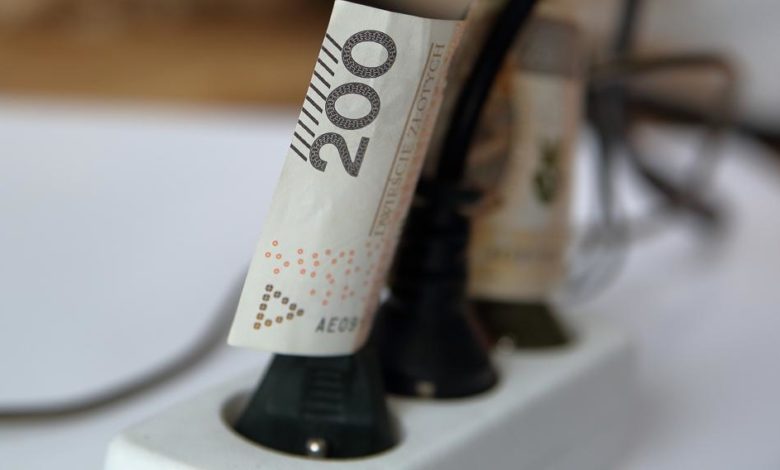
Energy poverty affects about 1.5 million households in Poland – the climate resort informed PAP. This phenomenon has a socio-climate plan, which Poland should transfer to the EC until June 30, but according to the Ministry of Funds, its consultations will last until then.
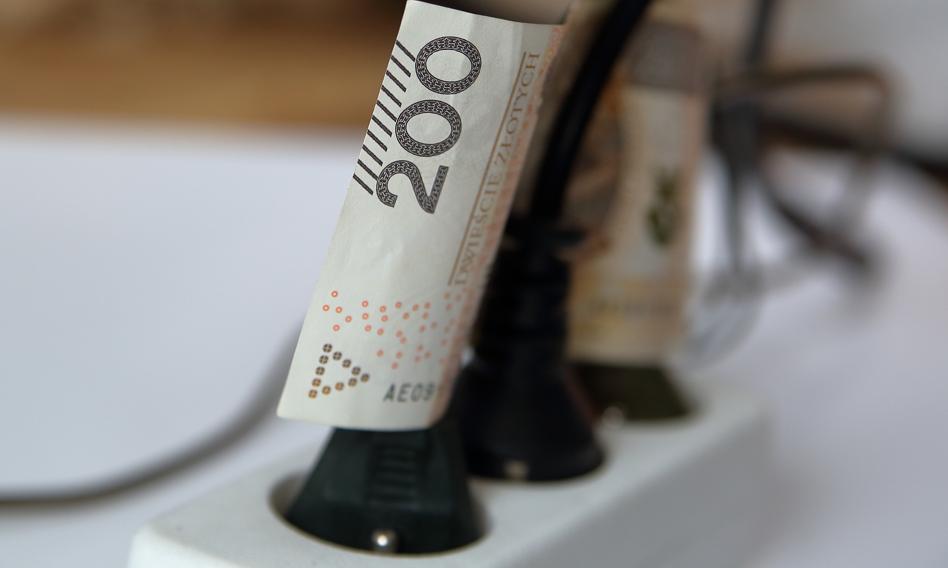
Energy poverty occurs when households cannot afford to use sufficient energy to ensure thermal comfort and power supply for electrical equipment; It often results from economic poverty.
According to the Ministry of Climate and the Environment, in accordance with the version of the project of the socio-climate plan of June 4, 2025, Energy poverty applies to 12 percent. Polish society, i.e. approx. 1.5 million households – according to the high -income cost indicator (WKND – Low Income High Costs (LIHC)). According to this indicator, the household can be considered energy poor if it meets two criteria at the same time: low income and high hypothetical energy expenses.
MKIŚ reminded that Poland is to be the largest beneficiary of the Social Climate Fund (SFK) – 17.6 percent, which means over EUR 11.4 billion to be used in 2026 – 2032. SFK was established by the European Parliament regulation (SCF regulation) to fight with energy poverty in the European Union. Pursuant to the Regulation, EU Member States should submit their socio -climate plans to the European Commission until June 30, 2025.
MKIŚ pointed out that the preparation of a socio -climate plan with a list of activities that you will finance as part of the fund is a condition for obtaining support from its funds. The ministry added that “intensive work” is currently underway to finalize the document.
“In Poland, work in this area is coordinated by the Ministry of Funds and Regional Policy (MFIPR),” the climate ministry pointed out, emphasizing that the decision on the date of sending the social plan – climate to the European Commission belongs to the MFIPR.
MFIPR June 6 this year. began public consultations of the plan; As announced, they will last until June 30 this year.
When asked by PAP, when the plan is presented, the Ministry of Economics replied that the further procedure will depend on the course of consultation. “After analyzing the comments submitted, a new version of the draft plan will be prepared, which will then be proceeded in accordance with the Regulations of the work of the Council of Ministers,” he added.
According to the Ministry of Funds, the budget of the plan for years 2026-2032 amounts to PLN 65 billion. “This amount consists of an EU contribution and the required domestic contribution of 25 % of the value granted. To use this money, you must first submit a socio -climate plan” – he noted on June 6 this year. Deputy Minister of Funds Jan Szyszko.
The resort proposes to allocate 37.5 percent amounts of co -financing for direct support of people exposed to poverty – so -called cover component.
Investments in improving the energy efficiency of buildings and access to public transport will be of key importance in the implementation of the plan according to MFIPR. The ministry indicated that support will be granted in the form of grants, subsidies, loans and vouchers (vouchers) for heating and energy costs.
In turn, MKIŚ added that it is planning as part of SFK to finance the implementation of the Pure Air priority program – planned allocation of PLN 10 billion and a pilot program – energy communities – planned allocation PLN 300 million.
“In implementing investments planned by the Ministry of Culture and National Heritage under SFK, i.e. the Pure Air Priority Program and the pilot program – the energy community will be involved in the MKIŚ and the National Fund for Environmental Protection and Water Management,” explained the ministry.
The climate ministry pointed out that energy poverty is regulated in Poland in Poland. “According to the high -income cost indicator (WKND), The level of energy poverty ranged from 7.6 percent. in the Śląskie Voivodeship to 21.3 percent in the Opolskie Voivodeship” – he added. He also pointed out that in the north and east of Poland the main risk is associated with low income and higher unemployment than in other regions, while in the south and southwest, old buildings with low energy efficiency prevail, many of which are heated with individual heat sources.
MKIŚ also noted that the risk of energy poverty according to the WKND indicator among residents of single -family houses is twice as high as among the inhabitants of blocks. “The highest level of energy poverty measured by the WKND indicator for single -family buildings was recorded in voivodships Opolskie (30 percent), Pomeranian (22 percent) and Greater Poland (22 percent) “ – the resort informed. He added that the lowest indicator is in the Silesian (10 %) and Lubuskie (9.7 percent) provinces.
In the case of multi -family buildings, energy poverty indicators The highest values have in the Lower Silesian Voivodeship (11.6 percent), while the lowest in Lublin (6 percent).
The inhabitants of villages and small towns (below 20,000 inhabitants) are the most exposed to energy poverty. “There are often old houses with a very large area, and the larger the area of the building, the higher the heating costs or the risk that the building is not properly heated,” said the ministry.
The problem of energy poverty also affects 8-19 percent. residents of large cities (over 500,000 inhabitants). “The inhabitants of old tenement houses and municipal buildings not connected to the heating network are most often struggling with this problem,” MKIŚ pointed out.
Anna Byniewska (PAP)
AB/ Malk/ MHR/