Success story. How did a forgotten village be successful to become successful tourist destination with the help of bears

While in Romania discussions about bears are often worn between panic, petitions and controversies, in a small mountain village in Italy, people have chosen another way: coexistence.
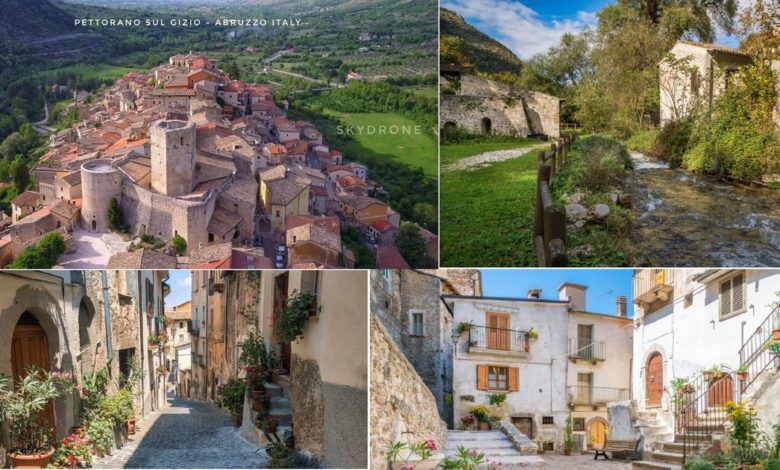
Pettorano Sul Gizio, a medieval village in the Abruzzo region, with narrow streets, abandoned houses and vigilant cats, was once endangered. With the departure of young people to the cities, the population fell from 5,000 inhabitants in 1920 to only 390.
The rustic charm of the picturesque village, part of the network “I Borghi Più Belli d'Italia” (The most beautiful villages in Italy) – the cobbled alleys, the ocher facades, the old wood – are now mixed with the signs of abandonment: collapsed houses, closed bars and real estate ads over time.
But, instead of extinguishing, the village chose to reborn … with the help of bears.
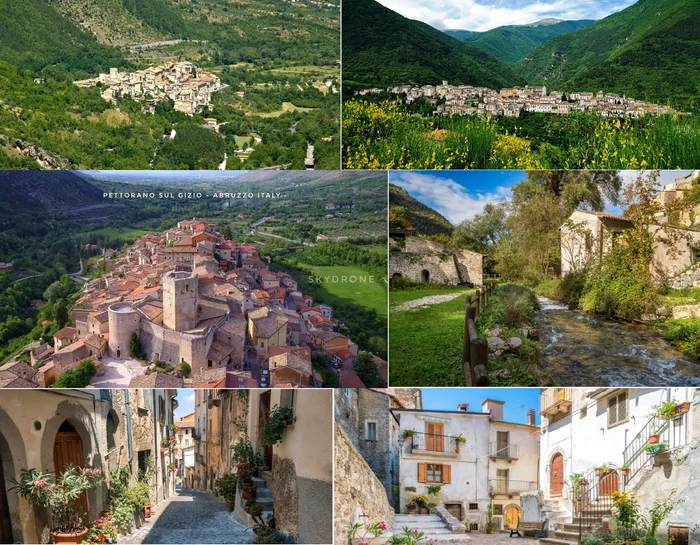
Pettorano Sul Gizio The first friendly community with bears in Italy Colaj Visit Ity Eu & Tripadviso
“The human settlement that embraced the wild”
The biggest threat to bears are humans, so the environmentalists have realized that the inhabitants of these isolated villages have to want to protect the animals.
A 1905 photo shows Pettorano Sul Gizio, with the bare hills, left by the grazing of animals and the deforestation caused by the coal producers. After World War II, as the economy of Italy bloomed, many inhabitants of the rural areas moved to the city to work. With the decrease of human pressure on the landscape, nature has begun to recover – today, the population of Marsican bears count about 60 copies, and their number seems to increase. However, the remaining inhabitants forgot how to coexist with the big predators.
On the streets of Pettorano circles a “Living legend”: Barbara, a brown bear, is often seen in the twilight, accompanied by her chicks, looking for food. It is not a horror story, but one of adaptation. Instead of chasing the bears, the locals learned to live with them, developing a real passion for them, as they report The Guardian.
In the center of the city can now be admired a statue in the natural size of a bear with its chicken, and mural paintings depict these animals, which ironically began to attract tourists and revive the local economy.
Pettorano Sul Gizio became known as “The human settlement that embraced the wild”attracting more and more young people passionate about preserving bears and implicitly.
The tragedy that generated the change
However, this coexistence model did not build without difficulty. Marsican or Apennine bears – a rare and critical endangered subspecies – have long been perceived as a threat.
Relationships between people and bears became extremely tense 10 years ago, during “Reign” Peppina, a 135 kg bear who had chickens in the area for several years. She was known for the ravages on attacks on chickenshives and orchards, stealing any food could find. Mario Cipollone, from Rewilding Apennines, says that “She was extremely vicious in these raids.”
In 2014, tensions between people and bears reached a turning point, when an amateur farmer shot a young bear that robbed a cot. Many inhabitants felt terrorized by bears so they supported the farmer who said he was attacked by the bear. There is no evidence that Marsican bears would ever kill people, and they are generally shy and avoid contact with people. However, the community was divided between fear and fascination.
Cipollone tells how the death of the bear has triggered a paradigm change: “It was an atmosphere that opposed the bear. We had to do something more practical.”
The tragedy was, paradoxically, the catalyst for a change from which Romania could learn a lot, if, of course, they were willing to do so.
The first “friendly community with bears” in Italy
So in 2015, Pettorano Sul Gizio became the first “Community friendly with bears” from Italy. Electric fences have been mounted around 100 properties to protect bees, chickens and other farm animals; gates and bears resistant containers were installed; And guides on how to live next to bears were distributed both in Pettorano Sul Gizio and in the neighboring town of Rocca Pia.
Residents are advised not to leave food outside; The ripe fruits are raised from the ground from the orchards, and the food residues are kept inside until the garbage is collected. “Since 2014, the damage has been dramatically reduced”says Cipollone.
Peppina's successor, Barbara, now haunts the alleys in Pettorano Sul Gizio, but no longer causes damage. The bears raids were reduced by 99% compared to three years ago, according to the data from Salviamo L'Orso, an organization for the preservation of bears, which reports that there have been no damage since 2020.
“The amount of damage almost disappeared. I did everything resistant to bears”says Cipollone.
From abandoned village, in flourishing tourist destination
Other European countries begin to observe this phenomenon. Currently there are 18 “Smart communities for bears” throughout Europe, financed through the Life Environmental Program of the European Union.
Although depopulation can be a factor that has attracted bears in this region, in Pettorano Sul Gizio, bears have now begun to bring people back.
Last October Valeria Barbi, environmental and naturalist journalist, visited “Smart community for bears” and he liked it so much that he decided to stay: “This place made me shine again in a certain way. I was a little overwhelmed by the global ecological situation. But these places make me think we can do something, that there are really good practices.”
Milena Ciccolella, owner of Il Torchio restaurant, describes rewilding events as “A true economic savior”so much that it now offers vegetarian food on a menu that was once dominated by meat, to attract lovers of nature.
Mario Finocchi, president of Valleluna Cooperative Society, says: “There is an increasing trend about the number of tourists in the area. Some of those who came as tourists have decided to buy a house here.”
The number of tourists has increased 10 times over the past five years
The number of tourists staying in Pettorano Sul Gizio increased from about 250 to 2020 to over 2,400 in 2024, according to data collected by Valleluna.
“It is good to have tourism, but it is important for people to live here. There is a young community that came here because of the bears and who works to enrich the city,” says Mario Finocchi, president of Valleluna Cooperative Society.
In the evening, dozens of people can be found at Pizzicheria di Costantino, a local who sells local cheeses and ham, along with bear -related beer. The owner, Massimiliano del Signore, who leads her with his wife, says they moved here for nature, tranquility and people: “We fell in love with this place and decided to invest in the area. It's not just about tourism. It's about making people believe they can stay here and have a very good life.”