Employees of Japanese restaurants complain to bosses that foreign tourists offer them tips. “We do not want the culture of the tip in Japan”

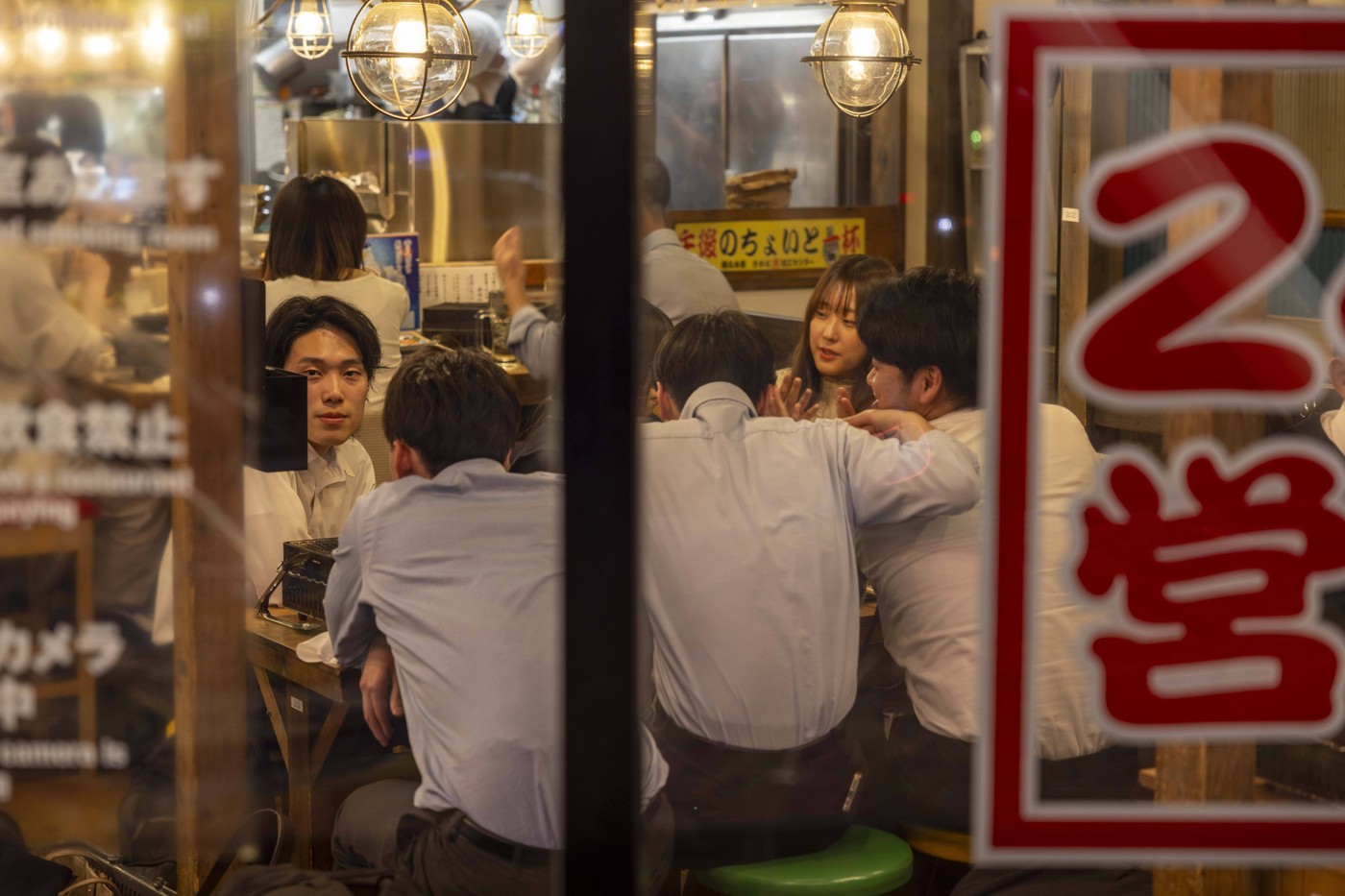
The increasing number of foreign tourists who give a tip in Japan caused confusion and led to animosity among locals, writes the Japanese press
More and more tourists are trying to provide tips for restaurant services, probably without knowing that this is not a regular practice in Japan.
A chain of restaurants with traditional Japanese specific, operating over 20 locations at national level, has changed its procedures after the employees said that they were offered tips from foreign customers and that they did not know how to manage this gesture.
In February last year, the operator began to install “Boxes for tips” next to the cashiers in almost all its locations.
According to the company, each point of sale now collects several tens of thousands of yen in the form of tips every month.
“In Japan, where there is no culture of the tip, the employees become confused. When the restaurant is crowded, it is difficult for the staff to respond individually, so I placed the boxes as a solution,” said a company official.
The company records the tips collected as various revenues, and the cash is used for the benefits of employees.
However, some customers who saw the boxes with tips have harshly criticized the idea.
“We do not want to introduce the culture of the tip in Japan,” they were angry.
The boxes with tips also became a topic of discussion on social networks, some people wondering: “Does the restaurant take the money given for staff?”
“Tips” for tea
According to Yoshiyuki Ishizaki, a professor at the Postgraduate School of the University of Ritsumeikan, with tourist marketing expertise, Japan had a habit similar to the tip before World War II.
Basically, the guests of the inns gave “money for tea” to the members of the staff.
However, in search of efficiency, the practice was replaced with fixed “service fees” during the 1964 Tokyo Olympic Games.
The hotels adopted a 10%service fee, while the traditional Ryokan inns were 15%. Even today, some luxury restaurants impose a fixed service fee.
In the United States, where the tip is the norm, the restaurants usually attribute the waiters specific to each meal. The tip offered at the end of the table becomes the personal income of the waiter.
As the size of the tip is based on the quality of the services, the supporters of the system say that it helps to motivate the employees.
Chibo, a chain of restaurants specialized in “Okonomiyaki” salted pancakes, introduced a tip system in its luxury locations in 1992, after expanding from western Japan. However, no customer used the system, and it was quickly abolished.
Mobile ease
In order to facilitate the granting of the tip, the Inc. teeth, based in Tokyo, a supplier of mobile order systems for restaurants, has developed a program that allows customers to add tips besides invoices, the first of its kind in the Japanese industry.
The teeth introduced the function in June, allowing the addition of up to 25% of the payment note as a tip through the application. The system is available in about 900 restaurants or premises across the country.
According to the company, the main users of this function of tip are considered to be foreign tourists, and its use is particularly high in areas with high tourist density, such as the SHinjuku neighborhoods in Tokyo and Namba in Osaka.
Takashi Waki, owner of Yakitori Smith, a chain of restaurants based in Osaka specialized in grilled chicken fridges, is optimistic about the tooth system.
“It makes our employees feel motivated and creates a lively atmosphere in our restaurants, which we appreciate a lot,” he said.
The tips are used for staff members, Waki said.
Low wages, labor deficit
Professor Ishizaki said that many restaurants frequented by foreign tourists have already reached a stage where they have only to decide how to manage the tip.
The workers in the food industry continue to fight with low salaries, while restaurants suffer from lack of workforce.
According to the basic survey regarding the wage structure of June last year, conducted by the Ministry of Labor, the average monthly salary in the sector of accommodation and public food services was 269,500 Yen ($ 1,832), the lowest of all industries.
“In Western countries, services are considered something you pay for. In Japan, there is a psychological resistance when setting a price for hospitality, which is understandable,” said Ishizaki.
However, he said that labor productivity will not improve if the country continues to believe that such services are free.
“Ideally, companies should include the costs of services in their prices and make sure that profits are properly distributed to employees,” Ishizaki said.