Do you think you eat healthy? Maybe yes, but the truth is that the way you prepare and consume some of the most common foods in your kitchen can make a huge difference for your health. Some seemingly ordinary foods can become true superfood if you know a few simple preparation tricks.
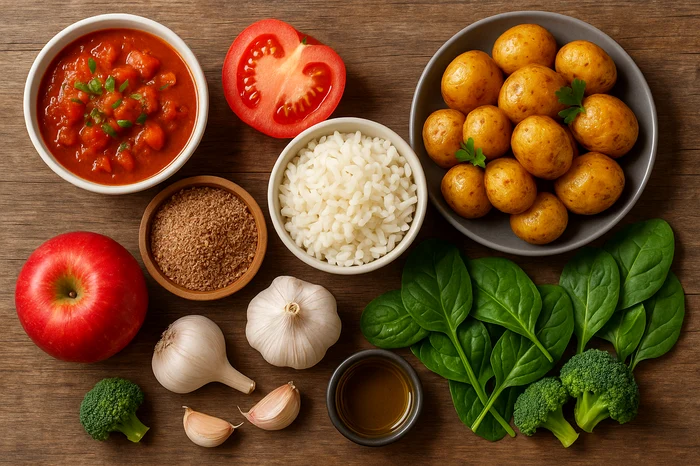
6 Correctly consumed foods can be transformed into DMS photo superiments
From tomatoes and flax seeds, garlic, apple, potatoes and rice, each food has “Secret” Its: a small step that increases the absorption of nutrients and benefits to your body. It is fascinating to discover that the mere fact of letting the garlic stand for a few minutes or not cleaning the peel of an apple can completely transform the nutritional value of your table.
In this article you will discover common mistakes and the correct way to consume these foods, so that you make the most of vitamins, minerals and antioxidants.
1. The tomatoes – more than merely raw
- Wrong: Many people eat them only raw in salads.
- Correct: Cooked in soups, sauces or curry, tomatoes release lycopene – a powerful antioxidant that protects the heart and skin. Add a little olive oil for better absorption. In this way, your plate becomes a real anti-aging shield.
Practical suggestion: Boil 5–10 minutes the tomatoes for sauce or bake in the oven. Recommended portion: 150–200 g per day.
2. LIF seeds-Omega-3 key
- Wrong: Consumed whole, they pass almost undigested through the body.
- Correct: Minted before consumption, flax seeds release omega-3 fatty acids and essential fibers.
Practical suggestion: Grind 1–2 teaspoons of linen seeds and add them to yogurt, smoothie or oatmeal. Avoid cooking them at high temperatures, so as not to destroy nutrients. A simple step can turn a trivial breakfast into a super-food, with the help of this surprise ingredient.
3. Garlic – the secret of Alicina
- Wrong: Thrown directly into the pan after you cut it.
- Correct: Allow him to stand for 10 minutes after you cut or crushed. During this time, the Alicina is activated, the compound that fights against diseases and strengthens the immune system.
Practical suggestion: Add the garlic to the food after staying for 10 minutes, without cooking too much. 1–2 dogs a day are sufficient.
4. The apple – better with a shell
- Wrong: Cleaning the shell, you lose valuable nutrients.
- Correct: Wash it well and eat it all with a shell. The peel contains strong fiber and antioxidants such as quercetina, which protects cells and regulates digestion
Practical suggestion: An medium apple per day, consumed whole, is sufficient for a good fiber intake.
5. Potatoes – Healthy with shell
- Wrong: Consume cleaned and fried are charged with fat.
- Correct: Bake or boil them all with a shell. You will keep potassium, vitamin C and fibers, reducing unhealthy fats.
Practical suggestion: The baked potatoes at 180 ° C for 30-40 minutes or boiled with shell are ideal. Consume 150–200 g per portion.
6. The rice – how not to waste nutrients
- Wrong: Boiled and rinsed excessively, throwing the starchy water full of vitamins.
- Correct: Use the right amount of water so that it is completely absorbed. You will keep vitamins B and minerals, turning trivial rice into nutritional food.
Practical suggestion: For a portion of 100 g rice, use 200 ml of water and boil until completely absorbed.
The little detail makes the difference
Some simple adjustments in how you prepare these foods can greatly increase their nutritional value. Your plate can become healthier without making taste sacrifices. By applying these tricks daily, you will turn the usual meals into real sources of energy and health.