Israel announced the occupation of the city of Gaza. Fears about the fate of Palestinians and Hostages

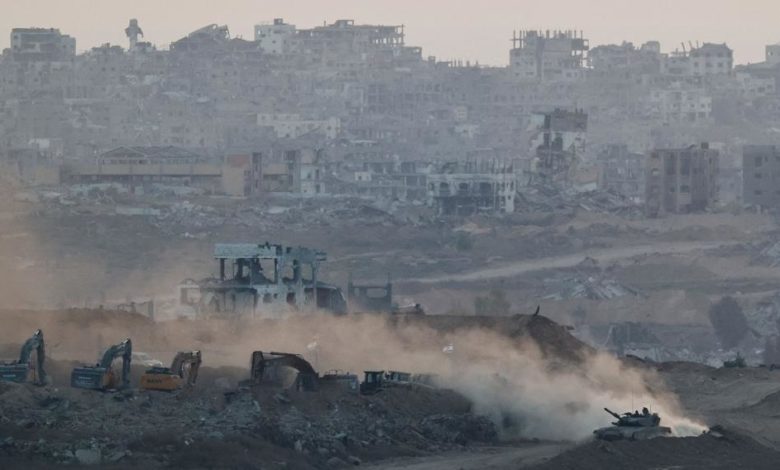
The Israeli authorities announced the occupation of the city of Gaza, which means the intensification of the war with Hamas in the Gaza Strip for nearly two years. The decision was criticized within Israel and in the world. There are concerns that the new campaign will worsen the tragic situation of Palestinian civilians and threaten Israeli hostages.
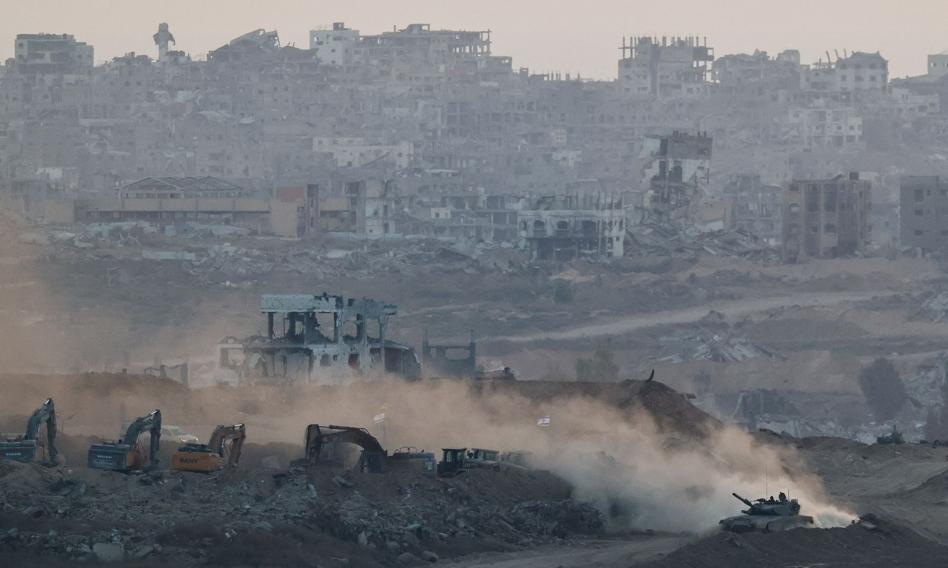
Decision to seize Gaza
The Israeli Security Cabinet decided to seize this largest city of the Gaza Zone at all -night meeting at the night of Thursday to Friday. In a short announcement of the office of Prime Minister Benjamin Netanyahu, it was reported that “the armed forces would prepare to take control of the city of Gaza, while providing humanitarian aid for civilians outside the fighting zone.” The deadline of the new operation or further details has not been given.
Situation in the Gaza Strip
Currently, the Israeli army controls about 75 percent. Gaza zones. These are areas that are directly occupied by soldiers or covered by evacuation orders. In the remaining area, about 2.1 million Palestinians pushed there. The areas not still by Israel mainly cover three regions: the city of Gaza in the north, around the centrally located city of Deir al-Balah and the so-called Humanitarian zone in the south near Al-Mawasi.

According to the army, in addition to civilians, there are still Hamas fighters and other terrorist organizations in these areas, who hide about 20 surviving Israeli hostages.
The cities of Gaza, like most Palestinian territory, are largely destroyed and although there are currently no Israeli soldiers there, it has been many times the target of raids and lands of land forces.
Humanitarian crisis in the Gaza Strip
The new operation will almost certainly worsen the tragic situation of Palestinian civilians. In the war -ruined zone, Gaza is deepening the humanitarian crisis, including hunger. According to local authorities controlled by Hamas, 212 people died of hunger, including 98 children.
Israel is dealing with more and more criticism of world public opinion and has recently allowed the influx of help. Humanitarian organizations, however, alert that transports are still too small.
The activities of the GHF Foundation supported by the USA and Israel, which at the end of May, took over a large part of the food distribution. In the vicinity of its points there were a number of shootings in which hundreds of Palestinians were killed. Israel emphasizes that GHF guarantees that transports will not fall into the hands of Hamas. Critics, including the UN, accuse her of ineffectiveness, politicization and militarization of humanitarian aid.
The US Ambassador to Israel Mike Huckabe announced that with four large GHF food distribution centers, he will create 12 consecutive such points.
What a new operation can look like
According to the Israeli media, the offensive plan assumes the seizure of Gaza in four or six months and will be associated with the displacement of 800 thousand. – 1 million Palestinians remaining there. Civilians are to be resettled south. This process can take from several weeks to two months. Later, Gaza would enter the Israeli army to destroy Hamas's remaining fighters.
Since the outbreak of the war in autumn 2023, approx. 90 percent Residents of the Gaza Strip became internal refugees, many of which had to run away from the war many times. Most live in makeshift tent towns.
Hamas's military potential
Israel informed at the beginning of 2025 that during the war about 20,000 were killed. fighters of this Islamist group. The group's military potential has been significantly weakened. However, Hamas and other militias are still able to put limited resistance in the Gaza Strip, which is favored by, among others An extensive tunnel network or the fact that fighters hide among civilians.
According to American intelligence estimates, at the beginning of the year, Hamas managed to attract about 10-15 thousand during the war. new recruits, but they are less trained and worse equipped than their predecessors killed by Israel.
In the Israeli media there are comments that the attempt to completely eliminate Hamas will be associated with long and difficult fights on the area prepared earlier by the enemy, which can be paid for with serious losses.
Tension between the Israeli army and the government
According to the media, the issue of the future of the war caused a serious dispute between the government and military commanders, including the Chief of General Staff of General Ejal.
The general was to oppose the extension of the offensive, arguing that it exposes hostages and soldiers. Information about the fatigue of the army has already appeared earlier, the reservoirs' reluctance to appear for service or material deficiencies.
Among the critics, there were arguments that entering the areas occupied by civilians would also mean taking over responsibility for them, which would involve organizational and financial effort for Israel, for which the state is not prepared.
After the decision of the Security Cabinet, however, Zamir assured that the army would take the approved plan “as well as he can.”
New offensive and the future of the Gaza Strip
Netanyahu announced earlier that he was seeking to take the entire Gaza Zone, but rejected the accusation that he was planning her occupation. He noted that the power over this area would be transferred to a civil, peaceful administration. However, he excluded that it would be associated with Hamas or Palestinian autonomy.
However, there are fears in the comments that the new offensive is conducive to the implementation of a larger plan to open and propagated by Israeli extreme right. It assumes the occupation and occupation of the entire Gaza Zone, pushing the Palestinians south and to promote as many of them as possible to voluntary emigration, as well as the reconstruction of Jewish housing estates in the Gaza Strip.
Israeli hostages in the Gaza Strip and protests against government plans
50 Israeli hostages remain in the hands of terrorist organizations. According to the army, at least 28 of them are already dead.
While the government decided about the new offensive, thousands of people protested against this movement, accusing the prime minister of abandoning hostages and sentenced them to death.
Hamas had already threatened to kill the abducted if the soldiers approached the places of their detention. According to the media, the Israeli government is aware of this, but this does not affect its plans.
The prime minister assures that he does everything to free the abducted, but also to achieve other main war goals of Israel, i.e. destruction of Hamas as a political and military force.
According to critics, the government should lead to an agreement with Hamas instead of a new offensive. The polls show that most of the Israelis are a truce that would end the war and release all the kidnapped.
This solution, however, would probably allow Hamas to preserve some of the forces and influence, which Netanyahu and his far -right coalition partners, who depend on the survival of the government, do not want to allow.
The Israeli opposition consistently criticized the Gaza Plan, describing it as a disaster that will lead to the death of hostages and soldiers and a long and expensive campaign. The allegations that Netanyahu continued the war for political benefits.
World reactions
The approval of Gaza's occupation met with a critical reaction of many countries of the world, including about 20 Muslim and Arab countries, but also Great Britain, Germany, France, Italy, Australia, China and the European Union. On Saturday at the request of Several Western countries are to take place an extraordinary meeting of the UN Security Council devoted to the Gaza Strip.
On Friday, the media reported that Egypt and Qatar are working on a new truce proposal, which would solve dispute points that were causing the failures of the negotiations conducted for months.
Axios said that on Saturday at Spanish Ibiza there is to be a meeting of the American envoy for the Middle East Steve Witkoff with the prime minister of Qatar Mohammed Bin Abdulrahman as-Sanim. Leaders are to talk about a project to be presented to Israel and Hamas within two weeks.
The war has been going on for nearly two years
The war in the Gaza Strip has been going on from October 7, 2023, when Hamas, the rulers of this territory, attacked the south of Israel, killing about 1,200 people and kidnapping 251, of which 49 are still imprisoned. It was the largest terrorist attack in the history of Israel; Most victims and hostages are civilians.
Israel soon after the attack began raids on the Gaza Strip, and later land operation in this territory. According to the Hamas Ministry of Health, over 61.3 thousand were killed in the war. Palestinians. The institution in their messages does not distinguish civilians from fighters, but informed that nearly half of the dead are women and children.
The war in the Gaza Strip is another armed clash between Israel and the Gaza Gaza Hamas zone since 2007 and the latest installment of the Israeli-Palestinian conflict from the beginning of the 20th century. The dispute concerns the rights to the historical territory of Palestine (before 1948) and the laws of Palestinians living in it. For decades of tensions they deepened subsequent wars and intifada.
The key disputes are: Palestinian law for self -determination, the status of Jerusalem, the borders of the Israel state and the law of refugees, i.e. the descendants of Palestinians displaced in 1948 from the areas of the present Israel. Currently, the situation is additionally complicated by the extensive Jewish settlement in Palestinian areas.
From Jerusalem Jerzy Adamiak (PAP)
adj/ mal/ pad/