Protest announced by one of the judges who stood in solidarity with the magistrates in the Recorder documentary: “What I'm doing now can be called professional suicide”


Sorina Marinaș, judge at the criminal section of the Craiova Court of Appeal, announced that she is joining the protests against the state of the justice system in our country, amid the wave of dissatisfaction triggered by the revelations in the Recorder documentary “Captured Justice”.
“Certainly what I am doing now can be called professional suicide. I, a criminal judge, will do this, even though my hands are shaking, and I know it may mean the end of my career,” the judge wrote Friday evening, in a message published on her Facebook page.
“My career developed exclusively based on INM and exams. I did not pass on interviews. I was appointed judge at 26 years old, today I am 40. My gesture is a manifestation of solidarity and is sufficiently justified by current events,” says the judge.
Thus, she announces that on Saturday, December 13, starting at 5:00 p.m., “I will be at the Craiova Courthouse (where I grew up) and I will protest.”
“It will be a message that this can no longer be done. I am asking you, if you join us, to have a decent, apolitical, peaceful manifesto,” the judge emphasized at the end of her post.
In two hours 2 hours after it was published on the social network, Sorina Marinaș's message gathered approximately 2,000 likes and was shared more than 500 times.
Protest in Craiova
After the revelations in the Recorder documentary, a series of protests were organized on Wednesday, Thursday and Friday in several cities in the country, such as Bucharest, Sibiu, Cluj, Timişoara, Braşov, but also in Craiova.
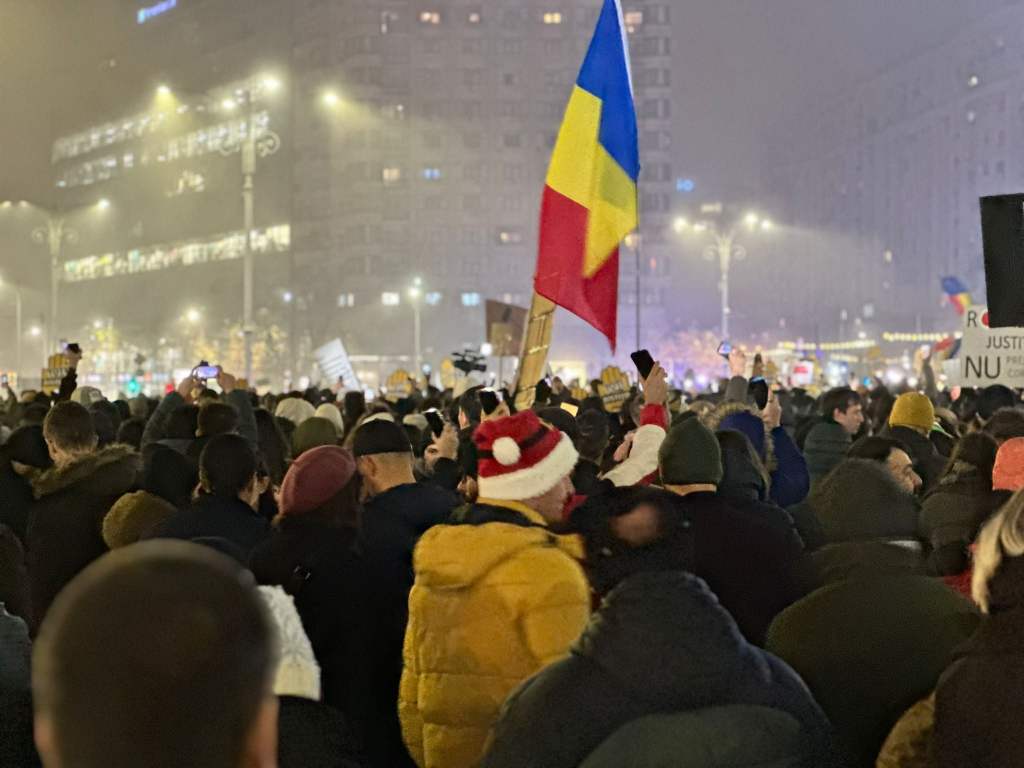 Several thousand people protested in Piața Victoriei. What are the reasons why people say they took to the streets / Protests in other cities as well – VIDEO
In the town of Banie, over 100 people protested in front of the Court, chanting the central message: “Justice, not corruption”.
The participants demanded a fair, transparent and independent judiciary.
Among the chants, you could hear: “Down with Predoiu” and “Justice, not corruption”, according to the local publication Jurnalul Olteniai.
“We are protesting for an independent judiciary. I am a lawyer and I need to believe in a fair justice, because otherwise I can no longer practice. What I saw yesterday at the Bucharest Court of Appeal, to be honest, disgusted me. I had the claim that, if a press conference was still organized, it would be answered promptly. I don't think it is right that instead of identifying and solving the possible problems reported in this system, you start to you are throwing mud at the people who reported them,” said a lawyer present at the protest, according to the quoted publication.
Who is Judge Marinaș?
Judge Marinaș is also the one who posted on Facebook the initial list of the 178 prosecutors and judges who signed the message of support for the prosecutors and judges who make the revelations in the documentary “Captured Justice”.
On Thursday, she said she was sure there would be “repercussions” from the Judicial Inspectorate against magistrates “who dared” to speak out about problems in the judiciary.
“Whenever one of us went out of the pre-set setting, he woke up with the Judicial Inspection on his head, inevitably. If you are a little more vocal, the Inspection automatically comes to the door. I can categorically tell you that we already know that there are discussions at the level of the Inspection to calm us all down,” said Sorina Marinaș, in a telephone intervention with Euronews, according to Agerpres.
“I can't give you exact data on what will happen in the next period, but considering that the procedures initiated by the Judicial Inspection are basically carried out in a very short period of 20-30 days, we will probably all find out very soon. However, I think that, after the public reaction of the judiciary, it should be delayed a little”, added Marinaș.
In the judge's opinion, the press conference convened on Thursday by the management of the Bucharest Court of Appeal was an “attempt to publicly smear certain magistrates who dared to speak about what is happening”.
In September, the judge from the Craiova Court of Appeal explained on Facebook why she decided to sentence a 60-year-old man to 30 years in prison, sent to court for attempted murder, after he tried to kill his wife, for the second time.
At that time, she said that it is necessary for the courts to focus more on the victim, not only on the aggressor, and in justifying the conviction, she draws attention to the phenomenon of femicide in Romania and the inability of the state to protect the victims.
“I have no feeling of pity, although I am aware that he will die in detention.” “Well, on the contrary, it's a solution that makes me happy, I know that we saved society from a person who was a ticking time bomb. And I'm generally happy with solutions when I'm convinced that society is free, at least for a while, of an individual who endangers fundamental rights,” Marinaș wrote in the fall.
Later, the Judicial Inspectorate announced that it had self-referred to her case for a possible violation of the Magistrates' Code of Ethics.
800 magistrates have stood in solidarity with colleagues who made revelations in the Recorder investigation
The number of signatories to the message of solidarity with the magistrates who made the revelations in the documentary “Captured Justice” exceeded 800 by Friday evening.
The list is opened by the former head of DNA Laura Codruța Kovesi, who now heads the European Public Prosecutor's Office, followed by six judges from the Bucharest Court of Appeal (CAB) and 9 other retired magistrates from the same court and the High Court. There are 33 magistrates from the Bucharest Court of Appeal on the list.
There are also 18 prosecutors from DNA and 61 from DIICOT on the list of those who stood up against “captured justice”.
The signatories are judges and prosecutors from several courts and prosecutor's offices in the country, including Brașov, Iasi, Arad, Baia Mare, Sibiu, Oradea, Satu Mare.
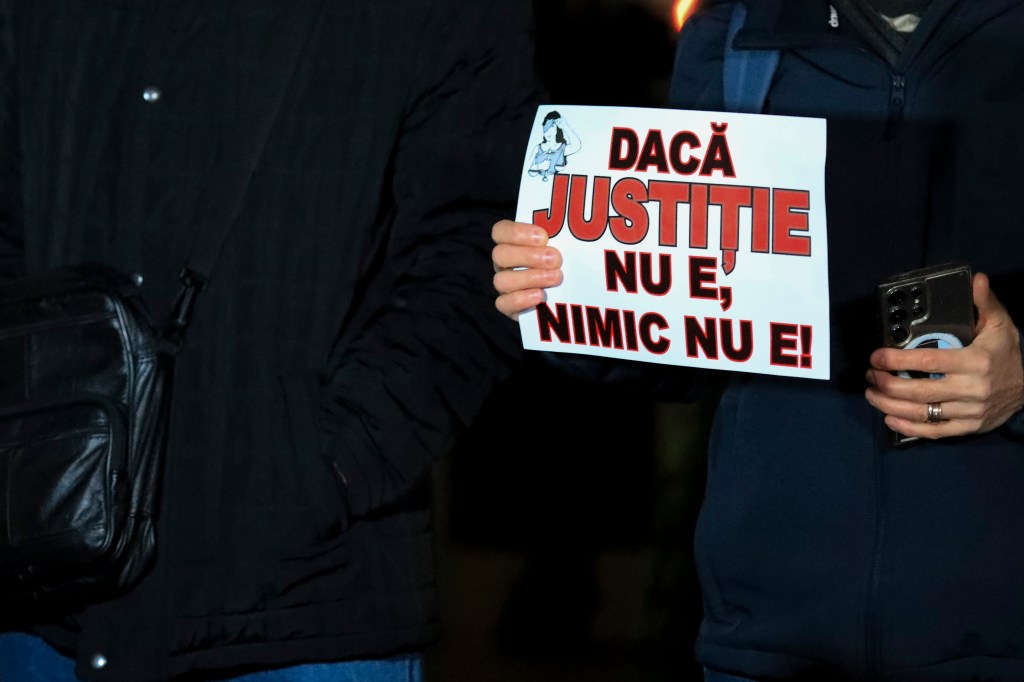 More than 300 magistrates joined colleagues who spoke of “captured justice”. Who are the more than 500 magistrates. A surprise name
In their message, the judges and prosecutors say that “silence is not an option when the values of the profession are at risk”:
“We publicly express our solidarity with the magistrates who had the courage to denounce the problems and pressures in the justice system. The truth and integrity must not be sanctioned, but protected. Silence is not an option when the values of the profession are endangered. At the same time, we emphasize that the reported aspects are not isolated. Deep and systemic dysfunctions persist, and their assumption is essential. Justice needs not only courage, but also a real, honest reform, to be able to remain free, fair and credible – in the service of the citizen”, affirm the signatories.
The documentary “Captured Justice” was published on Tuesday evening by the Recorder on its YouTube channel. The film is an investigation about the state of justice in Romania, the phenomenon of statutes of limitations, but also the effects of the centralization of power at the level of “some magistrates who coexist with politicians”.
In the Recorder documentary, the military prosecutor Liviu Lascu, Crin Bologa, the former chief prosecutor of the DNA between the periods of Laura Codruța Kovesi and Marius Voineag, but also a prosecutor from the DNA and a judge from the Court of Appeal, who spoke anonymously, were interviewed. Claudiu Sandu, representative of the prosecutors in the CSM, said that the excessively formal interpretation of the law led to the annulment of the evidence in the file “for anything”, for what he metaphorized as “a comma”.
Kovesi's message
The sanctioning of magistrates who take a stand against abuses within the justice system “can only be interpreted as a measure of retaliation”, Laura Codruța Kovesi told HotNews on Friday.
The former head of the DNA and currently the prosecutor leading the European Public Prosecutor's Office, Kovesi recalled the decision of the ECHR that gave her the right when she accused that she was illegally revoked.
“The European Court of Human Rights has clearly ruled that magistrates enjoy freedom of expression when they report serious institutional dysfunctions or abuses that affect the functioning of the justice system,” Kovesi told HotNews.
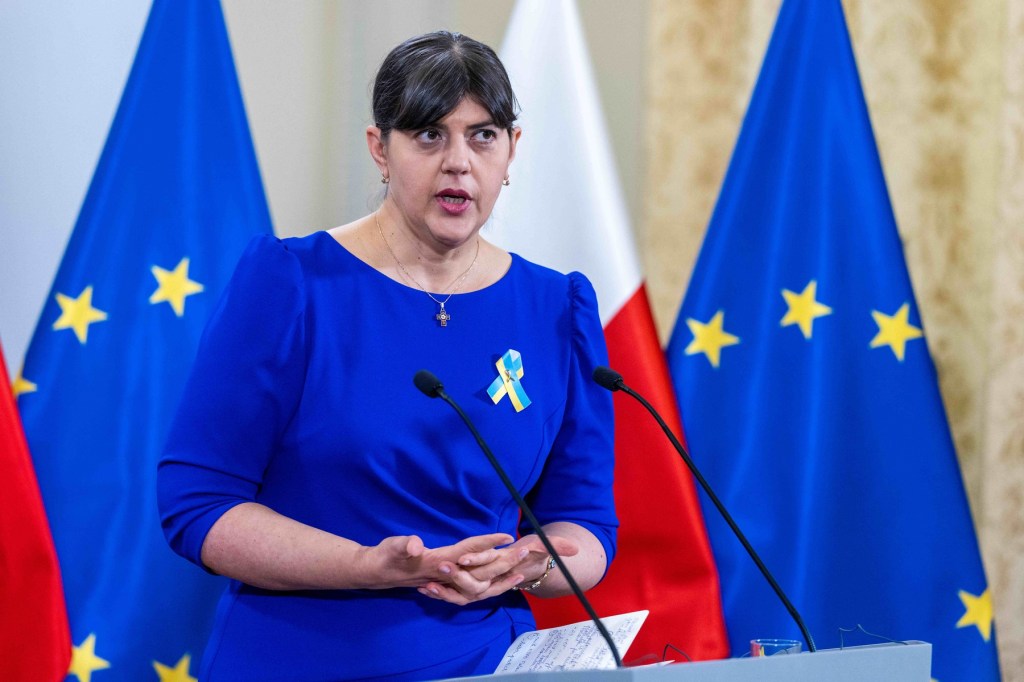 Laura Codruța Kovesi, message of solidarity with the magistrates who rose up against “captured justice”. Appeal to the Romanian authorities
“In the case of Kövesi v. Romania, the Court held that sanctioning or revoking a magistrate for opinions expressed in the public interest constitutes a violation of the European Convention on Human Rights. This principle is not a personal one, but a universal one, applicable to all magistrates who act in good faith”, explained the former head of the DNA.
She stated that, in her capacity as European Chief Prosecutor, “I wish to express my concern regarding the recent revelations that affect the independence and reputation of the judiciary in Romania”.
“What is an even greater cause for concern for me, coming from Romania and having a personal experience with a similar situation just a few years ago, is the reaction of the responsible authorities to these revelations. The application of disciplinary sanctions to judges and prosecutors who take a stand against abuses within their own professional body can only be interpreted as a retaliatory measure, aimed at silencing a legitimate and deeply needed criticism,” added Laura Codruța Kovesi.
She stressed that instead of “repressive measures against judges and prosecutors who have reported abuses”, the authorities “should focus on the substance of these criticisms, by establishing the facts and defining appropriate corrective measures on that basis”.