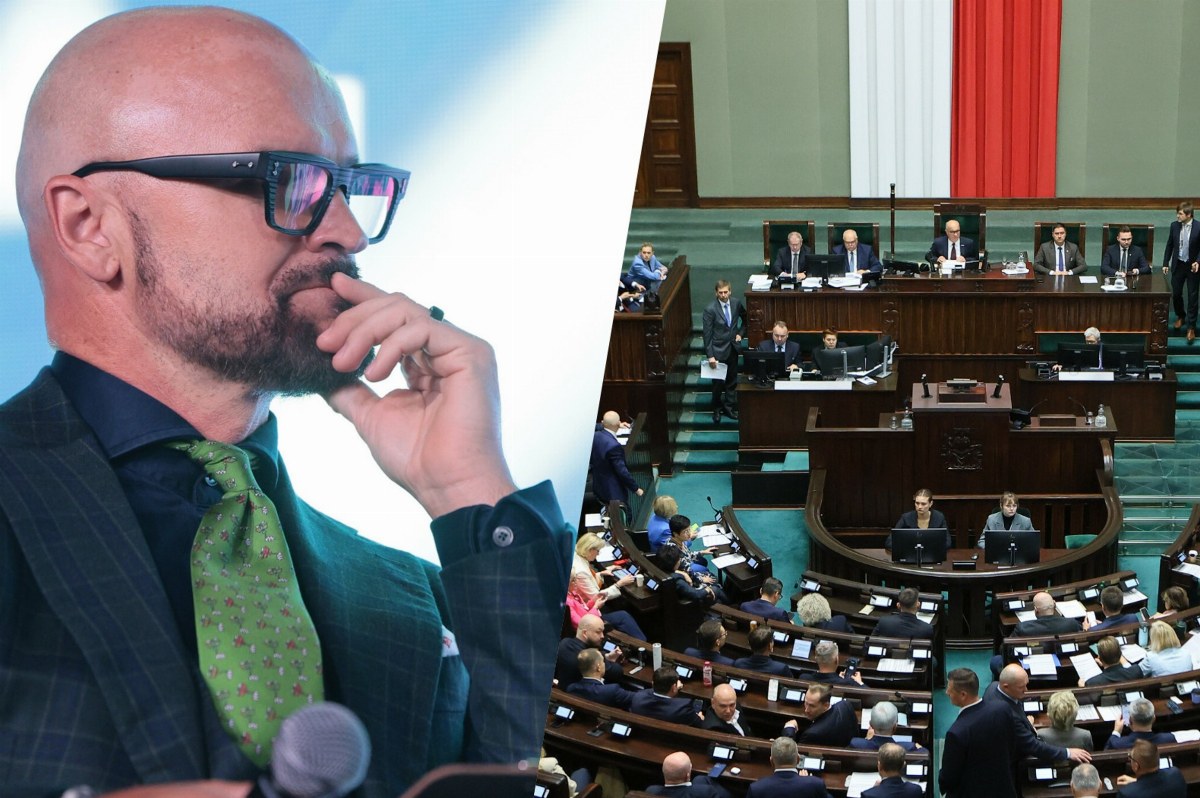
During a recent conference hosted by the Sobieski Institute, a think tank aligned with right-wing politics, discussions centered on Poland’s future strategy exposed significant rifts within the Polish political landscape. The event, which received honorary patronage from President Karol Nawrocki, featured politicians from various parties.
Participants included Deputy Speaker of the Sejm Krzysztof Bosak, PiS MP Piotr Gliński, PSL MEP Krzysztof Hetman, leader of Rozwoju Plus Mateusz Morawiecki, Minister of Funds Katarzyna Pełczyńska-Nałęcz, and chief of the president’s cabinet Paweł Szefernaker. Gliński criticized the current government, claiming it aims to annihilate political opposition, while emphasizing the need for unity among Polish patriots to address the nation’s strategic challenges.
Szefernaker echoed this sentiment, accusing Donald Tusk of perpetuating a doctrine of eternal conflict, which he argues hinders the establishment of a new operational system essential for national progress. He warned that without filling key positions, such as those in the NBP management, Poland might become the first EU country lacking a full governing board.
As discussions progressed, the need for a comprehensive strategy for the next few years became evident, with Szefernaker asserting that the president aims for a bipartisan approach to development. Meanwhile, business leaders like Rafał Brzoska criticized politicians for failing to discuss Poland’s future direction, suggesting that many behave as though preparing for a war long concluded.
Brzoska pointed to a new colonial policy by the United States and urged Polish politicians to respond effectively to contemporary challenges. His remarks were supported by Krzysztof Domarecki from Selena, who called for a new energy doctrine to address the demands of the 21st century, emphasizing the need for affordable and abundant energy to ensure economic growth.
Domarecki highlighted the significant energy cost disparities affecting Polish businesses compared to their counterparts in countries like Kazakhstan and China. He proposed that energy prices should not exceed 250 zł per MWh to support economic sustainability. Additionally, he called for the elimination of subsidies and regulatory constraints that hamper competition in energy markets.
Echoing these concerns, Maciej Mylik from ElevenLabs stressed the critical need for talent alongside energy resources to compete globally, while Jacek Dąbrowski from Synerise warned of potential sovereignty threats from the ongoing arms race in technology, particularly AI, led by the U.S. and China. He emphasized the importance of having access to energy and computing power in navigating these challenges.
Business leaders demanded that the government set clear objectives and ensure their implementation, as well as equal treatment of Polish companies compared to foreign firms. They also advocated for long-term plans in innovative sectors, including space exploration.