
A war for the TV market is taking place before our eyes. China has a big plan, and on the front line TCL, Hisense, Xiaomi


The announcement of the creation of a new joint venture between the Chinese TCL and the Japanese Sony Electronics, which will de facto absorb the Sony Bravia brand and provide the Chinese giant with a 51-percent majority of shares in the new company, slightly overshadowed other significant movements of big tech from the Middle Kingdom on the RTV market. In a short period of time between 2025 and 2026, three Chinese companies that already have an established position in the TV segment (TCL, Hisense and Xioami) will be joined by several others.
First of all, Huawei has officially launched its Mate TVs, including the gigantic 110-inch mini-LED TV Mate TV Max. This company has already had a love affair with TV thanks to the Huawei Vision S series TVs, and although it is still limited mainly to the local market in China, it cannot be denied that we have heard about Huawei TVs more times in recent months than ever before.
In the fall of 2025, we had the unexpected debut of TV Haier, a Chinese company that was previously famous for producing household appliances. We wrote extensively about new TV sets in Poland in Komputer Świat, it is worth emphasizing here that the flagship model is also mini-LED, although The offer also includes OLED Haier C95 on a WOLED matrix from LG Display.
In turn, the beginning of 2026 is Polish debut of Dreame TVsa Chinese company that has so far been famous for its cleaning and mowing robots. In February, at the conference, we had the opportunity to see a literal flood of equipment from this manufacturer, and the offensive was also complemented by Dreame S100 mini-LED TVs.
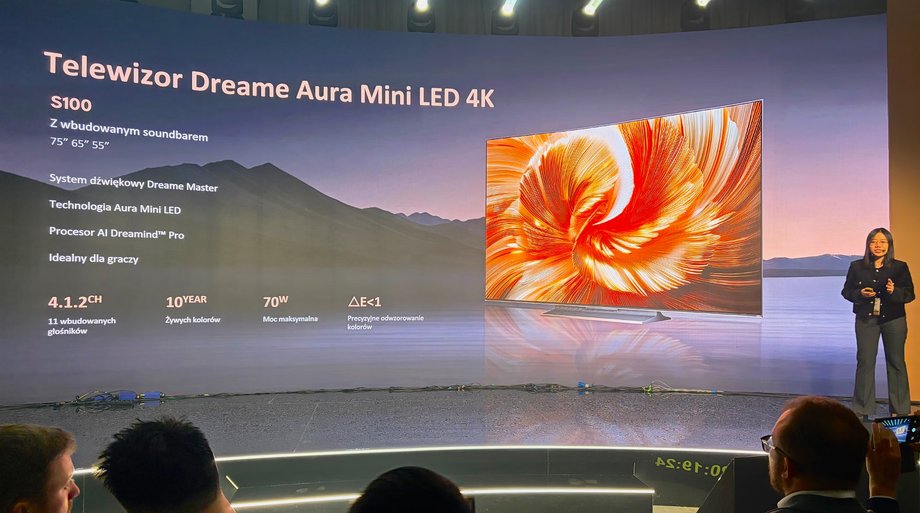
Dreame TVs
|
Piotr Kwiatkowski / Komputer Świat
Read also in BUSINESS INSIDER
TCL, Hisense and Xiaomi, who have been on the TV market for much longer, from 2022, they have focused heavily on packaged LCD TVs with advanced mini-LED backlightingahead of the availability of very large sizes (above 75 inches) at reasonable prices from manufacturers from South Korea (Samsung and LG) or Japan (Sony and Panasonic). These efforts paid off because the cumulative shares of the three companies mentioned above give them an advantage over successful Korean producers, who previously absolutely dominated the RTV segment.
Paradoxically, however it's not the mini-LED TVs that are at stake hereeven though large and very large screens with this backlight are currently the fastest growing part of the TV market.
Chinese printed OLED matrices are a key element
Currently, Samsung and LG have retained their dominance only in the premium and ultra-premium segments thanks to OLEDs. Currently, only Samsung Display and LG Display produce their own OLED matrices for TVs (QD-OLED and WOLED, respectively), and the latter company achieved great success in selling panels with organic diodes to other manufacturers such as Philips, Sony, Panasonic and Samsung.
Everything indicates that Chinese producers also dream of this – selling both its own OLED TVs and becoming a matrix supplier. The biggest chance for this is TCL CSOT, one of the main manufacturers of LCD matrixes, which has been working on implementing the technology of printed OLED panels for several years. Without going into technical details – it is about the technology of applying organic material directly to the substrate (OLED display substrate) in a way similar to how it works in inkjet printers. This is supposed to be a much cheaper process than the one used by the Koreans, and a printed OLED screen for a car was presented during CES 2026.
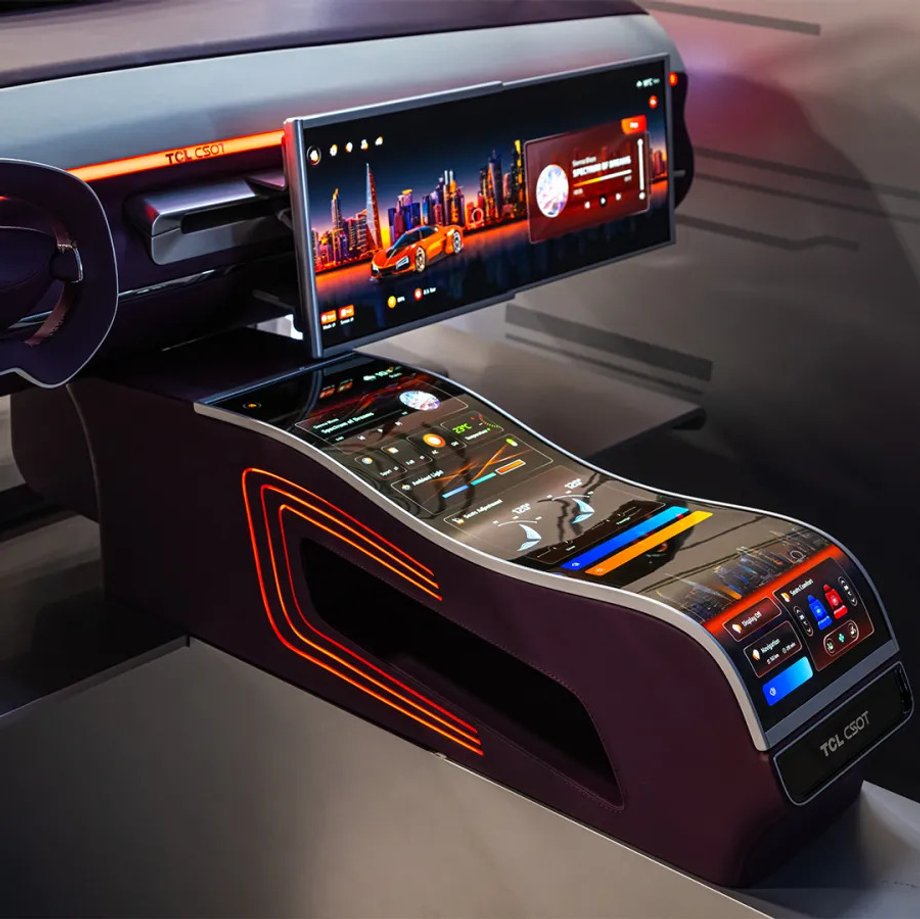
Visualization of a car cockpit with a printed OLED screen (IJP)
|
TCL
According to unofficial information Printed OLED screens will first go to smaller screens (e.g. tablets, monitors or specialized medical displays), but within 2-3 years we can expect the first OLED TVs made using the new technology. Thanks to this, Chinese producers will gain the last piece in their puzzleovertaking Samsung and LG in last place. And this may be why we've heard so much about Chinese TVs in the last few months – a logistics, marketing and communication base will be built on LCD screens among others with store chains, influencers and the media, which will then be used for a full-fledged offensive of Chinese OLEDs.
- Read also: Japanese electronics for next to nothing. This is the best time for shopping
In principle this would allow Chinese manufacturers to enter the high-margin segment of the premium and ultra-premium TV market. TCL and Hisense are practically already there and as a person who both tests screens and closely follows the RTV market, I can write that in a very short time (from 2022) both companies have significantly improved the quality of their TVs, as well as digital image processing and local dimming algorithms. The latter is an absolutely key aspect from the point of view of a mini-LED TV, which is responsible for, among others, for the quality of the HDR effect or the depth of black.
Consumers, for whom TCL and Hisense are not premium brands, look at it slightly differently, and “for safety” in the mid-high-end or strictly premium range (over PLN 10,000) they choose OLEDs from Samsung and LG. This is one of the reasons why TCL de facto took over control of the Sony Bravia brand, which is famous for being premium, even if some Japanese TVs do not deserve this label. The entry of a large number of Chinese producers into the OLED market would be a serious problem for Samsung and LG, and high competition would force them to lower prices, which, of course, would be very beneficial for customers. However, they may turn out to be more unpredictable than Chinese companies expect.
Brand loyalty brakes expansion
Dreame, Harier and Huawei with OLEDs on new matrices from TCL CSOT will compete not only with Korean TVs, but also with each other, but Contrary to appearances, price does not always come first. If Chinese companies that have recently entered the TV segment and want to stay in it longer beyond the strictly local market, they must seriously think about standing out. These TVs already look very similar to each other, they use the same Smart TV system (usually Google TV) and offer similar image quality.
In addition, there are childhood diseases related to, among others: with the already mentioned image processing or Smart TV operation. TCL and Hisense have been struggling with this for a long time in their LCD TVsand the first of these companies can gain a lot from partnership with Sony Bravia, because the Japanese have the best image dimming algorithms on the market for mini-LED TVs. So it's possible that There will also be some problems in Chinese OLEDsabout which their creators, and especially us, have no idea yet.
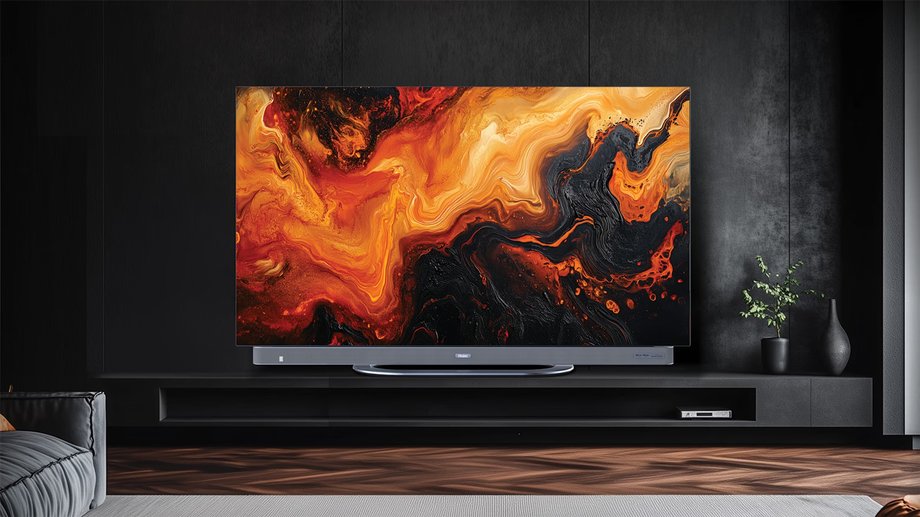
Haier TV
|
Haier
The third and perhaps most important issue is recognition. Sharp, JVC and Philips, even though they have long been a shadow of their former power in the RTV segment, are still associated with good TV sets. The latter manufacturer, although its TV division has been in the hands of TP Vision for many years, and the “Philips” on the TV is just a badge, has an external backlight system Ambilightwhich means that for many people, buying such a TV is the only sensible option.
Playing with a low price, although possible, as Xiaomi has shown, may turn out to be very difficult in the long run. And when many similar-looking TVs with similar images appear in stores, customers may feel lost, which is clearly visible, among others, in the smartphone market. Although Chinese brands such as Xiaomi or Realme (and their numerous sub-brands) invest a lot in marketing and offer really good smartphones, Apple and Samsung have absolute dominance in the mobile segment.
Well-established manufacturers/brands such as Samsung and LG may benefit greatly from the current and future offensive of Chinese TVs. Customers who simply don't know what to choose will choose what they know well. Therefore, it is possible that the takeover of the Sony Bravia brand by TCL may turn out to be a move into the future that will allow the Chinese giant to survive potential turmoil.
We will have to wait for the resolution of the TV war, but these will certainly be good years for customers. Those consumers who will gain the most will be those who approach the choice of TV wisely and, instead of accepting marketing pulp, read independent tests or guides created by experts familiar with the industry.


