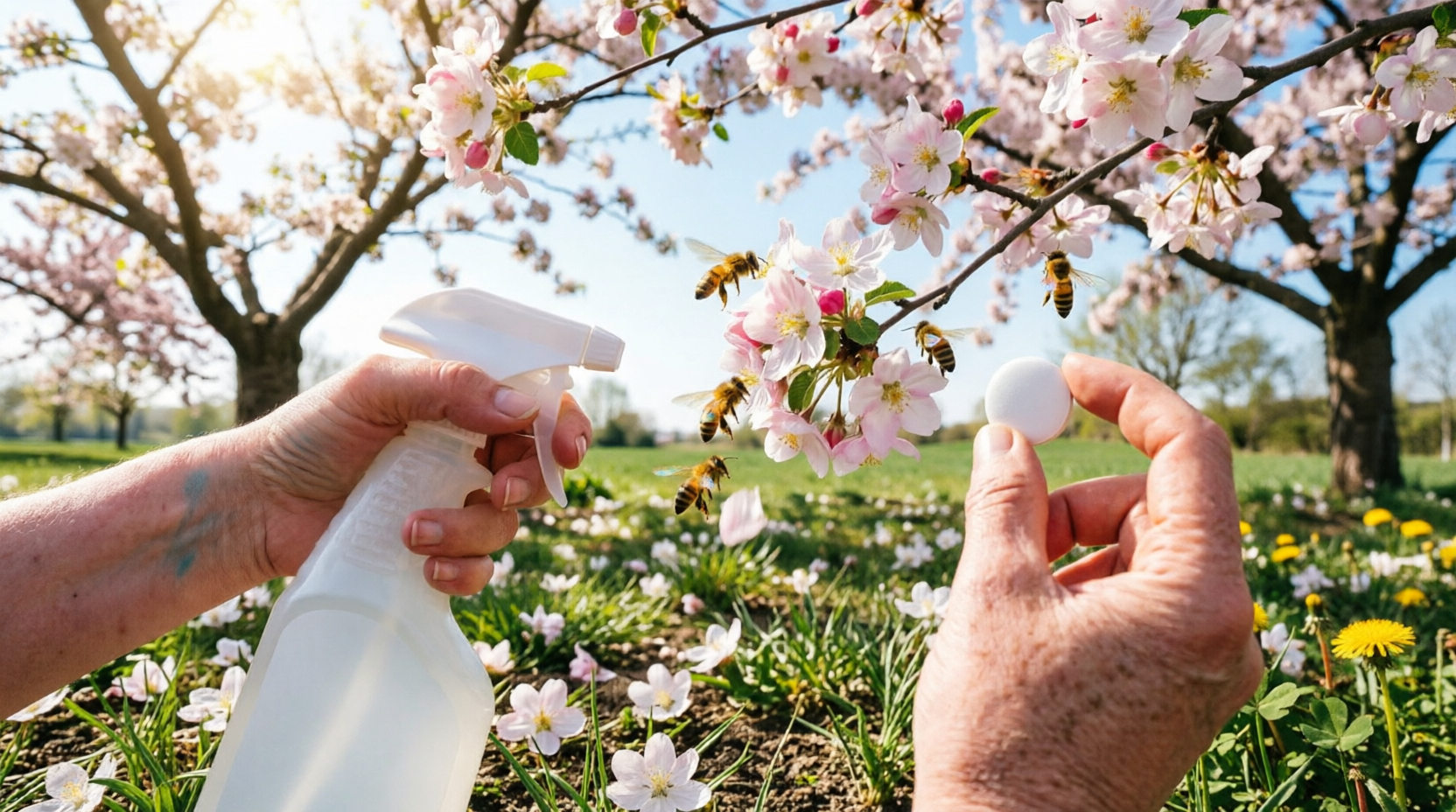
A garden without bees risks remaining just a beautiful but barren corner. Without these insects, even abundant spring flowering rarely turns into a full-fledged harvest of fruits and berries.
However, you can attract bees if you know a few tricks, says biologist Ivan Russkikh in his blog “Ivan’s Science” (18+).
Why do bees ignore the area?
These insects are quite picky. If they avoid your garden, there are specific reasons:
- Chemical treatment. Insecticides of the neonicotinoid group (Aktara, Iskra Zolotaya, Biotlin) are especially dangerous. They either scare away or kill pollinators.
- Inconvenient flowers. Decorative “double” varieties with tightly closed buds are beautiful, but it is difficult for the bee to get to the nectar.
- Attractive competitors. If there is a large field of honey plants (rapeseed, buckwheat) within a radius of 5–7 km, the insects will fly there.
- Weather and lack of water. In cold weather, strong wind or rain, activity decreases. In addition, bees need clean water to cool the hive and feed them.
How to attract pollinators
Start by planting “magnet plants”: clover, phacelia, mint, lavender, lemon balm, echinacea. In the spring, do not rush to mow down dandelions – let them bloom.
Provide continuous flowering from early spring to autumn so that plants succeed each other. Avoid pesticides at least during the period of active flowering. Set up a shallow container with water and pebbles so the bees can drink without risking drowning.
Important nuance: You should not spray flowering trees with sugar syrup or a solution with honey – this will attract ants and flies, and also provoke the development of sooty fungus.
The role of caffeine (“Citramon” for the garden)
Research shows that caffeine in low concentrations affects the behavior of bees. Those who have tried caffeinated nectar remember the smell of the flower three times better and are more willing to return to it. Caffeine also makes them think the nectar is sweeter and more nutritious than it actually is.
In practice it works simply:
- For drinking: 1 mg of caffeine per 1 liter of water. Bees will return to such a source more consistently.
- For garden spraying: 3 mg of caffeine per 1 liter of water. The solution is applied directly to the buds and flowers, which “binds” the insects to the area more strongly.
Caffeine for bees can be taken from Citramon or Askofen tablets. The usual dose of caffeine per tablet is 25–30 mg. This is enough for a bucket of water (10 l) to spray any plants.
You can also add Novosporin Light to the caffeine solution. It prevents monilial blight and fruit rot, and at the same time heals the bees themselves, since the microbes it contains work as a probiotic for both plants and insects.