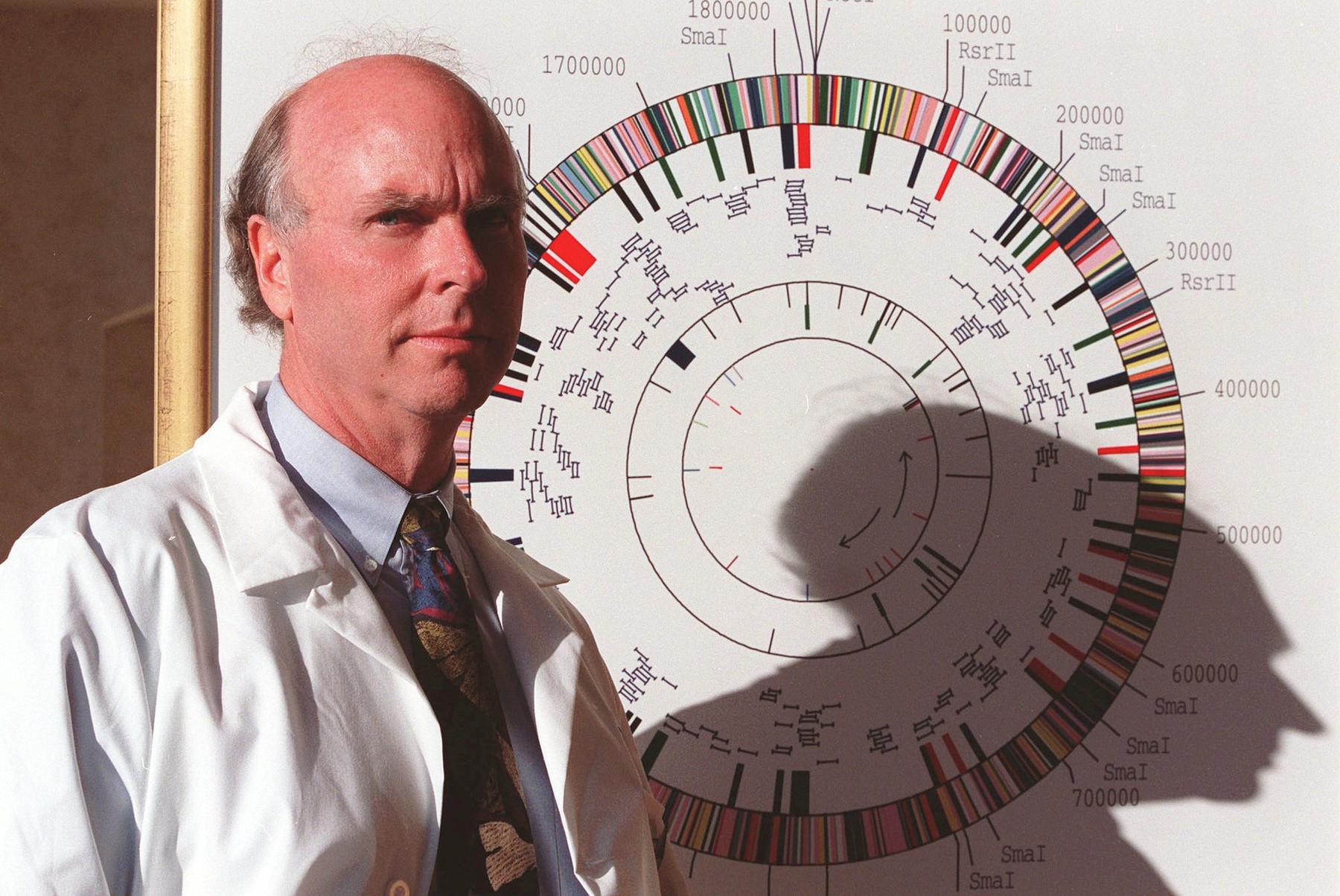
J. Craig Venter, the American researcher who first sequenced the human genome and helped scientists understand how genes shape our lives, has died, the Associated Press reported Friday. He was 79 years old.
Venter's death, which occurred on Wednesday, was announced by the J. Craig Venter Institute, a genomics research group based in the US states of California and Maryland. The institute said he died in San Diego after being hospitalized for side effects from recent cancer treatment.
In the 1990s, Venter bet that he could use a different sequencing technique to speed up the process of deciphering the human genome and succeed in doing so ahead of a huge government effort called the Human Genome Project.
And in 2000, his private company, Celera Genomics, announced, along with the leaders of the Human Genome Project, that they had deciphered the 3.1 billion subunits of DNA, the chemical “letters” that make up the recipe for human life. Three years later, in April 2003, the project declared the genome sequenced complete.
what he said J. Craig Venter about the huge achievement
“Some have told me that sequencing the human genome will diminish humanity, taking away the mystery of life,” Venter said at a White House event in 2000 regarding the achievement. “Nothing could be further from the truth,” he pointed out.
Venter, who served in the U.S. Navy during the Vietnam War, said that experience taught him how fragile life can be and sparked his curiosity about how the trillions of cells in the human body work together to create and maintain life.
He also worked at the National Institutes of Health, where he helped develop a technique to rapidly identify large stretches of human genes.
He later became the first person to publish his own sequenced genome, with the hope that researchers will be able to analyze it to learn what was inherited from each parent and where vulnerabilities to disease might exist, paving the way to the possibility of one day tailoring treatments to each person's genetic profile.
He and his team also made an important breakthrough in synthetic biology by creating a bacterial cell with DNA synthesized in the laboratory.