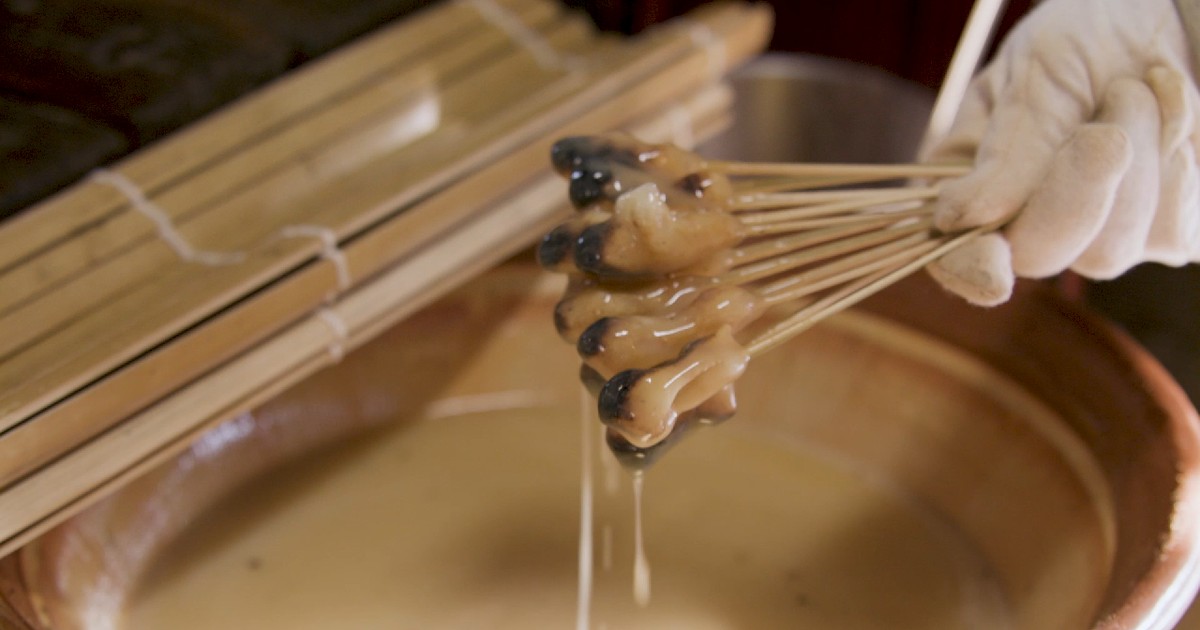
Here is one of the oldest companies in Japan. And aburi-mochi is the only dish on the menu. For over 1,000 years, the restaurant has served worshipers who visit the neighboring Shinto shrine to pray for good health. Many believe that eating puffed rice cakes protects against disease.
The store survived fires, civil and world wars, and even smallpox epidemics. All this time, 25 generations of one family have been running it, combining food and faith. We visited Ichimonjiya Wasuke in Kyoto to see how this place has survived.
Read also: Each bowl requires 20 tails and noses. They give a second life to skateboards
How is aburi-mochi made?
It all starts with wooden skewers. Owner Naomi Hasegawa carves them from special bamboo grown around the temple for ritual purposes. Therefore, they are considered sacred and treated with the same care as any other ingredient.
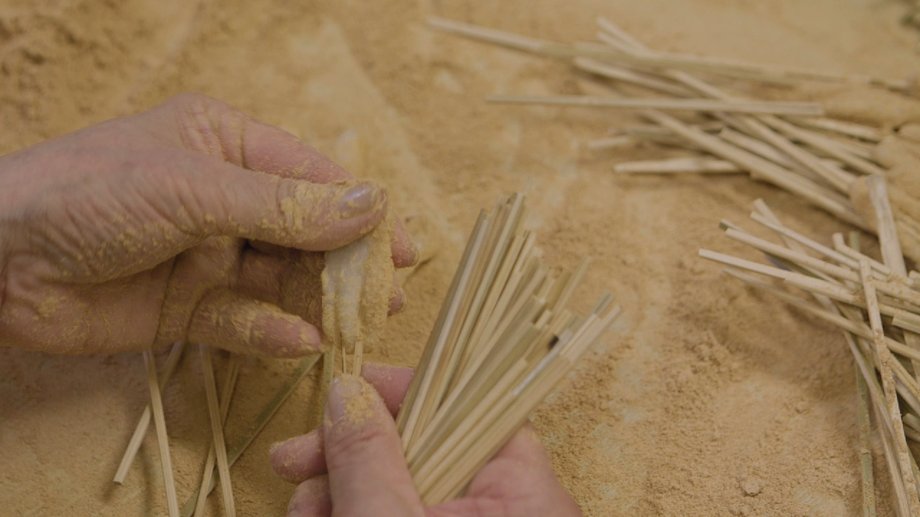
Making aburi-mochi starts with wooden skewers
|
Business Insider
The important task of disinfection is handled only by the owners, i.e. the owner and manager.
Skewers are gifts from God, so we take care of them and use them repeatedly
says Naomi Hasegawa, owner of Ichimonjiya Wasuke
Then Naomi prepares sweet miso sauce. He knows the recipe by heart. He measures the ingredients by eye and checks the consistency of the mixture. She learned everything from her aunt, the previous one.
— My predecessor was stubborn and did everything herself. It's hard to predict whether something will happen to me one day, so I taught this craft to all the women in my family, admits Naomi.
Naomi mixes today's batch with yesterday's for a richer flavor. Ichiwa uses a machine to prepare mochi dough instead of the traditional method of steaming and pounding.
Our ancestors would probably be furious if they knew we were using a machine. After all, we do not mass produce our mochi. We make each cookie individually and personally. We have mechanized the process, but the original spirit remains. This is an offering to Kōjin-sama, the god of fire
– he adds.
Read also: The climate crisis is destroying agriculture in Pakistan. Farmers in a dramatic situation
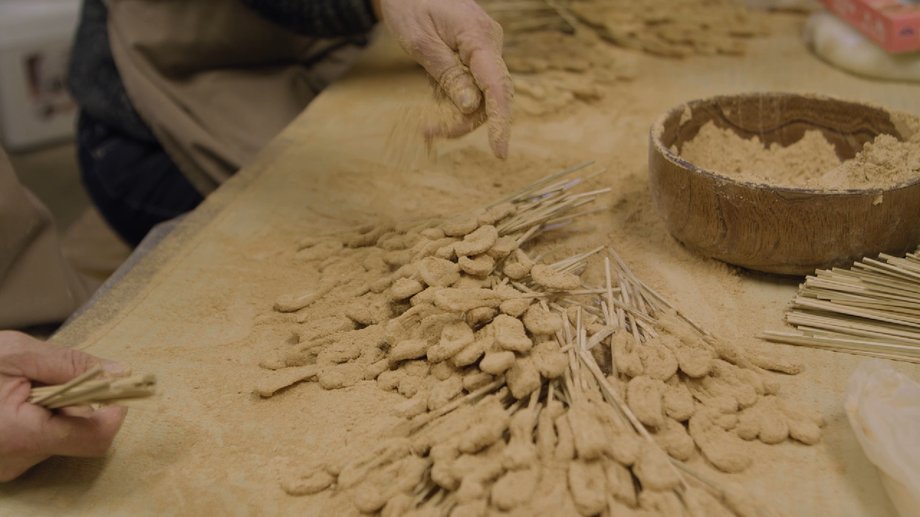
The tradition of making aburi-mochi dates back a thousand years
|
Business Insider
The first mochi has one purpose
Every day, Naomi prepares her first mochi as an offering to the gods and ancestors. Then it's time to put everything together. Naomi and her workers work on a woven mat covered in baked soy powder.
They cover the mochi with it, then measure out thumb-sized pieces and stick them on a skewer.
—The skewers are double because mochi swells while baking and could slide off if the skewers were completely straight. Because they are double, the mochi stays in place, explains Naomi.
To roast the mochi, Naomi turns them until they are a uniform dark color. It only takes about a minute, but requires a lot of attention because the mochi can easily burn, and even worse, the bamboo can burn. Naomi is even picky about the charcoal she uses.
This is binchotan, a high-quality oak charcoal that is much harder than ordinary charcoal. The word “aburu” means to roast. That's why the snack is called aburi-mochi.
“To roast mochi properly, you need to roast it for at least 10 years,” explains Naomi.
Naomi dips the aburi-mochi in the miso sauce while they are still warm. Eleven mochi skewers and a cup of green tea cost 500 yen (approx. PLN 11.50).
Naomi and her predecessor have kept this price constant for over 30 years, but had to reduce the number of skewers from 15.
— My older brother, now the head of the family, says: “We don't have to earn too much. Our store comes from serving people, so we should only work enough to not get bored,” says Naomi.
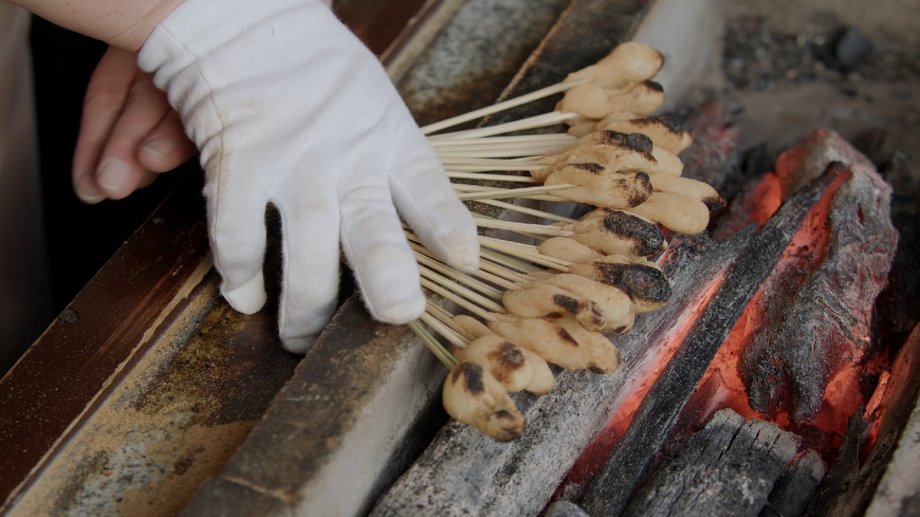
To roast the mochi, Naomi turns them until they are a uniform dark color
|
Business Insider
Business versus tradition
The Imamiya Temple, which Ichiwa operates, was founded in 994, when Kyoto was suffering from a smallpox epidemic. The locals worshiped Shinto deities who were believed to cure diseases and ensure long life.
Naomi says the original founders of Ichiwa served the head minister and then opened up shop to serve worshipers as well. They used to give out aburi-mochi for free and only sometimes received small amounts from pilgrims.
From the beginning, it was a tradition that the business was run by women from the family.
Men work in other professions and earn money for the family, while women work here to protect the family and the aburi-mochi of Ichimonjiya. I am a daughter myself and together with my brothers' wives we take care of this place
– says the woman.
Naomi is the 25th owner of Ichiwa, having taken over the business from her aunt 13 years ago. To adapt the company to modern realities, it introduced several improvements, such as providing insurance to employees and installing a time card system.
However, he does not agree to use food delivery apps.
— We politely decline all offers because mochi should not be treated this way. We make aburi-mochi for temple visitors, not for people who don't want to come here and pray to God, says Naomi.
Although Ichiwa was founded during the plague epidemic, nothing could have prepared the employees for the coronavirus pandemic. In 2020, the store was closed for almost two months and debts had to be incurred to keep employees paid even during the closure.
Even the government's tourism promotion program was not enough to attract many customers. Naomi's hopes for the future lie in the next generation of her family.
She believes her children or nieces and nephews will take over the business after her, but there is no succession plan in place. This is an intentional action.
If I appointed someone now, that person would be under enormous pressure. God and our ancestors should decide this when the time comes
– he explains.
Naomi says she would enjoy retirement, but for now she has loyal guests to feed.
— As long as the Imamiya Shrine stands, we will not give up. If one day it falls into disrepair, then we will retire. There is no way we could close our business early – he adds.