Trump sees “a lot of progress” after talks with Zelenski, held at Mar-a-Lago on Sunday. And the Ukrainian leader described the meeting as “great”. But a peace agreement is far from materializing.
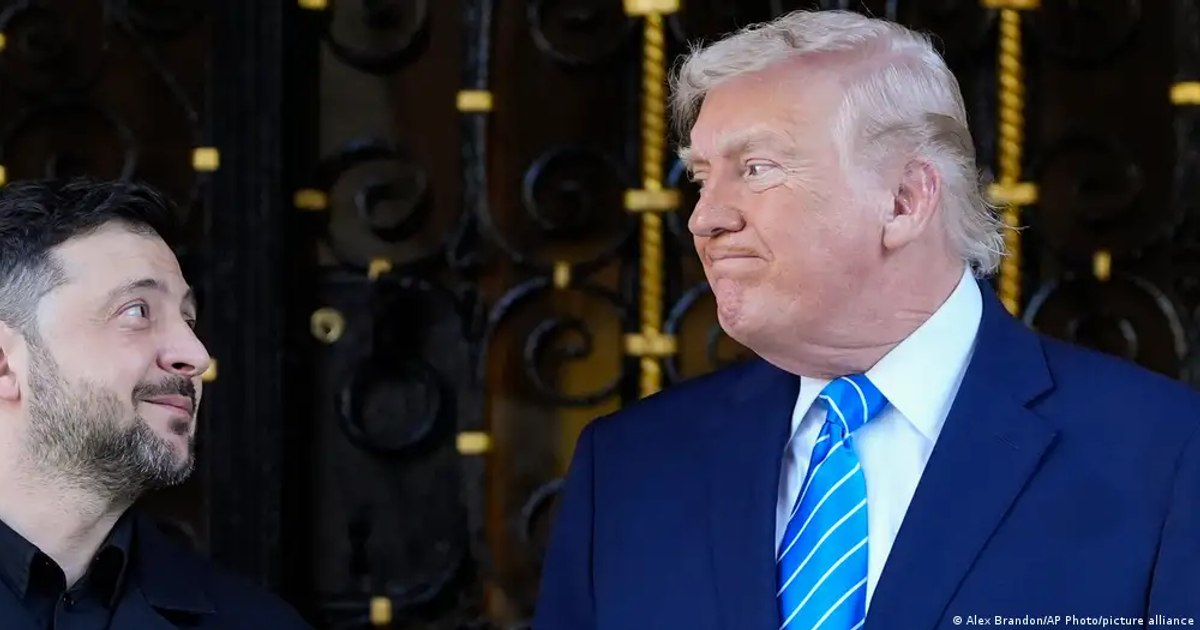
Donald Trump and Volodymyr Zelensky at Mar-a-Lago
Russia and Ukraine may be “very close,” even “closer than ever,” to an agreement to end nearly four years of war, but there is no guarantee that it will be signed. This message was delivered yesterday evening (December 28, 2025) by US President Donald Trump at the end of talks with Ukrainian leader Volodymyr Zelensky, whom he received at his Mar-a-Lago residence.
Progress, but fragile
“It was a very difficult negotiation. If things went very well, it may take a few more weeks. If they went badly, it will take longer,” Trump told reporters after the meeting. “We'll know in a few weeks, one way or the other, I think. We could have a situation where one element, which you don't even think about, is a major element and turns everything upside down.”
The head of the administration in Washington admitted that “one or two very thorny issues” remain unresolved, but he estimated at almost 95% the share of subjects on which the parties would have agreed.
A 20-point peace plan, drawn up by Ukraine and the United States, is almost complete, Zelensky also said after the talks in Florida.
Two hours before the meeting at Mar-a-Lago, Trump spoke by phone with Russian President Vladimir Putin. Moscow spoke of a “friendly tone” in which the discussion took place and noted that Trump listened to Putin's assessment of the peace talks.
Trump would go to Kyiv to speak to the Ukrainians
The leader of the White House said that “he has no problem traveling to Ukraine” to boost the peace negotiations through a meeting with the political class in Kiev. “I offered to go and speak in their parliament and, you know, if it would help, I don't know if it would help. I don't even know if it would be well received. I'm not sure it would really be necessary, but if it helped save 25,000 lives a month, or whatever the figure was, I'd certainly be willing to do it.”
Trump's offer came after Zelenskiy reiterated that he does not have the authority to cede territory to Russia. The Ukrainian leader explained that the decision belongs to the Verkhovna Rada, the country's parliament, or it would even depend on the outcome of a possible referendum. “It is their land”, explained the president from Kyiv. “The land does not belong to one person, it is the land of our nation, over many generations.” But, Zelensky added, addressing Trump, “you are welcome.”
Fundamental differences between Russia and Ukraine persist, however, and the success of the negotiations depends largely on the willingness of Moscow and President Putin to make real concessions to accept the framework agreed by the American mediator with the Ukrainian side. Russian officials have rejected several proposals by Kiev and the West in recent months. However, Trump claims that in the conversation with Putin, the head of the Kremlin would have expressed his interest in an agreement, without detailing the conditions set by Russia.
The 5% of major differences
From the Ukrainian perspective, a sensitive point is the security guarantees that Zelenskiy insisted on in the Florida talks, while Trump suggested that Europe should play the main role in this effort. The President of the European Commission, Ursula von der Leyen, confirmed talks between European leaders, Trump and Zelenski, and emphasized the need for “solid security guarantees from day one” of a peace agreement.
In response, Russian Foreign Minister Sergei Lavrov ruled out the presence of European peacekeeping troops in the disputed areas and warned that they would be considered legitimate targets.
Moreover, territorial disputes, especially in the Donbas region, remain unresolved. Ukraine would be willing to withdraw its troops, for the creation of a demilitarized zone. Russia, on the other hand, has shown no signs of relinquishing control over this territory. “It's a big deal,” Trump told reporters. “It's definitely one of the big issues and I think we're getting closer.”
Another controversial topic is the Russian-occupied Zaporozhye nuclear power plant. Trump claimed that Putin would be open to cooperation with Ukraine to restart the plant, but Kiev rejected the idea of joint management.
Russia opposes a temporary truce
Ahead of the talks at Mar-a-Lago, Kremlin diplomatic adviser Yuri Ushakov told reporters that Moscow had Washington's consent for a possible temporary suspension of hostilities. “Russia and the United States share the same position, namely that the Ukrainian and European proposal for a temporary truce (…) would only prolong the conflict and lead to a resumption of hostilities.”
Kiev and its European allies have called for a ceasefire as part of ongoing peace talks. Ukraine believes that a 60-day cessation of hostilities would also allow a popular consultation on possible territorial concessions. In the absence of security guarantees for Ukrainian voters, the result of any vote or referendum would be illegitimate, Zelensky pointed out. But Russia rejected that idea, arguing that a temporary ceasefire would allow Kiev to regroup.
Multilevel negotiations and consultations
Meanwhile, the negotiating teams of the two presidents will meet next week, and President Trump is expected to host Ukrainian and European leaders in Washington in January, President Zelensky said.
The president of the European Commission, Ursula von der Leyen, and several European leaders had a conversation for about an hour with Zelenski and Trump after the two met in Florida to discuss the results of the bilateral talks. “There have been good advances, which I welcomed”, communicated the head of the Community Executive. “Europe stands ready to continue working with Ukraine and our US partners to build on these advances.”
British Prime Minister Keir Starmer also participated in the conversation, who, the London Government said, “reaffirmed the United Kingdom's firm support for Ukraine and its commitment to achieving a just and lasting peace.” Kiev's allies in the so-called Coalition of the Willing will meet in Paris at the beginning of January, announced the President of France, Emmanuel Macron, to “finalize the concrete contributions of each country” to the security guarantees for Ukraine.
Cristian Stefanescu – DW