Video games do not spoil children's minds. What psychology says about the connection between play and cognitive development

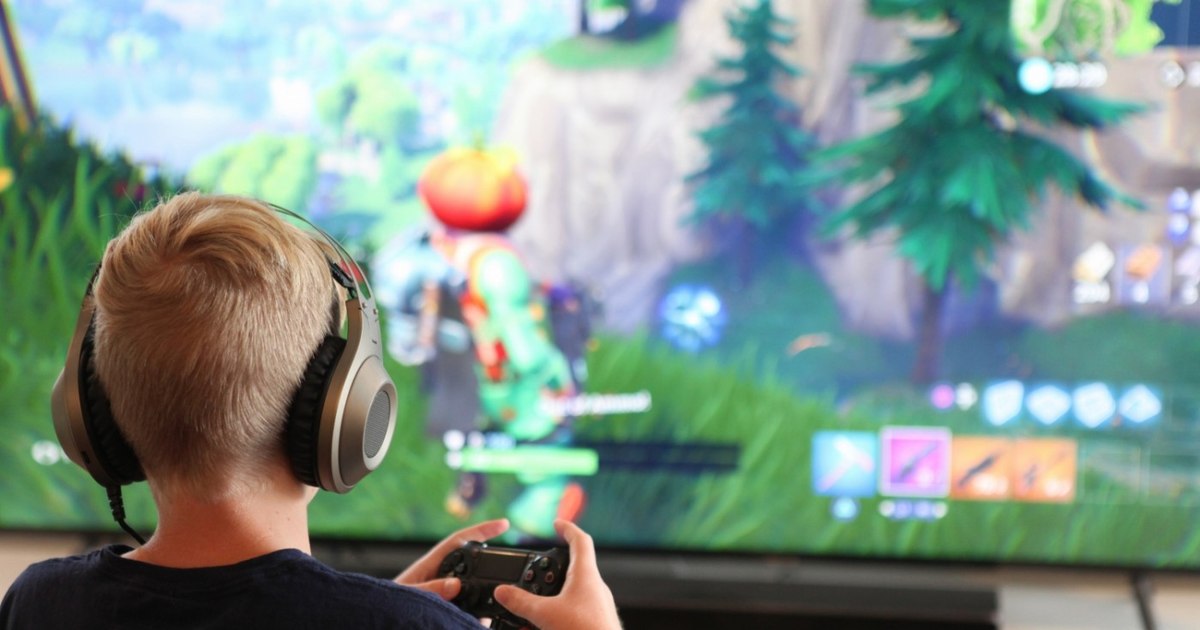
The idea that video games “damage intelligence” says more about our fears than how the brain works. Psychologists and sociologists explain why play can support learning and where the risk actually occurs.
Photo credit: Shutterstock
The idea that video games would diminish intelligence or affect the ability to think has its origin in a restrictive view of learning, in which cognitive progress is exclusively associated with sustained effort, permanent control and rigid discipline, Gabriela Marc, senior clinical psychologist and associate university lecturer at the Faculty of Psychology and Educational Sciences, explains for “Adevărul”.
“However, this perspective omits a fundamental aspect: play does not suspend cognitive effort, it organizes it into a primary form of learning. Play represents an original mechanism by which the human mind explored, tested, and integrated experience, but without being able to substitute the relational dimension of development. Developmental psychology and contemporary neuroscience show that the human brain was formed through relationship-guided exploration, curiosity, and interpersonal regulation, and not through coercion.”is the opinion of the specialist.
Why the brain learns better without fear
In his view, play is not the opposite of cognitive effort. But it is the context in which effort becomes possible without overwhelming the nervous system. In the game, says Gabriela Marc, the mind can test hypotheses, make mistakes without disproportionate consequences, adjust strategies and come back. “This is the basic mechanism of deep learning: action, feedback, correction. The brain learns effectively when it is supported by curiosity and not dominated by fear.”
From a neuropsychological perspective, play activates multiple networks: attentional, executive, motivational, and emotional. When the game requires active engagement, strategy and adaptation, it trains the brain's ability to make flexible connections between information, he said. When play becomes repetitive stimulation, it blocks the mind and the integration process between what we think, feel and do.
“It's important to make a clear distinction. Not all games have the same impact. To talk about 'video games' as a whole is an oversimplification. Psychologically, the essential difference is between activities that require complex cognitive processes and those that provide only repetitive stimulation. The former can support cognitive development. The others have a much more limited role”explains the psychologist.
Another important aspect, adds Gabriela Marc, is that play develops, but cannot replace, the relationship. “Here an essential limit emerges, which deserves to be clearly formulated and cannot be ignored without psychological consequences. Human development is not only cognitive. It is relational. The human brain organizes itself in relation, through processes of emotional co-regulation, live contact and mutual connection. No form of game, including digital, can substitute for human relation without generating psychological costs.”
Play can provide competence and a sense of progress, but it cannot provide the deep regulation that occurs in a secure relationship: the soothing gaze, the repairing voice, the presence that helps integrate difficult emotions, according to the specialist. When the game ends up taking the place of the relationship, we are no longer talking about a cognitive benefit, we are talking about an imbalance of the nervous system.
When the game becomes a self-regulating mechanism
“In clinical practice, excessive use of games often appears as an attempt to self-regulate in the absence of co-regulation. The game becomes a way of self-managing stress, anxiety, or lack of meaning. In these situations, the problem is not the game. The lack of a relational framework that allows the integration of the experience changes the role of the game in the learning process.” it also says this.
A mature educational perspective looks at video games through the role they play in the life of the child or adult, through the way they support or postpone emotional and cognitive integration and through the existence of relationship, dialogue and reconnection before and after the time spent in front of the screen, Gabriela Marc also says. “The real question isn't whether video games help or hurt development. Neuroscience shows that the human mind works best when it's integrated: when cognitive, emotional, and relational circuits can communicate with each other. Gaming can activate these circuits, train flexibility and the ability to learn, but the integration doesn't end at the screen.”
The brain develops fully in the relationship, the psychologist opines. “Where there is contact, mutual regulation and shared meaning, experiences are organized and become lasting knowledge. Without this framework, stimulation remains fragmented, however sophisticated. Play can open the mind, relationship unsettles it. Real development occurs when experience is lived, integrated and shared with another human being.” she adds.
Socializing through video games
For his part, Alexandru Oprișor, sociologist says that “gaming is essentially a form of socialization, and video games are only one expression of the whole category of gaming. By socialization I mean the process by which the individual learns, internalizes and reproduces norms, values and behaviors necessary for integration into the social field. Moreover, video games represent a well-versed technique of simulating reality (or any reality) that puts the player in a position where he can intervene on it, make decisions about his actions in the virtual environment and can shape the environment it interacts with.”
According to him, the game is about building a safe environment where different scenarios can be simulated. “Very often we would not feel safe and therefore refuse to be put directly into new contexts. In order to familiarize ourselves with different contexts or to acquire certain skills it is necessary to pretend that a certain reality already exists and behave as such, but without the real risk of not being able to cope with that situation. Basically, any form of play is a free trial for a present, past or future reality, actually or potentially, to which we we report. That's why games are a key element in anticipatory socialization, that is, in the process by which we prepare for roles we don't yet have.” he explains.
Narration as a cognitive tool
In his opinion, discussing video games specifically, their main advantage must first be pointed out, namely the complexity with which they can simulate almost any imaginable reality. “For a simulation to be effective, it must be immersive, it must cause the individuals who experience it to suspend disbelief. The techniques used to achieve this goal are many, but most of them are either narrative or sensory. If, from a sensory point of view, video games lose to traditional forms of play when it comes to the kinesthetic, they definitely win when we shift our attention to the visual or the auditory.”
In addition, adds Alexandru Oprișor, with the evolution of the field, more and more importance began to be given to the narrative in video games, with professional writers being hired to create the scenarios.
“In my view, this merging of all elements should place video games not only in the realm of entertainment, but also in the realm of art. I think it's only because of an outdated elitism reflex that we're reluctant to consider them an art form, because we're pandering to so-called high culture.” the sociologist opines.
He believes that video games help us understand social dynamics and acquire skills. “Among the phenomena in which we socialize through video games are cooperation, competition, coordination, communication, collaboration, and of course other terms beginning with the letters “co.” There are pilots and soldiers who, in the process of training, use virtual simulators very similar to video games, and which, in fact, from a structural point of view, serve the same utilitarian purposes.”
The sociologist also says that there are rather fearful positions regarding the influence that video games could have on individuals, especially in adolescence and pre-adolescence.
“They tend to associate antisocial behaviors, such as aggression or loneliness, with excessive video game consumption. However, causality is misattributed within these positions, because video games do not cause aggression or loneliness, but these behaviors appear as an effect of unfavorable psychological, social, or economic factors. Excessive video game consumption thus becomes an effect of disorders, an indicator of deeper problems. By excess I do not mean the number of hours an individual spends playing, but the degree of dissociation from reality the individual reaches. But correlation is never causation, that's what we have to remember.” concludes Alexandru Oprisor.