Xi Jinping, not Trump, is the one who has the key to influence on Putin. The question is: will he want to use it?

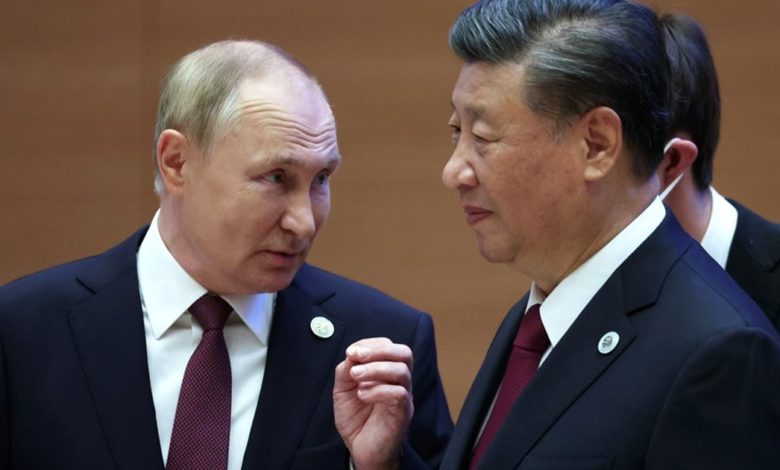
While Donald Trump tries to impose his authority on the Ukrainian file through a 50-day ultimatum addressed to Moscow, behind the scenes is a less comfortable reality for the US president: the true influence on Vladimir Putin seems not to come from Washington, but from Beijing. It is the conclusion of Professor Mark Galeotti, an expert in Russian geopolitics, in an analysis recently published by The Times.
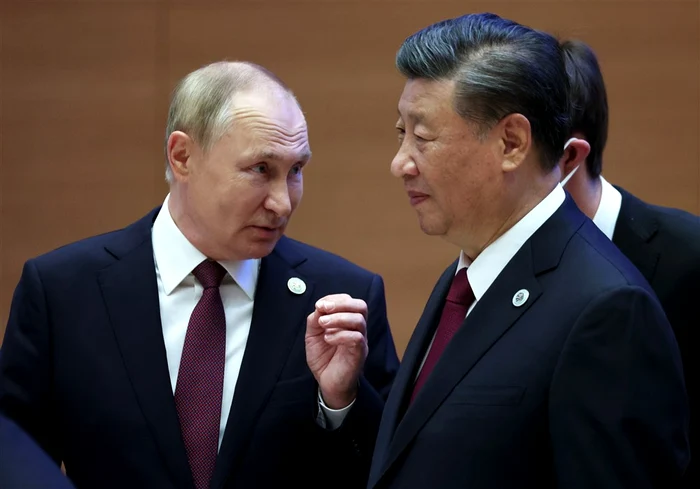
Vladimir Putin and Xi Jinping/Photo: EPA/EFE
Trump said, in an irritated tone, that he is “very disappointed” by Putin and threatened with 100% customs tariffs on Russian imports, if Russia does not cease hostilities. But beyond rhetoric, Russian financial markets reacted with optimism: the Moscow Stock Exchange index has grown visibly, a sign that Trump's threats were not perceived as real or imminent.
Symbolic rates and political calculations
The volume of Russian exports to the US was only $ 3 billion last year, which represents less than 1% of Russia's total exports. In this context, Trump's announcement on the imposition of tariffs does not cause concern at the Kremlin. Moreover, the threat with secondary rates on countries that import Russian oil – a truly potential economic weapon – was greeted with skepticism, especially because among the main buyers are US allies and Turkey, but also strategic emerging economies and China.
However, if Trump tries to strengthen his commercial relations with India and threaten to overdue Chinese products, Washington is unlikely to open two major commercial fronts simultaneously. In addition, the destabilization of the global oil market would have direct consequences on US internal prices-a major political risk in an election year.
Beijing, the great beneficiary
In all this geopolitical game, the only capital that seems to have gained land is Beijing. On the same day that Trump launched his warnings, President XI Jinping received Russian Foreign Minister Sergei Lavrov, reaffirming that the “mutual support” between China and Russia is essential. In official statements, Beijing has qualified American plans for new rates as “illegal unilateral sanctions”.
This position is not new. China has maintained a rhetorical balance on the Ukrainian war, but the facts show a more concrete involvement. Beijing provides Russia with double -use equipment – civil and military – such as jamming optical cables for drones or nitrocellulose for artillery ammunition. There are even indications that Chinese Silent Hunter air defense systems would have already been tested in the Ukrainian War Theater, and NATO suspects that Chinese ammunition could be transferred through North Korea.
Increasing strategic influence
The relationship between Russia and China has thus become an increasingly unbalanced one in favor of Beijing. If in the past Moscow claims its influence in Central Asia, it is now Beijing that proposes alternative regional initiatives, such as Global Security Initiative – a formula that excludes both the US and Russia, and which extends from the former Soviet Asia to Africa and Latin America.
In Cuba, China is already funding 55 solar power plants, while in Africa it sponsors training programs for law enforcement. Even countries like Laos or Georgia adapt their policies to the new economic realities imposed by Beijing. The National Bank of Georgia has announced, last day, that it explores the possibility of accession to the Chinese CIPS interbank system – the Chinese alternative to the SWIFT system, from which Russia was excluded.
In this context, it is difficult to claim that Trump can constrain China to “put pressure” on Putin. On the contrary, any recognition of Xi Jinping's key role only legitimizes the position of Beijing in the new global architecture.
The illusion of an antiocycidental axis
Although there is often a “axis of evil” that unites Russia, China, Iran and North Korea, in fact cooperation is rather opportunistic and marked by hidden tensions. An internal note of Russian services, recently drained in the press, suggested that the Chinese espionage intensifies right inside the “alloy” with the Russian Federation. In reply, the Chinese authorities submit their employees from Russia to test detector tests – a rarely applied measure.
However, Beijing continues to play in the long term. For China, the Ukraine war is a strategic tool: it erodes the reaction capacity of the West, isolates economic and military Russia, and offers China a dominant position in the bilateral partnership. After Visa and Mastercard withdrawal, most payments in Russia are already made through Unionpay – the Chinese banking system. Phones, cars, applications – everything comes from China.
A new global balance
In October last year, Donald Trump harshly criticized the Biden administration for the proximity between Moscow and Beijing and promised that he “will be able to separate them.” In fact, by recognizing China's decision -making role in the Ukraine conflict, Trump only confirms that the era of American Unipolar Order is approaching the end. And in this new multipolar landscape, it is Beijing – not Washington – the one who dictates the rules.
The rumors that Xi Jinping would plan to invite Trump and Putin to Beijing, on the occasion of the 80th anniversary of the end of World War II, are symbolic: they show that the Chinese leader is considered not only a mediator, but an architect of a new type of global balance.
It remains to be seen whether this balance will be more “right and rational”, as XI says, or just a rebranded version of a dominated world, this time, by China's interests.