Why do Romanians believe in places “charged with energy”? The explanation of Daniel David – the author of the volume “Psychology of the Romanian People”

Why do 51.4% of Romanians think, according to Inscop, that in Romania there are places “charged with energy” and what does this say about us? “Adevărul” sought answers and solutions from the Minister of Education and Research, the psychologist Daniel David and the sociologist Ioan Hosu.
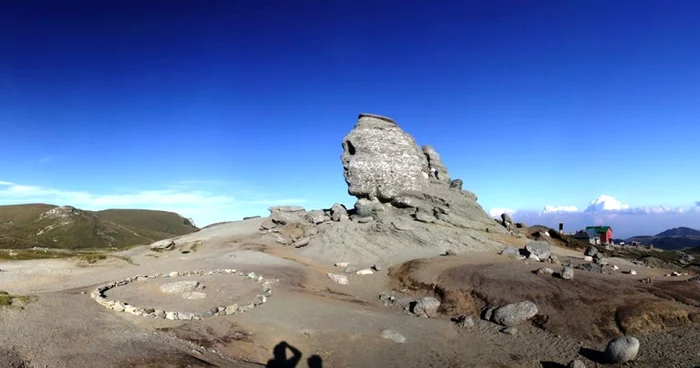
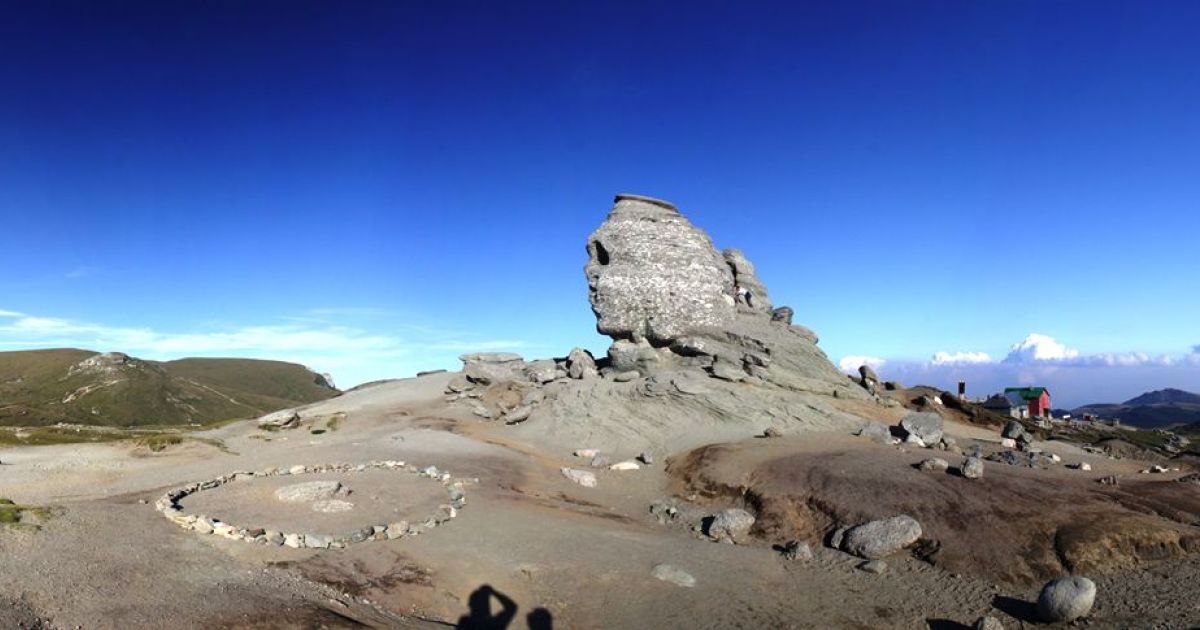
The Bucegi Plateau is one of the most popular “energy places”. PHOTO: Ovidiu Nicolae
51.4% of Romanians agree with the statement that in Romania there are places “charged with energy” that influence the state of people, according to the study carried out by Informat.ro and INSCOP “Romania between magic and esotericism”. 37.8% disagree with this idea, and 10.9% say they don't know or can't appreciate it.
The data are part of a study that will be launched in full at an event organized in partnership with the Museum of the Romanian Peasant on Monday, October 20, 2025.
Regarding education, the highest percentage of people who believe in these energetic places are those with secondary education 53% agree (37% disagree), followed by those with higher education – 51% agree and 40% disagree. The most skeptical are those with primary education who register a level of agreement of 49% and disagreement of 38%.
According to the area of residence, among the residents of Bucharest, the agreement is high, meeting 55%, and the disagreement of 39%. In large cities with more than 90,000 inhabitants, the agreement is 55%, and the disagreement is 36%. In medium and small cities with less than 90,000 inhabitants, agreement is declared by 58% and disagreement by 34% of respondents. In rural areas, 45% agree, and 40% of respondents disagree.
The distribution by gender does not reveal big differences: among men, 52% agree that there are “energetic charged” places that influence people's mood, and 39% disagree. Among women, 51% agree and 37% disagree.
Regarding age, we note that the highest percentage of respondents who believe in “energy places” is the 18–29 age group, 61% of respondents agree and 35% disagree. For the 30–44 age group, 49% agree and 39% disagree. Among those aged 45–59, 53% agree, 39% disagree. In the 60 and over category, 47% agree and 36% disagree.
Over 50% of PSD and AUR voters are of the opinion that there are places “charged with energy”
Among PSD voters, 58% agree with the statement that in Romania there are places “charged with energy” that influence people's condition and 28% disagree; among PNL voters, 49% agree and 44% disagree; among AUR voters, 55% agree and 35% disagree; for USR voters, agreement is 40% and disagreement 48%.
“The first conclusions of the study are totally unexpected. Belief in the existence of 'energy-charged' places crosses all social categories, with no significant differences between women and men. This uniformity suggests that the phenomenon has a general cultural resonance, transcending gender barriers. The most surprising thing, even the level of education does not produce clear polarizations in attitudes, people with higher education resonating similarly with the rest of the population with secondary or primary education. This aspect suggests that the idea of ”energetically charged” places transcends the boundaries between rational and subjective thinking,” explains the director of Inscop, Remus Ștefureac.
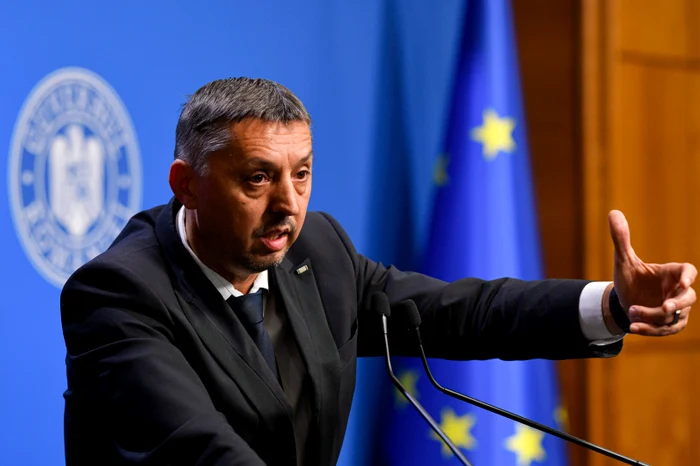
Daniel David, Minister of Education and Research. PHOTO: Mediafax
David: “Scientifically speaking, there really can be places that have an energetic charge”
“Adevărul” discussed with the Minister of Education and Research, Daniel David, the author of the volume “Psychology of the Romanian people. The psychological profile of Romanians in a cognitive-experimental monograph” about the explanations of this study and about what Education can do to develop the critical thinking of Romanians.
I asked Daniel David why so many Romanians believe in “energy-charged places?”
“First of all, I think the question is somewhat ambiguous. That's because, scientifically speaking, there can be places that, depending on the composition of the soil, human activities in the area, atmospheric exposure, etc., have a higher “energy charge” than others (e.g. magnetic; sometimes even radioactive), which can somewhat influence people's condition as well.” explained the minister.
He continued his reasoning: “If by 'energetic charge' we mean some kind of mystical charge, with an impact on health and/or destiny, then we are entering absurd and/or false theories derived from pseudoscience, some even with conspiratorial impact.”
“We are trying to form scientific competences through curricular and teaching reforms”
The author of the Psychology of the Romanian People explains why people can believe in places with a mystical energy charge with an impact on health:
(a) due to poor scientific training and/or understanding;
(b) along with the fact that simple narratives, albeit absurd or false scientifically speaking, but which give hope, are easier to assimilate in mind and behavior than complex and poorly presented scientific theories;
(c) including the fact that few people can tolerate the lack of an answer to a problem they assume, so until science comes with an answer, it is easier to resort to pseudoscience, and once a perspective is formed, however absurd/false, it is difficult to change.
The Minister of Education and Research also explained what the ministry he leads is aiming for with regard to Education:
“The formation of scientific competences through curricular reforms and modern teaching methods (as we do now for high school), along with the promotion of science in society in an interface language (including through “citizen science” approaches). While strengthening this antidote to pseudoscience, we are also trying to publicly signal the difference between science and pseudoscience, as recent collaborations with CNA and Tik Tok have shown, ultimately leaving people to choose freely, but informed and prepared.”
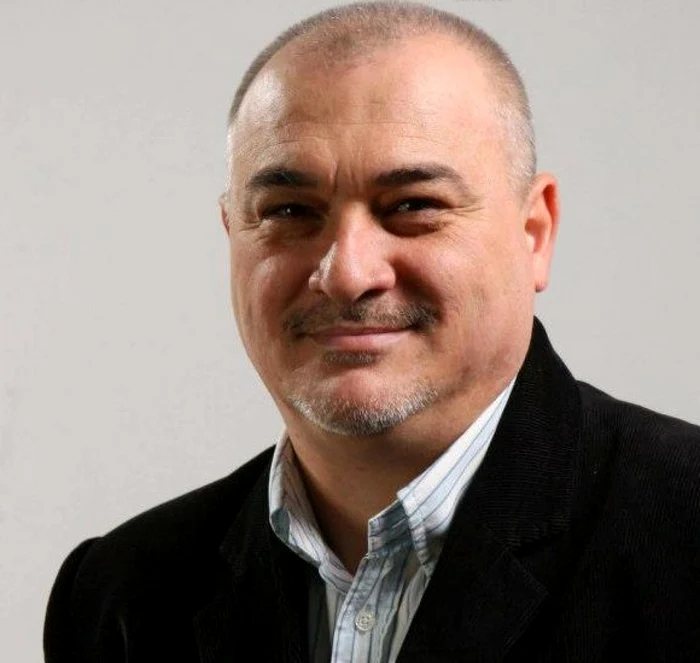
Sociologist Ioan Hosu claims that politicians used these beliefs. PHOTO: Personal archive
Sociologist Ioan Hosu: “These beliefs were used by politicians”
Sociologist Ioan Hosu, professor at the Faculty of Political, Administrative and Communication Sciences, within Babeș-Bolyai University, claims that political preferences do not necessarily influence these answers: “Of course, it may have intensified, as this is a context in which somewhat related themes appeared in social media, against the background of the electoral campaign, which were potentiated, amplified. But we are not talking only about Romania, but about a global phenomenon, characterized by a more restrained position towards science. It is a departure from rational thinking that crosses or exceeds any social category.”
However, Hosu claims that the politician tried to use these beliefs. “Some started or tried to place these places with special energies in the proximity of political figures, trying to provide a sense of control and meaning in the face of uncertainties, in the face of unpredictable elements, serious things that are going to happen.”
These superstitions provide emotional comfort, although they have no scientific basis. “It is an association between a discourse that creates anxiety, stress and uncertainty and a refuge in a place and space where you find comfort. And this transition makes her a political figure who, in fact, also has this “healing” function, but without any scientific basis. It creates a placebo effect.”
Hosu believes that we are also talking about a cultural and traditional baggage: “The Romanian people are quite close to folklore and a mythical universe, in which, of course, pagan elements are integrated with elements of Christianity, mainly Orthodox. And here associations appear between invisible forces, mystically charged places. I would mention here Stonehenge, because it is very well known. We also have New Age influences here, in which certain sacred places from pre-Christian periods are also invested with energies vital”.
A third level of discussion is related to communication in online environments, says the sociologist. “Social media messages amplify this predisposition of certain audiences to accept alternative explanations to science, because here we are also talking about alternative therapy and other alternative elements. They are alternative ways in which people explain the world or go beyond what science can give us. Neither medical science nor technological science can provide explanations for everything or solutions for everything. Then, of course, people in these situations of stress or limit try still find a solution”details Hosu.
“Miracle solutions come with salvation, not half-measures like science”
These beliefs are not necessarily harmful, the expert says, but they can become harmful when they are denied, for example, elements of medical science that have proven their effectiveness for decades, such as vaccination.
“Here, of course, the combination is much wider, it interferes these beliefs with theories about alternative medicine, with self-medication, with conspiracy theories, with campaigns to erode trust in everything that means science, that it is about school, doctor, other areas”, explains Hosu.
Mass media communication, in all its traditional forms, television, radio, press, plus the new forms and platforms, also contributes to the departure from rational thinking: “They all contribute because they go quite a bit on themes that catch on at times of sensitivity.”
These kinds of miraculous solutions come with salvation, not half-measures, as happens in science: “Science comes cautiously, rationally, with no promise of 100%. The idea of rescue seems more attractive than the idea that it might be a little bit better and over time we'll see and test the next treatment and the next stage and the next and the next. In the scientific discourse it is said: this kind of intervention or solution works for 67% of cases, the other 33% we cannot say that they managed to overcome the moment”.
What the school can do
The sociologist believes that in school there should be a module that allows you a real navigation in what the result of science means: “Not theoretical, real. Just like when you want to talk about biodiversity in nature, leaves, plants, animals, fauna, flora, what have we, it's better to take them to see, than to tell in a classroom. The exposure and the direct learning and the direct experience that you have is very important, of course, with some limits and with caution. It matters how you provide the information. And then, of course, the school must to his rethink this story.”
In addition, he says, a change in the media is also important: “The kind of information that comes and alters realities in a flagrant and negative way for individuals or the community in the long term, these should be easily, easily filtered and removed from the public space, because if they have no basis, because it is not only about spirituality and beliefs here, but also about practices that can lead to illness, to the worsening of the situation, that is, they can endanger the safety and life of a person. CNA has an important role here”.
The introduction of media education and digital media education in school programs is also important, the sociologist concludes.