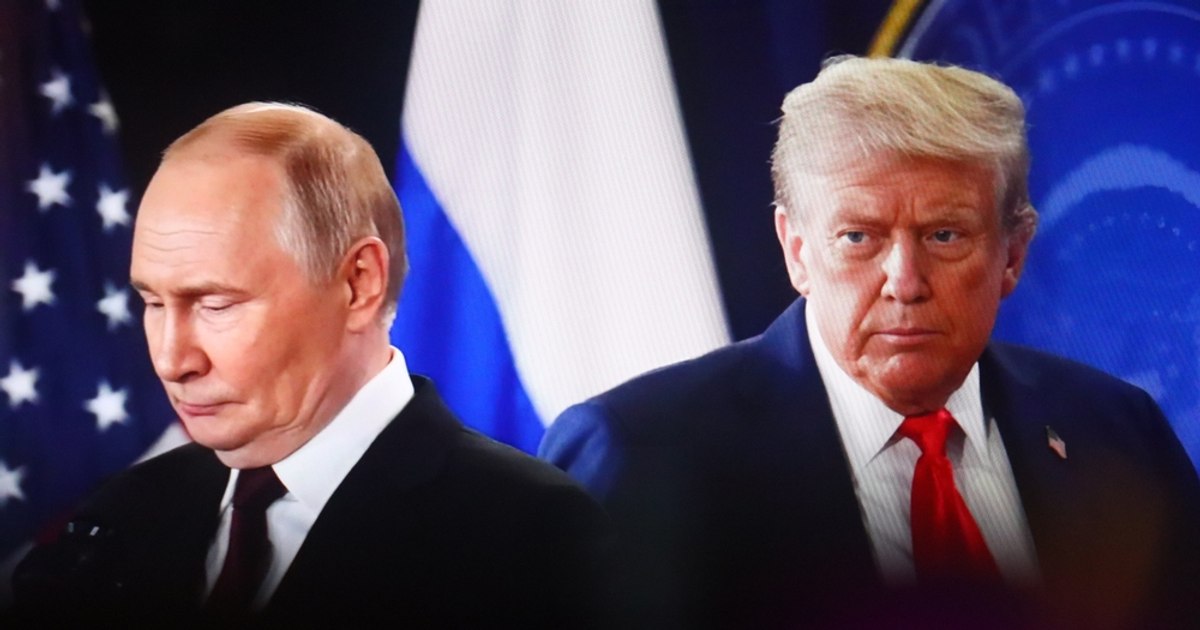
Locked in wars with no clear end and the pressure that makes it problematic to admit mistakes are increasingly defining the actions of Donald Trump and Vladimir Putin, who are struggling to manage their own strategies.
Vladimir Putin and Donald Trump. PHOTO Shutterstock
Donald Trump and Vladimir Putin face major difficulties in ending the conflicts in which they are involved, being caught in the consequences of their own decisions and in a logic of power that limits their options, according to analysis published by The Washington Post.
According to columnist David Ignatius, both leaders assumed that their opponents would give in quickly, ignoring the warnings of advisers. But neither seems willing to admit mistakes or take steps back, even as the prospects for total success diminish.
The author describes this situation as a “power trap”where leaders, isolated in circles of supporters and lacking real critics, continue to support costly strategies even in the absence of clear results.
In the case of Donald Trump, the difficulties are visible in the management of the conflict with Iran. Although they try to downplay the situation, including denying the character of war, military actions and public statements indicate increasing pressure. The White House leader is oscillating between harsh threats and proposals for compromise, which is causing concern even among some allies in the region.
“No one can afford to express doubts about Putin”
Vladimir Putin is portrayed as taking a similar approach in Ukraine, continuing to treat the conflict as a “special military operation” and believing he can impose his terms on Kiev.
However, according to analyst Tatiana Stanovaya, quoted by The Washington Post, inside the Kremlin power system there are reservations that no one expresses openly: “Nobody can afford to express their doubts about Putin“, she emphasized.
The analysis also highlights the high costs of Russia's strategy, including massive losses at the front and the lack of decisive progress. At the same time, the Kremlin leader avoids measures such as general mobilization, for fear of domestic impact.
The Washington Post also cites opinions from Russian analysts, including Dmitri Trenin, who draw attention to the risks generated by a misunderstanding of the Ukrainian context.
Also, expert Vasily Kashin, who heads a center at the Moscow Higher School of Economics, argues that the goal of controlling Ukraine is impossible without a long-term occupation, which is difficult for Russia to achieve.
“The goal of 'liquidating the anti-Russian regime' in Ukraine is fundamentally unattainable at this stage without a full and long-term military occupation of the entire country. … For Russia, this is technically impossible“, he wrote.
For the United States, the analysis suggests that an eventual deal with Iran could resemble the 2015 nuclear deal that Trump previously abandoned, indicating that military efforts have produced limited benefits.
Both leaders seem stuck between an inability to admit failure and an inability to achieve a clear victory. The costs of conflict are steadily rising, and domestic pressure is beginning to be felt in both Washington and Moscow.
According to The Washington Post, these situations could go down in history as examples of bad strategic decisions, comparable to other major controversial interventions, such as the 2003 invasion of Iraq.