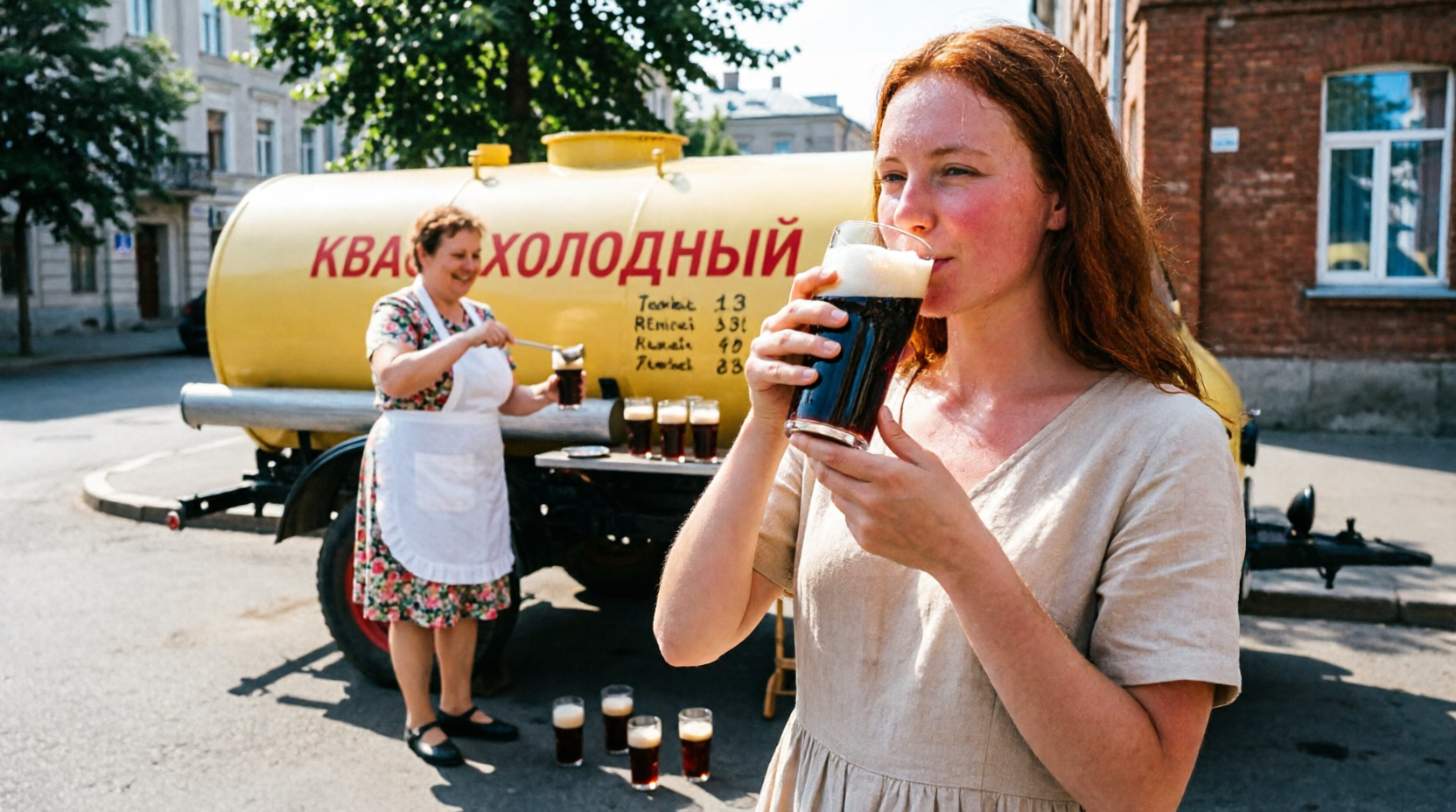
On a hot day, it’s difficult to find a more refreshing drink than natural kvass. Store-bought versions are too sugary and artificial, but that same kvass with a thick head and bright bready aroma can only be made with your own hands.
Selecting bread and preparing crackers
The basis of the taste is rye crackers. Take “Borodinsky” or “Darnitsky”. Cut the bread into cubes and toast in the oven until deep golden brown but not burnt. A slight bitterness will add piquancy, and burnt bread will make the kvass bitter. Under-dried crackers will produce a pale and bland drink.
Observe temperature conditions and laying order
Pour boiling water over the hot crackers in a three-liter jar to fill 2/3 of the volume. Wait for the liquid to cool to 30–35 °C (pleasantly warm). Only then add yeast – pressed or dry, as well as sugar.
In a hot environment, the yeast will die and fermentation will not begin. Cover the neck with gauze and leave in a warm place for 12–15 hours.
Important rules for caring for future kvass:
- do not strain the crackers until the end of the first fermentation;
- use only clean filtered or boiled water;
- For gas, be sure to add unwashed raisins at the bottling stage – they carry wild yeast.
Pour correctly and let the drink mature
After 12–15 hours, strain the kvass through cheesecloth, squeeze out the grounds (it can be saved as sourdough). Pour the liquid into bottles, put 5 pieces in each. unwashed raisins.
Close the lids tightly and leave at room temperature for another 6 hours. The bottles will become hard – this is a sign that carbon dioxide has accumulated. Put them in the refrigerator for at least 3 hours, advises culinary blogger Evgenia Polevskaya.
Conclusion
Ideal sharp kvass is obtained under three conditions: properly toasted crackers, warm (not hot) water for the yeast and final carbonation with raisins in closed bottles.
Personal experience
I tried more than a dozen recipes. The kvass was either cloying or smelled of yeast. I found the ideal proportions when I stopped sparing raisins and learned to wait for the tea leaves to cool completely. Now, even in the heat, my bottles don’t explode, and the foam comes out like it did from yellow barrels when I was a kid.