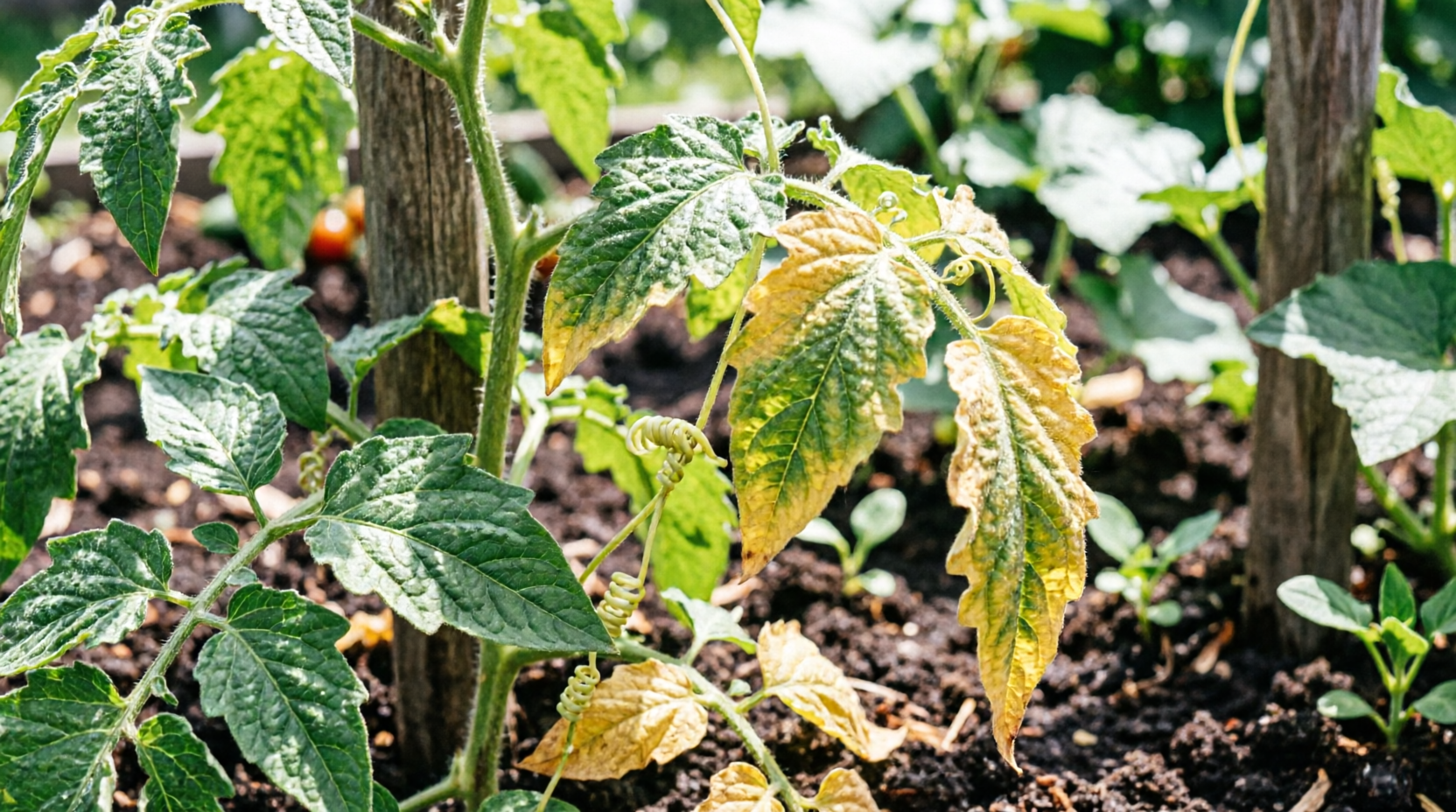
In June, tomatoes and cucumbers grow actively, but gardeners often notice yellowing of the leaves. This is a signal of a failure in the system: stress from temperature changes, leaching of nitrogen by rain, or chlorosis due to improper soil acidity.
Blindly applying nitrogen will only increase stress. It is important to distinguish nutritional deficiencies from diseases: rots are treated with fungicides, not fertilizers.
What is chlorosis
Chlorosis is a violation of the formation of chlorophyll in the leaves, in which the plate turns yellow, but the veins may remain green. The reason is a deficiency of iron, magnesium, nitrogen or other elements.
Emergency measures for yellowing
Step 1. Carefully inspect the bushes, especially the undersides of the leaves. Make sure there are no cobwebs or aphid colonies.
Step 2. Normalize watering – rare but plentiful. Be sure to loosen the rows after watering to allow oxygen to enter. In the greenhouse, open the vents to reduce temperature and humidity.
Step 3. Do foliar feeding. While the roots are recovering, this is the fastest way to deliver nutrition. Use a complex microfertilizer with nitrogen, magnesium, iron, zinc and fulvic acids.
Step 4. Evaluate the result after 3-5 days. If the greenery returns, the problem is solved. If not, the cause is root rot or high soil pH. Then you need biological fungicides or acidification of water for irrigation (2 g of citric acid per 10 l).
Common mistakes
- adding nitrogen when the upper leaves turn yellow will only worsen the situation;
- overwatering – causes root rot and increases yellowing;
- spraying only the upper side of the leaves;
- ignoring soil pH – in an alkaline environment, chelates are destroyed;
- infrequent feeding – during the period of active growth, fertilizers are needed every 7-10 days.
Conclusion
Yellowing of leaves of tomatoes and cucumbers in June is a standard situation. The most common cause is nutritional deficiency or cold stress. The main thing is quick diagnosis. For urgent help, foliar feeding with a complex microfertilizer with chelates and fulvic acids is effective.
Don't confuse chlorosis with infections. With regular fertilizing every 10–14 days, normal watering and control of soil acidity, the plants will get stronger by July-August and produce a rich harvest.
My personal experience
Last year my cucumbers in the greenhouse turned yellow. At first I thought that there was not enough nitrogen, but it was the upper leaves that turned yellow. It turned out to be iron chlorosis. I sprayed it with iron chelate, and after three days the new leaves turned green.