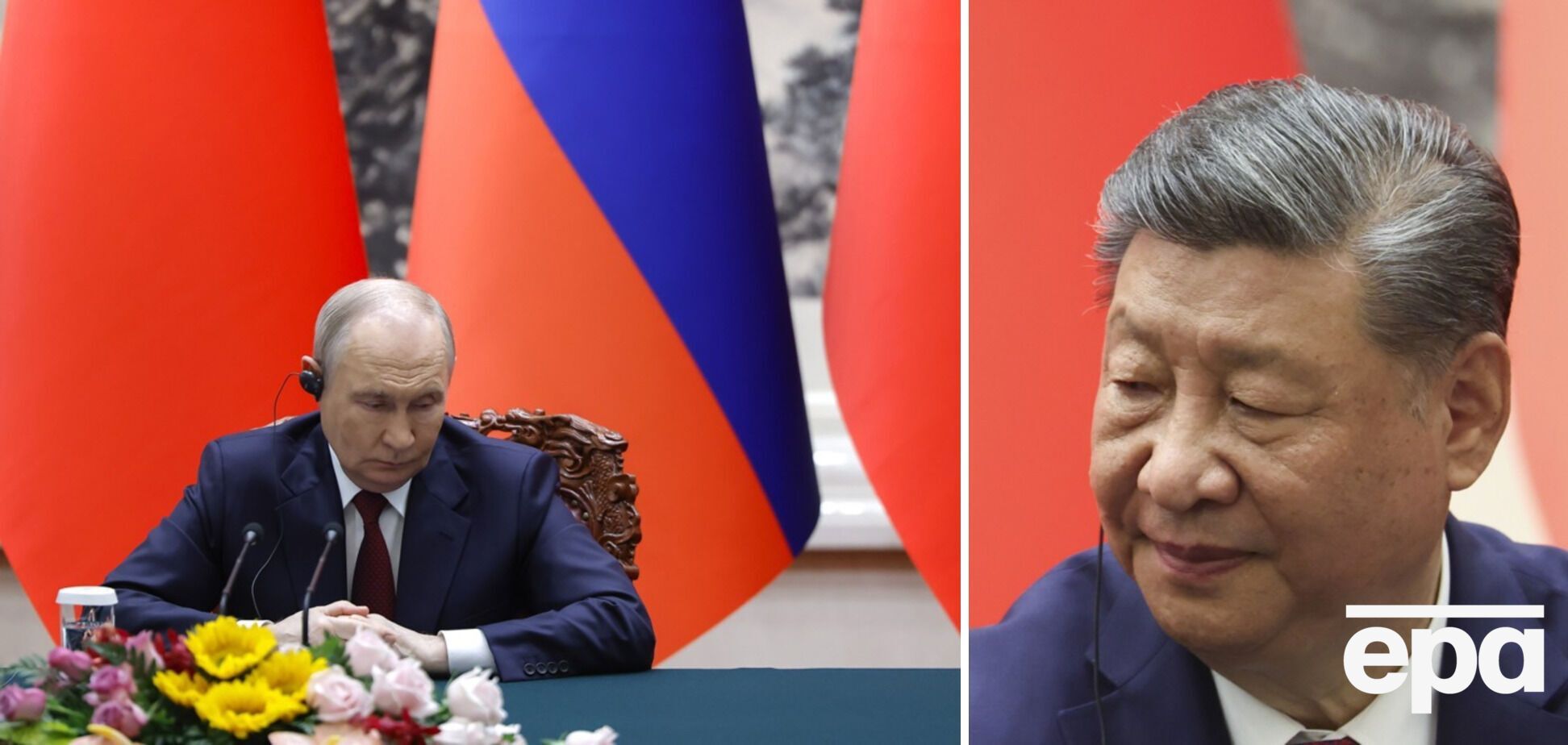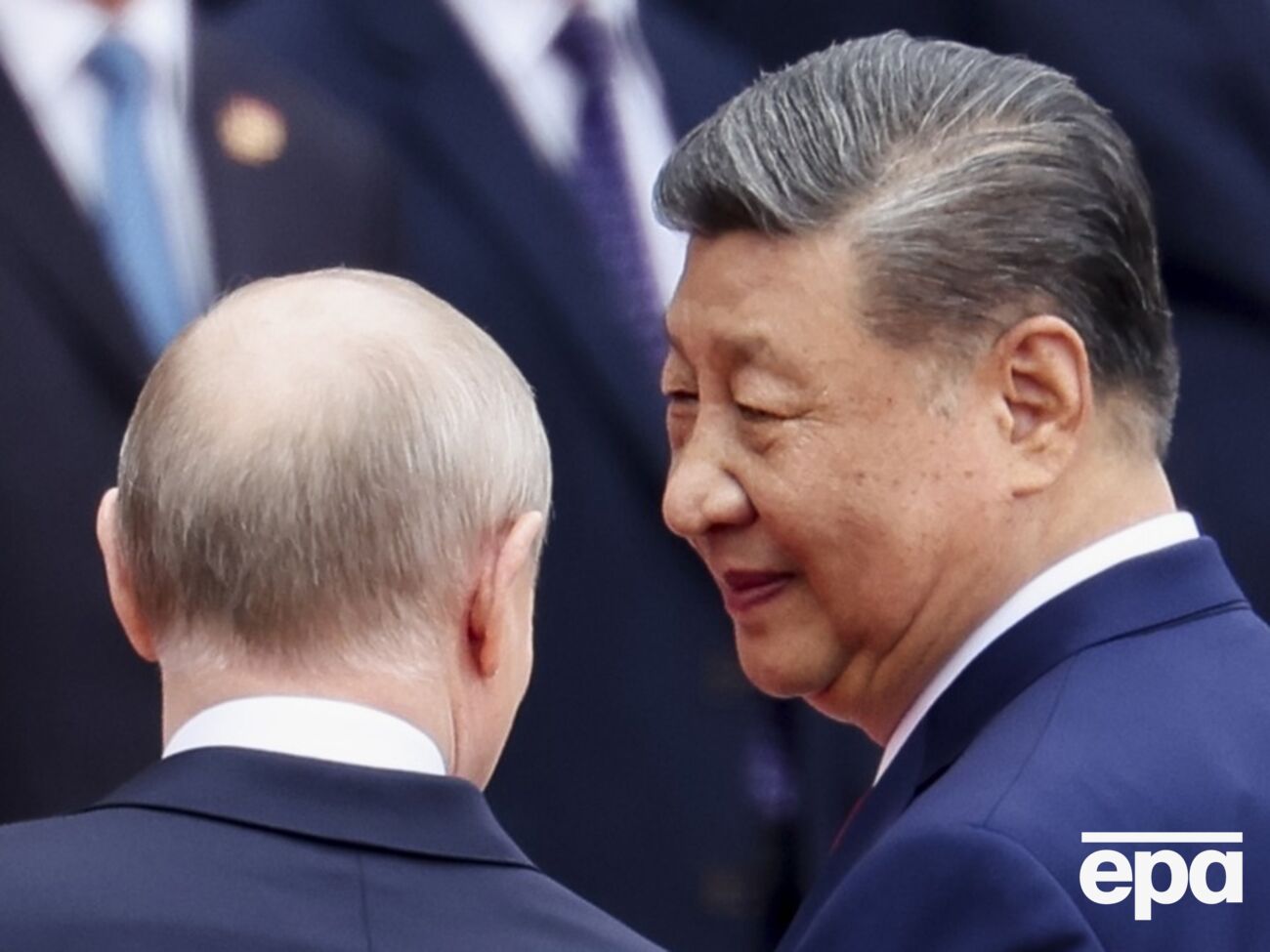
After the illegitimate Russian President Vladimir Putin gave China a small piece of land on the Amur River in 2004, ties between the PRC and the Russian Federation are growing every year. But after Russia’s full-scale invasion of Ukraine in 2022, relations between Moscow and Beijing reached a new level: the Kremlin, due to Western sanctions, actually became dependent on its senior partner. “GORDON” tells what economic cooperation between the aggressor country and the PRC looks like and why the Russian Federation will almost certainly collapse without this support.
Putin, who so desperately wanted international recognition that he first occupied part of Georgia and then attacked Ukraine, has led his country to transform Russia from a superpower into a “Chinese gas station.” In exchange for cheap energy, Moscow receives from China goods and products that are needed to continue the war against Ukraine and which the Russian Federation is not able to produce itself (or produce in sufficient quantities).
As a result, over the past two years, trade turnover between the Russian Federation and China has remained stable at over $200 billion, and in 2026, as Carnegie Russia writes, it may set another record.
In general, trade between the Russian Federation and China has been growing since the early 2000s, but after the outbreak of the war, China’s role increased significantly: China remained the only large industrial country that still trades with Russia (almost) without restrictions.
“The volume of Chinese exports to Russia is significant, since many goods that Russia receives from China, such as machinery, electronics or cars, cannot be imported from anywhere else. Moreover, in some aspects, the Chinese yuan and financial infrastructure have replaced the Western financial system for Moscow,” the report of the German Institute for International and Security Affairs emphasizes.
Since then, the composition of Russian-Chinese trade has remained virtually unchanged: energy resources in exchange for electronics, chemicals, consumer goods and auto parts.
“China currently accounts for approximately 30% of Russia’s exports, and Russia has risen to seventh place among China’s trading partners in 2024 from 13th in 2020. China has been Russia’s No. 1 trading partner since 2014, and its share of Russia’s foreign trade has increased from 11.3% in 2014 to 33.8% in 2024. China also accounts for up to 75% of all Russian oil and gas exports (while the share of these energy resources in China’s imports is only 6%. – “GORDON”),” noted the Center for European Policy Analysis (CEPA).
At the same time, analysts note a huge imbalance in trade (of course, in favor of China), as well as the fact that China is ready to buy Russian energy resources only if it is financially profitable (for example, in 2024, China, despite the slowdown in trade growth with the Russian Federation, received record discounts on oil from Moscow) and does not entail too painful consequences. Thus, after each major package of Western sanctions, the volume of trade between the Russian Federation and China invariably falls: while Chinese businesses are looking closely to see if sanctions will hit them if they continue to trade with Moscow.
“Beijing does not want to pay a high economic and political price for its help: Moscow is becoming increasingly dependent. In turn, China has taken advantage of the asymmetry in relations, using Russia as a market for its exports,” CEPA emphasizes.
The European Union's Institute for Security Studies (ISS) also emphasized that trade imbalances “provide Beijing with strategic flexibility, leaving Moscow tied to Chinese supply lines even though Beijing is not Russia's only supplier.
“Consequently, a decline in Chinese support will cause significant damage to the Kremlin. And the EU has significant leverage, [чтобы нарушить эти связи]especially in the form of secondary sanctions. The good news is that Beijing's behavior towards the Kremlin depends more on the price Europe makes China pay than we might think (The institute noted that exports of dual-use goods from China to the Russian Federation fell after the introduction of secondary sanctions, and not only in the short term. – “GORDON”),” says the ISS analysis.
The fact that Russia plays the role of a junior partner in this tandem is also evidenced by the results of Putin’s recent trip to China. A Carnegie Russia columnist noted that Chinese leader Xi Jinping once again “leaked” the Power of Siberia gas pipeline project, the construction of which Moscow has been trying to negotiate with China for 22 years now. “It is the Chinese comrades who can increasingly dictate which projects are of interest to them and which are not and on what conditions the PRC will participate in something. The example of “Power of Siberia – 2” is a clear illustration. If anyone in Moscow thought that Trump’s war against Iran and the blockade of the Strait of Hormuz strengthened Russian positions in negotiations with China, then the results of Putin’s visit should dispel these illusions,” – wrote Alexander Gabuev.