The spectacular return of trams in western Romania. Investments “on rails” are changing the face of Timisoara, Arad and Reșița

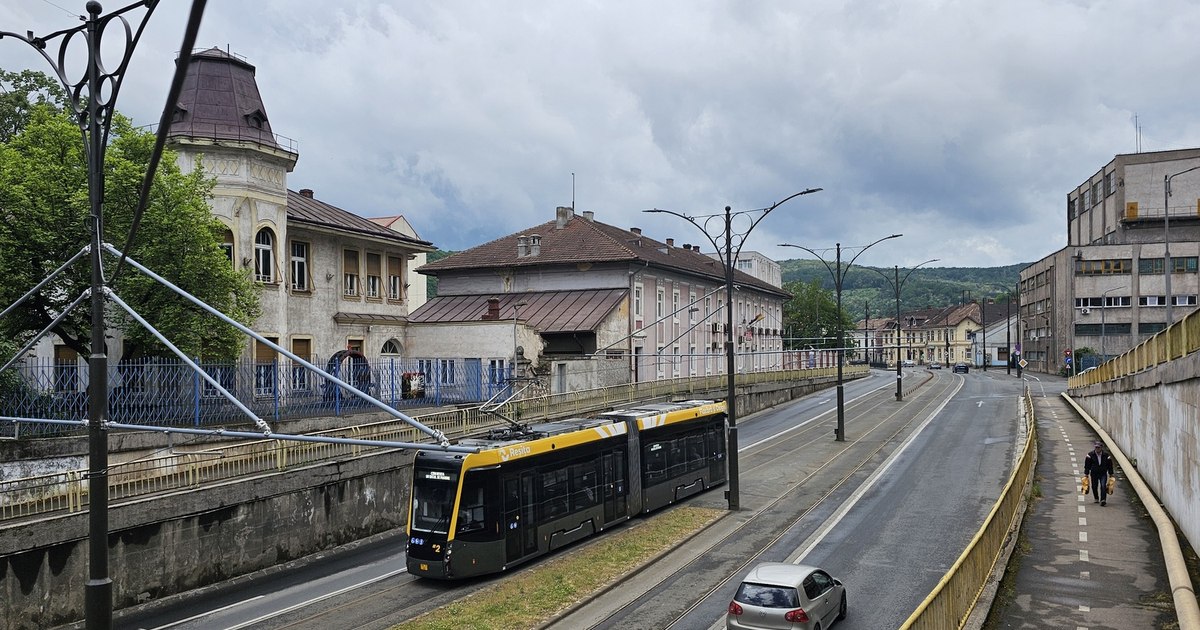
Trams are coming back in force in western Romania, supported by European investments. In Reșita, rail transport was resumed with modern trams after a 13-year break, with the modernization of the lines. In Arad, the network is modernized and extended, and Timișoara is renewing its tram fleet.
In Resita, the trams are back on the tracks, from 2024. Photo: Daniel Guță. TRUTH
In Timișoara and Arad, the rail transport network has a long history. The first trams circulated in the two nearby cities in western Romania starting in 1869, at first pulled by horses, and until the end of the 19th century, powered by electricity.
More than a century and a half after their appearance on the streets, trams continue to be an important means of transport for locals, and the investments of recent years promise more comfort, more efficient transport and a more attractive alternative to road traffic.
New trams in Timisoara
In Timișoara, the most recent investments announced by the municipality regarding public rail transport aim both at renewing the fleet and expanding the tram infrastructure. Recently, Timișoara City Hall contracted another 10 modern Bozankaya trams, financed through the Western Regional Program 2021–2027. An investment of 47 million euros, announced by ADR Vest and Timișoara City Hall, aims at the purchase of 10 trams, 10 trolleybuses and 20 new electric buses.
“The first project, with a total value of over 27 million euros, of which almost 20 million euros are non-refundable funds, aims at the purchase of 10 modern, articulated trams with a lowered floor and a transport capacity of at least 150 people”, inform ADR West.
New trams in Timisoara. Photo: Timisoara City Hall
In January 2026, Timișoara City Hall awarded the contract for the supply of 10 new trams. They will have to be delivered by the spring of 2027 and will be able to be inserted on line 9, which ensures the connection between the North Station and the Buziașului industrial area, respectively on line 7, which connects the Fratelia neighborhood and the Cetății/Torontal area.
“The new trams will be 20 meters long and will be equipped with state-of-the-art technologies: electric traction, regenerative braking, air conditioning, real-time information systems, Wi-Fi, video surveillance and increased accessibility. They will operate on the principle of “zero CO₂ emissions”, being an integral part of the transition to non-polluting public transport”. announced the Timișoara City Hall.
According to the local authorities, in recent years, the municipality of Timișoara has invested approximately 700 million lei to renew the public transport fleet with new trams, electric buses and trolleybuses. Timișoara has one of the most developed tram networks in Romania, with over 130 kilometers of lines, forming eight routes on which nearly 60 million trips are made annually.
Another transport project aims to build a new tram line between the North Station and the Solventul area. The investment provides for the construction of more than 1.3 kilometers of double tram line, the development of new stations, the modification of the station at the North Railway Station, the modernization of Garii Street, the development of sidewalks, bike paths and green spaces. The total value of the project is estimated at 106 million lei, including VAT, of which approximately 67 million lei is European funding. The financing contract was signed in the summer of 2025, and the works would be implemented by the summer of 2027.
The new Solventu bridge. Plan. Photo: Timisoara City Hall
Also, the authorities recently announced the construction of the Solventul Bridge, the first new bridge over the Bega after the Revolution, with a double tram line, four lanes, bike lanes, sidewalks and green spaces.
Arad is modernizing its network
The municipality of Arad has a tram network of over 100 kilometers of track, and the investments financed by the European Union have contributed, in recent years, to its modernization. On May 12, 2026, the municipality announced the completion of the project of more than 90 million lei for the purchase of ten new, energy-efficient trams, which were recently put into circulation on the city's streets.
“The new trams can carry approximately 120 passengers, are 19 meters long and are equipped with modern information and e-ticketing systems, adapted to the requirements of European public transport. The investment is part of a large process of transformation of urban mobility in Arad. In recent years, the city has constantly invested in the modernization of public transport, by purchasing new trams, rehabilitating the infrastructure and running track, setting up modern stations and introducing buses electrical”informed the mayor's office.
The Semenic resort, brought back to life after a century. Major investment in the pearl of the Banatul Montan in the vicinity of Reșița
The new trams in Arad. Photo: Arad City Hall
More than four kilometers of tram lines are in the process of modernization, on the section Piața Podgoria – Pasaj Micălaca – Micălaca Zone III, and the authorities are also preparing the rehabilitation of the historical line Arad – Ghioroc, built in the early years of the 20th century. The investment, estimated at around 50 million euros, is currently in the stage of preparing the technical documentation, after the launch of the procedure for the feasibility study and the submission of offers.
Trams in Reșita, used by thousands of commuters
The story of the trams in Reșita began in the 80s, when the industrial city of the Banatul Montan had a population of over 100,000 inhabitants, and its economy was mainly supported by the Reșita Machine Construction Company (ICMR) and the Reșita Steel Plant (CSR), which together had over 30,000 employees.
In the mid-1980s, the construction of the tram line that connected the city's neighborhoods to the industrial area began, trams being considered the most efficient means of transport for the thousands of workers who traveled daily to the big factories. A first tram line, “experimental”, of about two kilometers, was put into use in 1988, and in August 1989, the railway line of Reșița, about nine kilometers long, was completed.
“The tests were done: all the people of Bârzava, over 65,000 people!, were present, no one had called them… We then made the connection between the North neighborhoods – the one where the new housing blocks were built – and the South – where the big industry is located. Thus the connection was made between the working people's “bedroom” and the “factories” where they work… The reaction of all of them was amazing: thousands and thousands of people out, at night, on the balconies, in the street — no one had called them! Three Militia cars were, in turn, in front of and behind the inaugural parade.”recalled, in 1989, Flacăra magazine.
However, the trams in Reșita had a short life. In the 1990s, the city went into decline, and the tram network followed the same trend. The transport infrastructure has deteriorated, investments in its modernization have been lacking, and more and more local residents have begun to complain about the noise and trepidations felt when the trains pass.
The dramatic fate of the Swabian settlers in the Banat: from the colonizations of Prince Eugene of Savoy to the danger of lottery gangs
“During peak hours, there are still bunches of people walking on the stairs (bus or tram). The conditions are just as miserable. In addition, residents who live on the main road complain about the noise or the damage to older buildings, as a result of the vibrations produced by the tram. The municipality also accuses the destruction of the water supply and sewage networks, the roads”, informed the local newspaper Timpul, in 1994.
Tram in Resita. Photo: Daniel Guță. TRUTH
Since then, the authorities have been questioning the abandonment of trams, considered expensive, but postponed the decision because they had no alternatives for public transport. They did it in 2011, when tram traffic was stopped, and the old line remained, for many years, a reminder of the industrial city of yesteryear.
The spectacular return of trams on the streets of Reșiței
In the following years, however, the municipality returned to the decision, and the tram was included in an extensive project to modernize electric public transport. The works concerned the restoration of the tram infrastructure on the route between the Govândari/Terminus area and Reșita Montană, over a length of about nine kilometers each way, respectively about 19 kilometers round trip, the modernization of the stations and the integration of rail transport with the new urban mobility solutions.
From December 2024, the trams returned to the streets of Reșiței, after a 13-year break. The city bought 13 new Durmazlar trams, manufactured in Turkey, through a contract of over 135 million lei, including VAT, financed from European funds. Their reintroduction has become one of the most visible urban changes in recent years in the old industrial center of the Banatul Montan.